
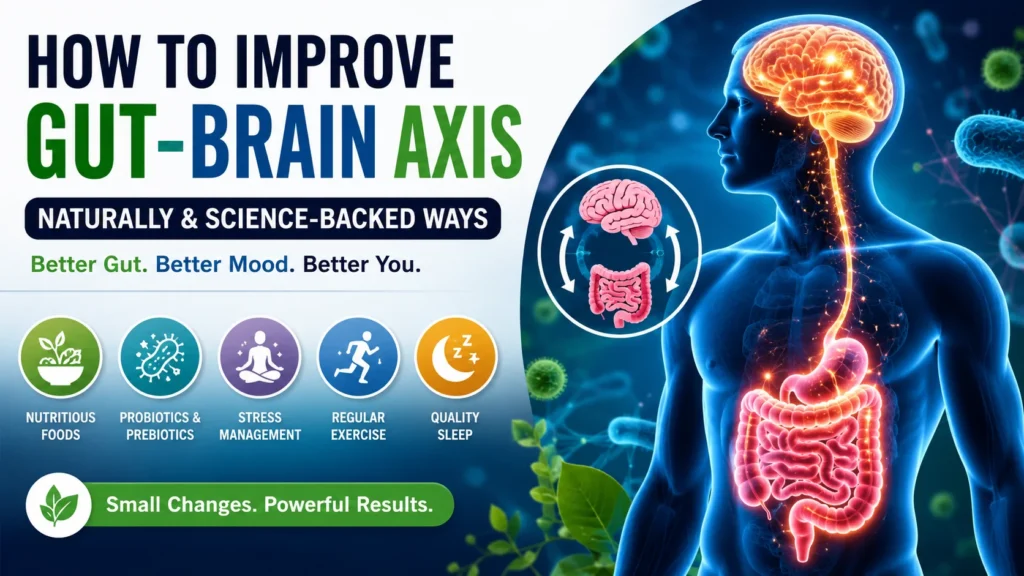

Your gut and brain are in constant, two-way communication through the gut-brain axis—a complex network linking your digestive system to your central nervous system. How to improve gut-brain axis boils down to five core strategies: (1) eat a fiber-rich, plant-based Mediterranean-style diet; (2) consume fermented foods and probiotics; (3) exercise regularly; (4) prioritize 7–9 hours of quality sleep; and (5) manage stress through mindfulness, yoga, or meditation. The gut produces 90% of your body’s serotonin and houses 70% of your immune cells—making gut health foundational to mood, cognition, and resilience against neurodegenerative diseases. Start with one small change today: add a serving of fermented food, take a 20-minute walk, or swap processed snacks for whole plant foods. Your brain will thank you.
1. Introduction: The Gut-Brain Connection Explained
More than two millennia ago, the father of medicine recognized what modern science is only now confirming: the gut is central to overall health. Today, we understand that the gut and brain are locked in a continuous, bidirectional dialogue—a communication superhighway known as the gut-brain axis.
The gut-brain axis integrates neural, endocrine, immune, and metabolic pathways to regulate everything from digestion and appetite to mood, cognition, and stress responses. Trillions of microorganisms—bacteria, fungi, and viruses—reside in your gastrointestinal tract, collectively forming the gut microbiome. These microbes don’t just help digest food; they produce neurotransmitters, modulate inflammation, and send signals that directly influence brain function.
2. The Science Behind the Gut-Brain Axis
The gut-brain axis operates through multiple interconnected pathways:
- The Vagus Nerve – This cranial nerve is the primary physical connection between the gut and brain. Gut microbiota and their metabolites, particularly short-chain fatty acids (SCFAs), regulate vagal activity through feedback mechanisms. Think of the vagus nerve as a telephone line—and you want the line crystal clear.
- Neurotransmitter Production – Gut bacteria synthesize serotonin, GABA, and dopamine. In fact, the gut produces approximately 90% of the body’s serotonin, a key mood-regulating hormone. When your gut microbiome is out of balance, so is your neurochemistry.
- The Immune Connection – About 70% of the body’s immune cells reside in the gut. Gut dysbiosis (microbial imbalance) triggers inflammation that can cross the blood-brain barrier, contributing to neuroinflammation—a common feature of depression, anxiety, and neurodegenerative diseases.
- The HPA Axis – The hypothalamic-pituitary-adrenal axis governs your stress response. Chronic stress disrupts the gut microbiome, which in turn dysregulates the HPA axis, creating a vicious cycle of stress and gut dysfunction.
3. How to Improve Gut-Brain Axis Through Diet
Diet is the single most powerful lever you can pull to improve your gut-brain axis. What you eat directly shapes your microbiome composition, which in turn influences your brain.
3.1 The Mediterranean Diet Approach
The Mediterranean diet—rich in fruits, vegetables, whole grains, legumes, nuts, olive oil, and fish—consistently emerges as one of the most effective dietary patterns for gut-brain health. Greater adherence to this diet is associated with a favorable gut microbiota profile and slower cognitive decline.
Research shows the Mediterranean diet supports microbial diversity, reduces inflammation, and enhances gut-brain communication. It’s anti-inflammatory and microbiome-supporting properties make it ideally suited for protecting against cognitive and mood disorders.
3.2 Fiber: Fuel for Your Microbiome
Dietary fiber is the preferred food source for beneficial gut bacteria. When these bacteria ferment fiber, they produce short-chain fatty acids (SCFAs)—critical metabolites that support gut barrier integrity, reduce inflammation, and communicate with the brain via the vagus nerve.
3.3 Polyphenols and Phytochemicals
Plant compounds called polyphenols and phytochemicals are emerging as powerful gut-brain modulators. Flavonoids, alkaloids, terpenoids, and polyphenols can restore microbial balance, regulate inflammatory signaling, and improve synaptic plasticity. Key compounds like resveratrol, berberine, and curcumin are being studied for their neuroprotective potential.
3.4 Fermented Foods and Psychobiotics
Fermented foods are a combined whole-food microbiota-modulating intervention. They contain beneficial microbes, microbial metabolites, and other bioactives that target the gut-brain axis.
4. Probiotics, Prebiotics, and Postbiotics
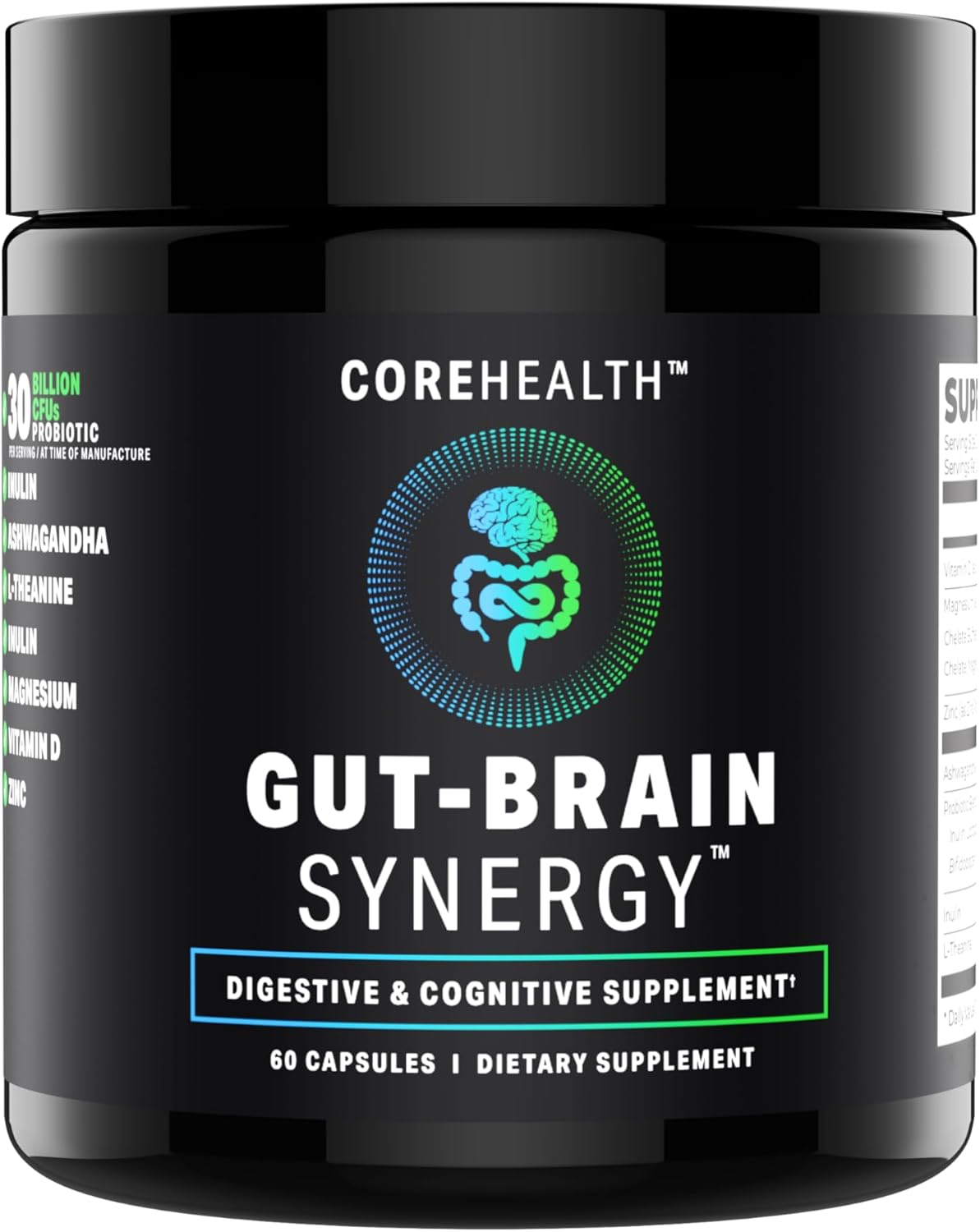
Probiotics are live beneficial bacteria. Prebiotics are the fiber that feeds them. Postbiotics are the beneficial compounds they produce. Together, they form a powerful trio for gut-brain health.
Probiotics – Gut microbiota modulators like probiotics have demonstrated efficacy in infection prevention and neuroprotection. Some probiotic or synbiotic regimens have yielded modest improvements in depressive symptoms in preliminary trials. A study found that up to 8 weeks of probiotic use effectively reduced depressive and anxiety symptoms in clinically diagnosed patients.
Prebiotics – These provide nutrition for beneficial bacteria, improving mental and emotional health through the gut-brain axis. However, stand-alone prebiotics have shown inconsistent or null effects in some studies, suggesting they may work best in combination with probiotics (as synbiotics).
Psychobiotics – This emerging category includes probiotics, prebiotics, and postbiotics that specifically influence gut-brain communication pathways to promote neurological health.
5. Exercise and the Gut-Brain Axis
Physical activity is a non-negotiable pillar of gut-brain health. Exercise improves gut motility, boosts circulation, strengthens digestive muscles, and supports a healthy metabolism.
- Increases microbial diversity
- Reduces inflammation in the hippocampus and colon
- Restores gut microbiota balance
- Enhances production of sleep-related metabolites like serotonin, GABA, and SCFAs
6. Sleep: The Restorative Link
Sleep and gut health share a bidirectional relationship. Poor sleep disrupts the gut microbiome, and an unhealthy gut impairs sleep quality. The microbiota-gut-brain axis contributes to the regulation of sleep continuity and duration.
Sleep supports gut health by:
- Allowing the gut to repair and regenerate
- Reducing systemic inflammation
- Maintaining circadian rhythm, which influences gut microbial composition
7. Stress Management and the Vagus Nerve
Chronic stress is one of the greatest threats to the gut-brain axis. It disrupts the microbiome, impairs intestinal and blood-brain barrier function, dysregulates the HPA axis, and fuels neuroinflammation.
Stress management techniques that work:
- Mindfulness meditation – calms the nervous system and reduces inflammation
- Yoga – positively influences digestive health and overall wellness
- Deep breathing – stimulates the vagus nerve, enhancing gut-brain communication
- Time in nature – helps maintain a healthy gut-brain connection
Probiotics may also help address chronic stress by restoring the gut microbiome, decreasing pro-inflammatory factors, and increasing neuroactive compounds like serotonin and dopamine.
8. Practical 7-Day Gut-Brain Optimization Plan
9.FAQs
The gut-brain axis is the two-way communication network between your digestive system and your brain. Your gut and brain talk to each other constantly through nerves, hormones, and immune signals. The trillions of bacteria in your gut play a starring role in this conversation—influencing your mood, memory, and even your risk for neurological diseases.
Noticeable changes can occur within 2–4 weeks of consistent dietary and lifestyle changes. However, significant microbiome remodeling typically takes 3–6 months. Consistency is more important than perfection—small daily habits compound over time.
Yes, emerging evidence is compelling. Gut microbiota imbalance can trigger or worsen anxiety and depression by interfering with gut-brain communication pathways. Some people with depression or anxiety benefit as much from anti-inflammatory approaches as they do from traditional antidepressants. Probiotic interventions have shown moderate to large effects on reducing depression and anxiety severity.
Top foods: Fiber-rich plants (legumes, whole grains, vegetables), fermented foods (yogurt, kefir, kimchi, sauerkraut), polyphenol-rich foods (berries, green tea, dark chocolate), and omega-3 rich fish.
While generally safe for healthy individuals, probiotics are not one-size-fits-all. Effectiveness varies across patient populations. People with compromised immune systems or serious underlying conditions should consult a healthcare provider before starting probiotics.
Exercise is powerful but works best in combination with diet and sleep. Alone, it improves gut motility and microbial diversity. Combined with a fiber-rich diet and good sleep, the effects are synergistic.
The vagus nerve is the primary physical highway connecting the gut and brain. Gut microbes and their metabolites (like SCFAs) stimulate vagal activity, which then transmits signals to the brain, influencing appetite, emotional tone, and cognitive function.
Yes. Fermented foods contain beneficial microbes, microbial metabolites, and bioactives that target the gut-brain axis. They are being actively studied for their mental health-promoting potential.
10. Conclusion: Your Journey to a Healthier Gut and Sharper Mind
The science is clear: how to improve gut-brain axis is not a mystery—it’s a lifestyle. The path forward is paved with whole foods, fermented delicacies, regular movement, restorative sleep, and mindful stress management.
This isn’t about perfection. It’s about progress. Start with one change—perhaps adding a serving of kimchi to your meals, taking a 20-minute walk after lunch, or committing to 7 hours of sleep. Let that habit生根, then add another.
Your gut is talking to your brain every single moment. Make sure it’s saying something good.
11. Disclosure & Disclaimer
Images:
12. Citations
- Targeting microbiota–gut–brain axis with phytochemicals: a mechanistic roadmap for dementia. Metabolic Brain Disease, 2026.
- Unraveling the gut microbiota-brain axis: Mechanisms, pathophysiology, and therapeutic opportunities. iScience, 2026.
- Dietary influences on the gut-brain pathways: Mechanisms and therapeutic potential. ScienceDirect, 2025.
- Targeted and individualized dietary interventions in disorders of gut-brain interaction. Best Practice & Research Clinical Gastroenterology, 2025.
- The microbiota-gut-brain-axis theory: role of gut microbiota modulators (GMMs). Naunyn-Schmiedeberg’s Archives of Pharmacology, 2025.
- Gut microbiota-targeted interventions for depression in adolescents and young adults. General Psychiatry, 2026.
- The Gut-Brain Axis: How Your Gut and Brain Stay Connected. Cengild, 2025.
- The microbiota-gut-brain axis in mental and neurodegenerative disorders. Frontiers in Aging Neuroscience, 2025.
- The Gut-Brain Axis in Parkinson disease: Emerging Concepts and Therapeutic Implications. Movement Disorders Clinical Practice, 2025.
- Fermented foods: Harnessing their potential to modulate the microbiota-gut-brain axis for mental health. Neuroscience & Biobehavioral Reviews, 2024.
- Mediterranean diet, gut microbiota, and cognitive decline in older adults. BMC Medicine, 2025.
- The Gut-Brain Axis and Mental Health: How Diet Shapes Our Cognitive and Emotional Well-Being. Cureus, 2025.
- Modulating stress responses via the microbiota-gut-brain axis. ScienceDirect, 2026.
- Electro-microbial interplay in the gut–brain axis. ScienceDirect, 2025.
- The effect of probiotic and synbiotic supplementation on sleep parameters. DTIC, 2025.
- Better objective sleep quality is associated with higher gut microbiota richness. GeroScience, 2025.