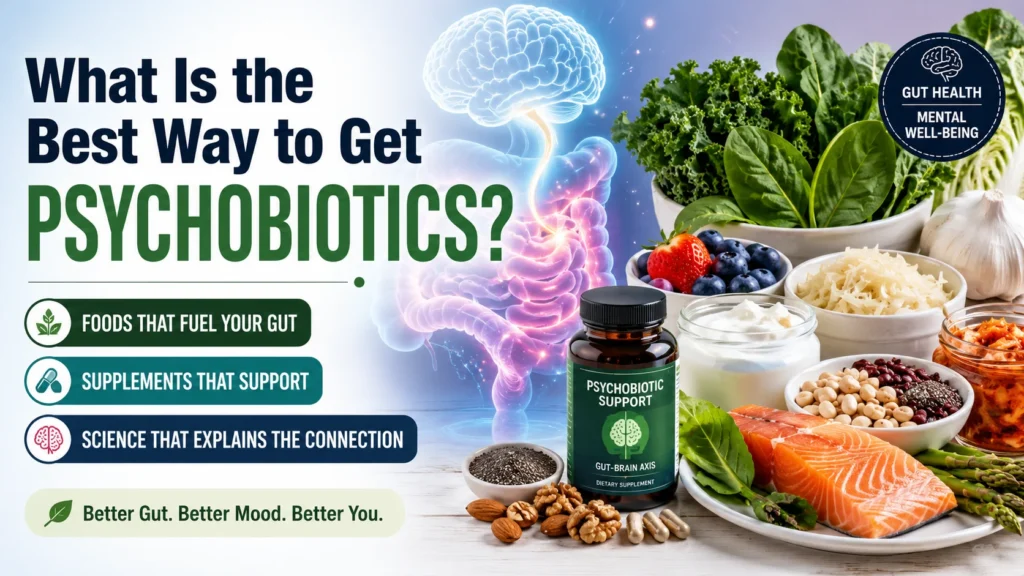

Psychobiotics are probiotics, prebiotics, and fermented foods that positively influence mental health through the gut-brain axis — the bidirectional communication highway between your digestive system and your brain. Research shows that specific bacterial strains can produce neurotransmitters like serotonin and GABA, reduce inflammation, and regulate the stress response. A 4‑week psychobiotic diet has been shown to reduce perceived stress by up to 32%. The best psychobiotic foods include kefir, sauerkraut, kimchi, kombucha, yogurt, and prebiotic‑rich fruits and vegetables. While promising, psychobiotics work best as part of a holistic approach to mental wellness rather than a standalone cure.
🌟 Ultimate Psychobiotic Gut-Brain Support
Our top‑rated recommendation to kickstart your mental wellness journey.
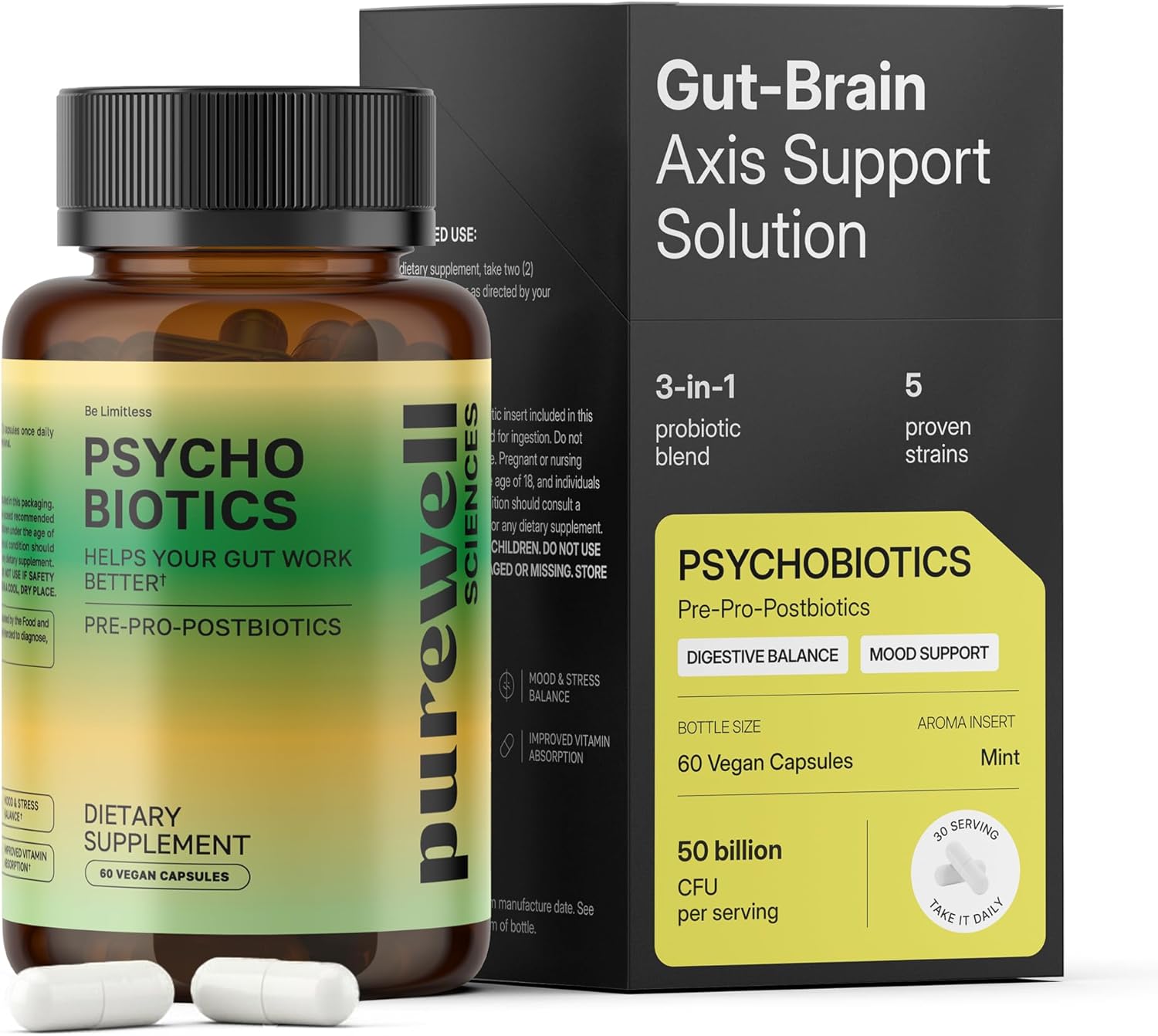
This premium formula is specifically designed to nourish the gut‑brain axis, combining targeted probiotic strains with prebiotic fibers to help reduce stress, support mood, and promote cognitive clarity. Perfect for daily use alongside your psychobiotic diet.
✅ Clinically studied strains • ✅ High potency • ✅ 30‑day supply
👉 Grab Your Bottle Now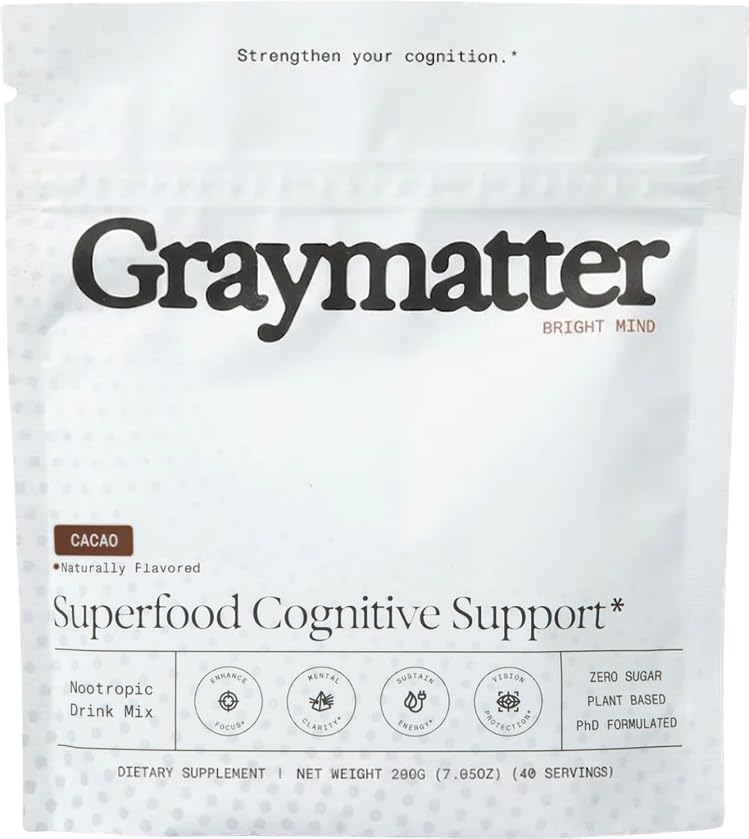
📖 Table of Contents
1. What Is Psychobiotics Food? — Understanding the Gut-Brain Connection
Let’s start with the million‑dollar question: what is psychobiotics food?
Psychobiotics are a novel class of microorganisms that convey benefits to the host’s mental health via the dynamic microbiota‑gut‑brain crosstalk. The term was first coined by researchers Timothy Dinan and John Cryan and refers to probiotics (live bacteria) and prebiotics (food for bacteria) that, when consumed in adequate amounts, promote psychological well‑being.
In simpler terms, psychobiotic foods are edibles that nourish the specific gut bacteria capable of influencing your brain chemistry. They include both:
- Probiotic foods — fermented items containing live beneficial bacteria
- Prebiotic foods — high‑fiber foods that feed those beneficial bacteria
Think of it this way: your gut is a garden. Psychobiotic foods are both the seeds (probiotics) and the fertilizer (prebiotics) that help your “good bacteria” flourish. When these bacteria thrive, they produce neuroactive compounds that travel to your brain via the gut‑brain axis — a complex bidirectional communication system involving neural, immune, and endocrine pathways.
 ⬆️ The gut‑brain connection
2. Can Your Gut Bacteria Actually Affect Your Anxiety? — The Science Explained
The short answer is yes. And the evidence is mounting.
The gut‑brain axis is a bidirectional communication superhighway connecting your central nervous system (brain and spinal cord) to your enteric nervous system (the “second brain” in your gastrointestinal tract). This two‑way communication involves the autonomic nervous system, the enteric nervous system, and the hypothalamic‑pituitary‑adrenal (HPA) axis — your body’s central stress response system.
Here’s how it works:
- Your gut microbes produce neurotransmitters — specific bacterial strains like Lactobacillus and Bifidobacterium can synthesize GABA, serotonin, dopamine, and acetylcholine. In fact, about 90% of your body’s serotonin is produced in your gut!
- These chemicals travel to your brain — through the vagus nerve, signals travel directly to the brain, influencing mood and behavior.
- Inflammation is regulated — gut bacteria modulate the immune system by regulating cytokine production, which impacts brain function and contributes to depression and anxiety.
- The stress response is balanced — psychobiotics regulate HPA axis activity, helping normalize cortisol levels.
A randomised controlled trial with 45 healthy adults found that a 4‑week psychobiotic diet led to a 32% reduction in perceived stress. Specific strains like Lactobacillus plantarum PS128, Lactobacillus helveticus NS8, and Bifidobacterium longum 1714 have shown particular promise in overcoming anxiety and mood disorders.
⬆️ Gut microbes make brain‑active chemicals3. Best Foods to Eat for Better Mental Health — Your Psychobiotic Shopping List
The psychobiotic diet isn’t complicated. It’s about eating real, whole foods that nourish your microbiome. Here’s your ultimate psychobiotic shopping list:
🥛 Fermented Foods (Probiotic Powerhouses)
| Food | Why It’s Great |
|---|---|
| Kefir | A fermented dairy drink packed with multiple probiotic strains |
| Sauerkraut | Fermented cabbage rich in Lactobacillus bacteria |
| Kimchi | Korean fermented vegetables with diverse bacterial communities |
| Kombucha | Fermented tea that delivers probiotics and organic acids |
| Yogurt | Choose plain, unsweetened varieties with live active cultures |
| Miso | Fermented soybean paste that supports gut health |
| Tempeh | Fermented soy product with psychobiotic potential |
🥗 Prebiotic Foods (Fuel for Good Bacteria)
| Food | Why It’s Great |
|---|---|
| Apples | High in prebiotic fiber pectin |
| Bananas | Rich in prebiotic fructooligosaccharides |
| Leeks & Onions | Excellent sources of inulin, a prebiotic fiber |
| Oats & Whole Wheat | Provide beta‑glucan and resistant starch |
| Quinoa | A whole grain that feeds beneficial gut bacteria |
| Legumes | Chickpeas, lentils, and peas — 3‑4 servings weekly |
📊 The Psychobiotic Diet Daily Targets
- 6‑8 daily servings of fruits and vegetables high in prebiotic fibers
- 5‑8 daily servings of whole grains
- 2‑3 daily servings of fermented foods
- 3‑4 weekly servings of legumes
⬆️ Your mental‑health grocery list🌟 Supercharge Your Psychobiotic Journey
Two products to help you get started:
🔹 High‑Quality Probiotic Supplement — a carefully formulated blend of psychobiotic strains to support your gut‑brain axis. Perfect for days when you can’t get enough fermented foods.
🔹 Prebiotic Fiber Boost — feed the good bacteria already in your gut with this premium prebiotic fiber supplement.
Shop Probiotic Blend → Shop Prebiotic Fiber →4. How Psychobiotics Work: The Mechanisms Behind the Magic
Psychobiotics work through four primary mechanisms:
🧠 Mechanism 1: Neurotransmitter Production
Certain gut bacteria can actually synthesise neurotransmitters like serotonin (happiness), GABA (calming), dopamine (reward/motivation), and norepinephrine (focus).
🛡️ Mechanism 2: Immune System Modulation
Your gut houses about 70% of your immune system. Psychobiotics help regulate inflammatory responses — chronic inflammation is increasingly linked to depression and anxiety.
🧬 Mechanism 3: HPA Axis Regulation
The hypothalamic‑pituitary‑adrenal axis is your body’s stress response system. Psychobiotics help normalise this system, reducing the harmful effects of chronic stress.
🔬 Mechanism 4: Production of Neuroactive Metabolites
Gut bacteria produce short‑chain fatty acids (SCFAs) and Brain‑Derived Neurotrophic Factor (BDNF), which maintain intestinal barrier integrity, control inflammation, and support brain health.
5. What the Research Says: Do Psychobiotics Really Work?
The evidence is promising but still emerging. Here’s what the research shows:
✅ What Works (Strong Evidence)
- Specific probiotic strains can reduce depressive symptoms and anxiety.
- Psychobiotic diets reduce perceived stress in as little as 4 weeks.
- Fermented vegetables like kimchi and sauerkraut show mental health benefits through neurotransmitter modulation, inflammation reduction, and stress response enhancement.
🔬 What’s Being Studied (Promising but Preliminary)
- Potential benefits for Alzheimer’s disease, Parkinson’s disease, autism, ADHD, and schizophrenia.
- The role of psychobiotics in neurodegenerative and neurodevelopmental disorders.
- Long‑term effectiveness and safety across diverse populations.
⚠️ What We Still Don’t Know
A systematic review found that while 6 out of 12 studies found probiotics reduced depression, and 2 found they reduced anxiety, translational research is limited. More investigation is needed to fully realise the therapeutic benefits of psychobiotics.
The Bottom Line: Psychobiotics are not a magic bullet or a replacement for professional mental health care. But they represent an exciting, accessible, and safe complementary approach to supporting mental wellness.
6. How to Start a Psychobiotic Diet Today
Week 1: Foundation
- Add 1 serving of fermented food daily (start with kefir or yogurt).
- Increase prebiotic fiber with one extra fruit or vegetable serving.
- Reduce sugary drinks and processed foods — they harm gut bacteria.
Week 2: Build Momentum
- Aim for 2 servings of fermented foods daily.
- Add whole grains like oats or quinoa to breakfast.
- Include legumes in 2 meals this week.
Week 3: Optimise
- Hit the 6‑8 daily fruit/vegetable target.
- Experiment with new fermented foods — try kimchi or kombucha.
- Notice how you feel — energy, mood, digestion.
Week 4: Make It Habit
- The psychobiotic diet becomes second nature.
- Consider supplementation if you struggle to get enough from food alone.
🛒 Ready to Begin Your Psychobiotic Journey?
Start with these top‑rated products to support your gut‑brain axis:
👉 Premium Psychobiotic Probiotic Blend — multi‑strain formula designed for mental wellness support
👉 Prebiotic Fiber Complex — feed your good bacteria and support a healthy microbiome
Shop NowFAQs: Your Questions Answered
Q: What exactly are psychobiotics?
A: Psychobiotics are probiotics, prebiotics, and fermented foods that benefit mental health through the gut‑brain axis. They’re not a single food but a category of dietary approaches that support the gut bacteria capable of influencing brain chemistry.
Q: Are psychobiotics the same as probiotics?
A: Not exactly. All psychobiotics are probiotics (or prebiotics), but not all probiotics are psychobiotics. For a probiotic to be considered a psychobiotic, it must have demonstrated specific mental health benefits — not just general gut health benefits.
Q: How quickly do psychobiotics work?
A: Studies show measurable benefits in as little as 4 weeks. However, individual results vary based on your starting gut health, diet, and consistency. Some people notice mood improvements within days; for others, it takes longer.
Q: Can I get enough psychobiotics from food alone?
A: Yes! A well‑planned psychobiotic diet provides ample probiotics and prebiotics. However, if you struggle to eat fermented foods daily or have specific dietary restrictions, high‑quality supplements can help fill the gaps.
Q: Are there any side effects?
A: Generally, psychobiotic foods are very safe with fewer side effects than conventional medications. Some people may experience temporary bloating or digestive changes when increasing fiber and fermented foods — start slowly and increase gradually.
Q: Can psychobiotics replace antidepressants?
A: Absolutely not. Psychobiotics are a complementary approach, not a replacement for prescribed mental health treatments. Always consult your healthcare provider before making changes to your mental health regimen.
Q: What’s the best psychobiotic food to start with?
A: Kefir is often recommended as a starting point — it’s widely available, palatable, and contains multiple probiotic strains. Followed by plain yogurt, sauerkraut, and gradually expanding to kimchi and kombucha.
Q: Do psychobiotics help with stress?
A: Yes. A 4‑week psychobiotic diet study found a 32% reduction in perceived stress among participants. Psychobiotics regulate the HPA axis and reduce inflammation, both of which play key roles in the stress response.
8. Final Thoughts: Feed Your Gut, Feed Your Mind
The emerging field of psychobiotics represents a paradigm shift in how we understand mental health. For centuries, we’ve viewed the mind and body as separate entities. Science now tells us they are inextricably linked.
Psychobiotic foods offer an accessible, affordable, and natural way to support your mental well‑being. They’re not a cure‑all, and they don’t replace professional care. But they are a powerful tool in your wellness toolkit — one that has been hiding in plain sight in traditional fermented foods for millennia.
The best part? You can start today. Open your refrigerator, head to your local market, and choose foods that nourish not just your body, but your brain. Your gut bacteria are waiting to help you feel better — all they need is the right fuel.