
If you’re exploring fertility supplements, you’ve likely encountered inositol. It has become a popular topic for those with polycystic ovary syndrome (PCOS) and those undergoing fertility treatments. However, determining the “best” inositol for fertility isn’t a one-size-fits-all answer. It requires understanding the different types, the science behind them, and what the latest research reveals.
What is Inositol?
Inositol is a sugar alcohol naturally found in foods like fruits, beans, grains, and nuts, and is also produced by the human body. While it was once considered part of the vitamin B complex, it is now recognized as a key component in cellular signaling. It is involved in several crucial bodily functions, including insulin signaling, hormone regulation, and ovarian function.
There are nine different forms of inositol, but the two most well-studied and commonly used in fertility supplements are myo-inositol (MI) and D-chiro-inositol (DCI).
Myo-Inositol vs. D-Chiro-Inositol: The Crucial Difference
Understanding the distinct roles of MI and DCI is the first step to choosing the right supplement.
- Myo-Inositol (MI): This is the most abundant form of inositol in nature and is essential for proper follicle development and oocyte (egg) maturation. It mediates the response to follicle-stimulating hormone (FSH), playing a “crucial role in determining oocyte maturation”. High concentrations of MI in the follicular fluid are considered a good indicator of oocyte quality.
- D-Chiro-Inositol (DCI): While also important, DCI plays a different role in the ovary. It is involved in regulating androgen production. The critical point is that DCI, at high concentrations, may be detrimental to oocyte quality.
The “Ovarian Paradox” and the 40:1 Ratio
In a healthy body, there is a specific balance between these two inositol isomers. The myo-inositol to D-chiro-inositol ratio is typically around 40:1 in plasma. In women with PCOS, insulin resistance can disrupt this balance, leading to an excess of DCI in the ovaries at the expense of MI. This imbalance is thought to contribute to the hormonal and ovulatory issues seen in PCOS.
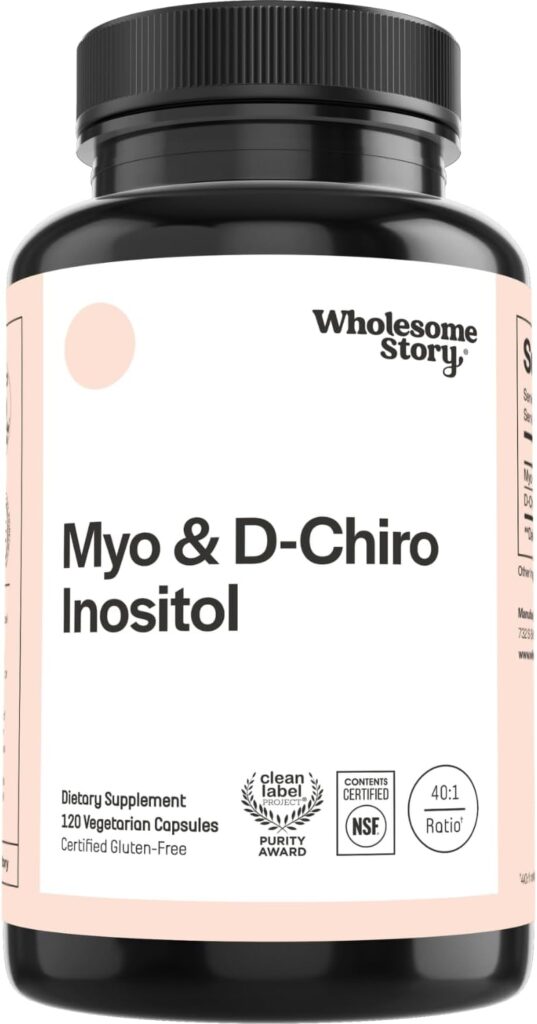
This is why many experts recommend supplementing with a 40:1 ratio of MI to DCI. This ratio is supported by research showing it is the most effective for restoring ovulation and improving other key parameters in women with PCOS.
Pros and Cons of Using Inositol for Fertility
✅ Pros
- Improves egg & embryo quality in PCOS: A 2024 meta-analysis found that MI/DCI supplementation significantly increased clinical pregnancy rates and top-grade embryos in women with PCOS undergoing ART.
- Restores ovulation: Inositol, particularly myo-inositol, can help restore spontaneous ovulation and regular menstrual cycles in women with PCOS.
- Enhances IVF outcomes: MI supplementation has been shown to improve mature egg (MII) rates and fertilization rates, and may reduce gonadotropin requirements.
- May improve sperm quality: A meta-analysis found myo-inositol increased total and progressive sperm motility and decreased sperm DNA fragmentation.
- Favorable safety profile: Inositol is generally well-tolerated with mild side effects.
❌ Cons & Limitations
- Limited evidence for general fertility: Strongest benefits are seen in PCOS/insulin resistance; less effective for other causes like primary ovarian insufficiency.
- Mixed evidence on live birth rates: While it improves intermediate outcomes, robust data on live birth rates is still lacking.
- Not a standalone cure: Inositol “is a tool — not a miracle.” It will not replace medical treatments or fix anatomical issues.
- Not endorsed as first-line by all guidelines: Some international guidelines do not yet recommend inositol as a primary treatment for PCOS infertility.
Duration: How Long Does It Take to Work?
Inositol is not an immediate solution. It works gradually by improving metabolic and hormonal signaling.
- Timeline: Studies have shown that women may see improvements in their cycles within 6 to 8 weeks, but full hormonal benefits may take 3 to 6 months. A consistent and patient approach is key.
- Dosing: A standard and evidence-based dose is 2,000 mg of myo-inositol twice daily (4,000 mg total), often combined with 400 mcg of folic acid. Some protocols suggest starting supplementation 1–3 months before starting an IVF cycle.
Which Type of Inositol is Best for Fertility?
Based on the available evidence:
- For Women with PCOS and Insulin Resistance: The consensus points to a 40:1 combination of Myo-Inositol and D-Chiro-Inositol. Start with the standard dosing and duration outlined above.
- For General IVF Support or Non-PCOS Female Fertility: Myo-Inositol is the primary form of interest. While DCI is also present in some supplements, it is crucial to maintain the proper balance and avoid excessive DCI, which can be counterproductive.
FAQs
Some studies suggest that inositol can achieve ovulation rates comparable to metformin but with fewer gastrointestinal side effects. However, metformin remains a standard treatment, and current guidelines do not universally recommend inositol as a first-line treatment for infertility. It is often best used as part of a broader strategy under medical supervision.
Yes, research suggests that myo-inositol may significantly improve total and progressive sperm motility and increase testosterone levels in men with fertility issues.
The evidence is less strong for women without PCOS. While it may support egg quality and response to IVF, its benefits are most predictable for those with PCOS-related insulin resistance.
Inositol is generally well-tolerated. Common side effects are mild and can include nausea, gas, diarrhea, fatigue, and dizziness. Doses up to 6–12 grams daily appear to be safe.
© 2026 • Fertility & Wellness Resource • Always consult your healthcare provider for personalised advice.