
📑 Table of Contents
🏆 The best broad spectrum sunscreen for face overall is the EltaMD UV Clear SPF 46 — the #1 dermatologist-recommended professional sunscreen brand [citation:2][citation:5][citation:6]. It combines 9% zinc oxide with niacinamide and hyaluronic acid in a lightweight, oil-free formula that calms sensitive, acne-prone, and rosacea-prone skin without leaving a white cast [citation:2][citation:5][citation:6]. For daily wear, look for SPF 30+ and the “Broad Spectrum” label to ensure protection against both UVA (aging) and UVB (burning) rays [citation:1][citation:3].
Why Face Sunscreen Is Different
The skin on your face is thinner, more prone to clogging, and often more reactive than the skin on your body [citation:1]. Picking the wrong formula can mean breakouts, irritation, or a chalky finish that ruins your complexion. A few smart filters save you the trial-and-error [citation:1].
According to the American Academy of Dermatology, you should wear broad-spectrum sunscreen every day that has a minimum of SPF 30 and is water resistant [citation:5]. The best sunscreen is the one you’ll actually wear every day [citation:3].
How to Choose the Best Broad Spectrum Sunscreen for Face
SPF Level and Broad Spectrum Labeling
SPF 30 blocks about 97% of UVB rays, while SPF 50 blocks about 98% [citation:1]. That 1% difference matters less than consistency—the real goal is a formula you will actually apply every day [citation:1]. Always look for the phrase “broad spectrum” on the label. That is the only guarantee that the product also shields against UVA rays, which cause premature aging and deeper skin damage [citation:1].
Skin Type and Formula Texture
- Oily and acne-prone skin: Does best with gel or serum-like textures labeled non-comedogenic [citation:1].
- Dry skin: Benefits from creamier bases with added humectants like hyaluronic acid [citation:1].
- Sensitive skin: Should prioritize fragrance-free and mineral-based filters (zinc oxide or titanium dioxide) to reduce the risk of stinging or redness [citation:1].
White Cast and Finish
Mineral sunscreens historically left a visible white layer, but modern micronized formulas now offer transparent finishes [citation:1]. If you have a deeper skin tone, check for user reviews specifically mentioning “no white cast” on your complexion range [citation:1].
The #1 Dermatologist-Recommended Pick
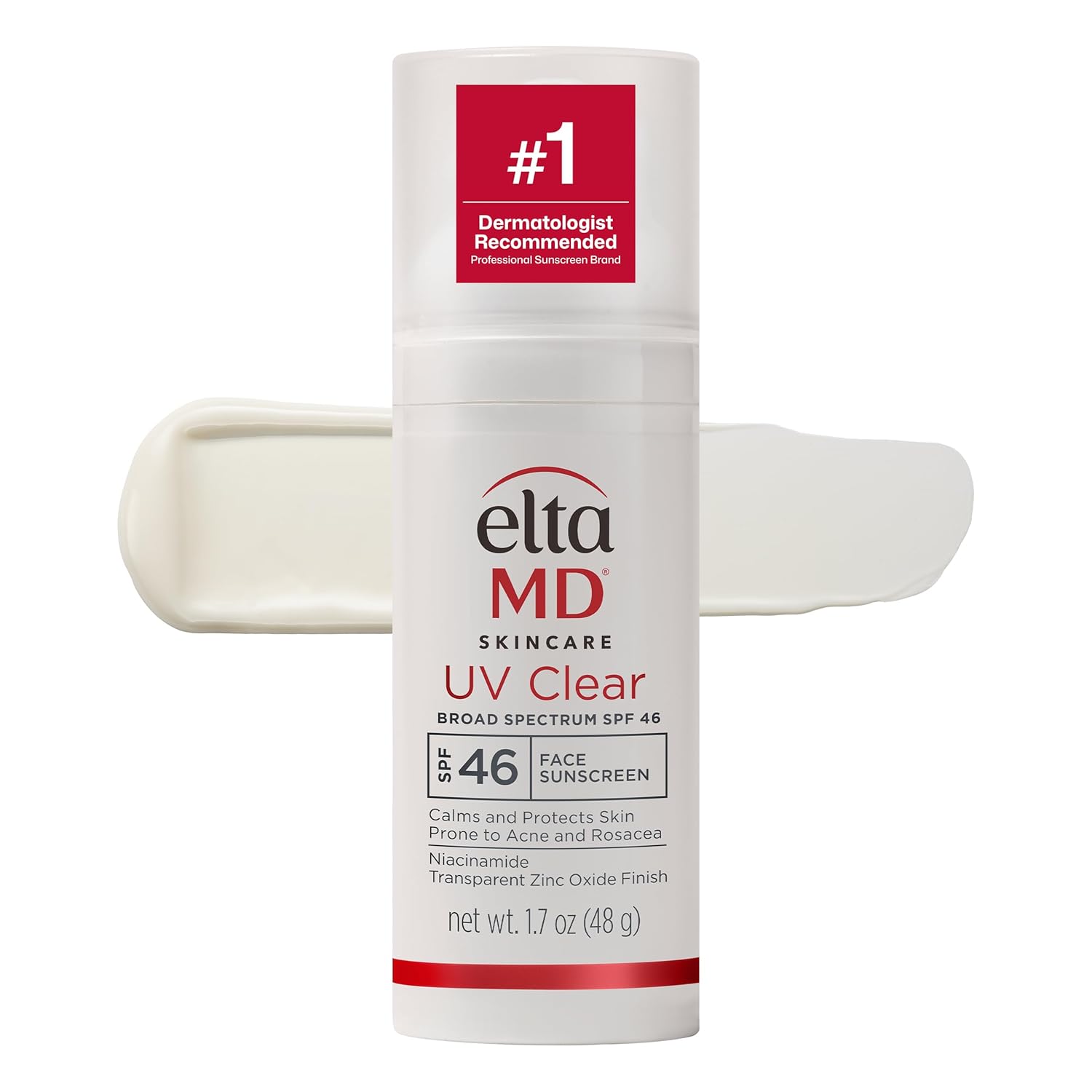
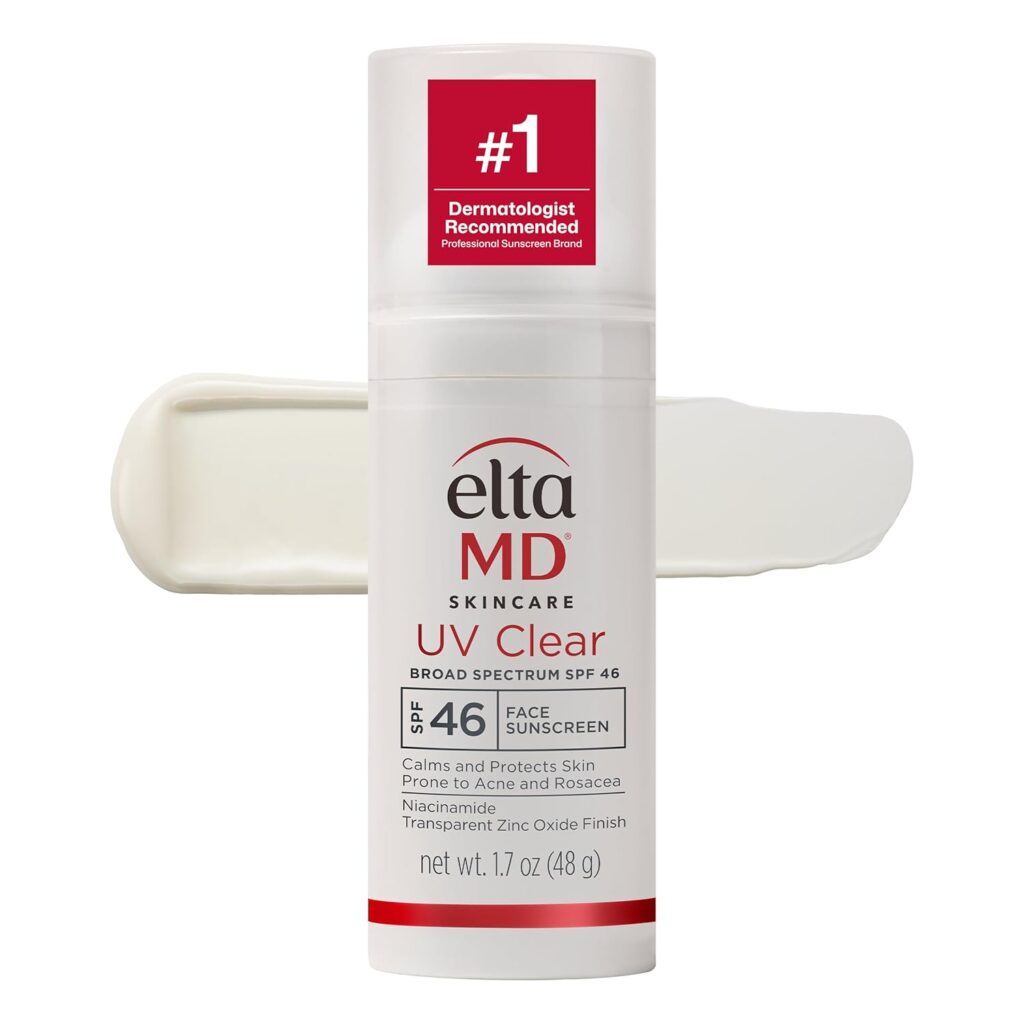
This is the #1 best-selling sunscreen on Amazon with nearly 45,000 ratings, and it’s the pick for the best overall face sunscreen on the market [citation:2].
Why dermatologists recommend it:
- ✅ 9% transparent zinc oxide – mineral protection with no white cast [citation:2][citation:6]
- ✅ 5% niacinamide – calms inflammation, reduces redness, and evens skin tone [citation:2][citation:6]
- ✅ Hyaluronic acid – plumps and hydrates without clogging pores [citation:2][citation:6]
- ✅ Oil-free, fragrance-free, non-comedogenic – won’t irritate or break out sensitive, acne-prone, or rosacea-prone skin [citation:2][citation:5]
- ✅ Lightweight, silky finish – layers perfectly under makeup [citation:2][citation:5]
“Designed for patients with rosacea or acne, this oil-free formula provides light moisture, rubs in quickly, and contains niacinamide as an anti-inflammatory to reduce oil.” — Heidi Waldorf, M.D. [citation:2]
“This sunscreen has seen me through hot, sunny Florida beach days, sweaty treks across Manhattan, and beyond, without unsightly streaking or a cakey feeling.” — Prevention Deputy Editor [citation:2]
🛒 Shop Now on AmazonQuick Comparison: Top Broad Spectrum Sunscreens for Face
| Product | SPF | Type | Best For | Key Ingredients |
|---|---|---|---|---|
| EltaMD UV Clear | 46 | Hybrid (Mineral + Chemical) | Sensitive, acne-prone, rosacea [citation:2][citation:5] | 9% Zinc Oxide, Niacinamide, Hyaluronic Acid [citation:6] |
| Supergoop Unseen Sunscreen | 40 | Chemical | Oily, acne-prone, makeup primer [citation:3] | Avobenzone, Homosalate, Octisalate [citation:3] |
| La Roche-Posay Anthelios UV Air | 50 | Chemical | Sensitive, reactive skin [citation:3] | Thermal Spring Water, Niacinamide [citation:3] |
| Innisfree Daily UV Defense Mineral | 45 | 100% Mineral | No white cast, all skin tones [citation:3] | 17% Zinc Oxide, Centella, Hyaluronic Acid [citation:3] |
| Eucerin Sun Advanced Hydration | 50 | Chemical | Sensitive, dry skin [citation:1] | Hyaluronic Acid, Antioxidant Complex [citation:1] |
More Top Picks by Skin Type
An oil-free, gel-to-powder texture with a velvety, mattifying finish that doubles as a makeup-gripping primer — ideal for anyone who wants zero shine from their daily SPF [citation:3].
Built on belif’s hydrating Napiers formula with panthenol and glycerin, this functions as moisturizer and sunscreen in one step — a strong pick for patients who find most SPFs too tight or drying [citation:3].
A modern micronized zinc formula that blends into a range of skin tones without the chalky finish older mineral sunscreens are known for, plus centella and hyaluronic acid for added calm [citation:3].
A hydrating mineral formula that uses iron oxides to visibly reduce white cast and blur tone unevenness, with niacinamide and hyaluronic acid for a dewy finish [citation:3].
Frequently Asked Questions
Q: What is the best broad spectrum sunscreen for face?
A: According to dermatologists and thousands of reviews, the EltaMD UV Clear SPF 46 is the top choice overall. It offers broad-spectrum protection in a lightweight, calming formula suitable for sensitive, acne-prone, and rosacea-prone skin [citation:2][citation:5][citation:6].
Q: Is SPF 30 or SPF 50 better for face?
A: SPF 50 blocks about 98% of UVB rays, compared to 97% for SPF 30 [citation:1]. For daily use, SPF 30 is sufficient, but SPF 50 offers extra protection if you’re outdoors frequently [citation:1][citation:3].
Q: Can I use body sunscreen on my face?
A: It’s not recommended. The skin on your face is thinner and more prone to clogging and irritation. Face sunscreens are specifically formulated to be non-comedogenic and compatible with makeup [citation:1].
Q: What does “broad spectrum” mean?
A: It means the sunscreen protects against both UVA (aging) and UVB (burning) rays. This is the only guarantee that the product shields against premature aging and deeper skin damage [citation:1].
Q: How much sunscreen should I apply to my face?
A: The AAD recommends at least 1 teaspoon (about the length of your index and middle fingers) for the face alone. Most people apply only a quarter to half of that amount, which cuts your effective SPF substantially [citation:3].
Final Thoughts
The best broad spectrum sunscreen for face is ultimately the one you’ll wear consistently every day [citation:3]. Whether you choose the dermatologist-favorite EltaMD UV Clear, a lightweight Korean formula, or a budget-friendly option, the key is to:
- Always choose “Broad Spectrum SPF 30 or higher”
- Match the formula to your skin type (oily, dry, sensitive, acne-prone)
- Apply enough product — 1 teaspoon for your face
- Reapply every 2 hours when outdoors or near windows
🛡️ Shop the #1 Dermatologist-Recommended Sunscreen
This article contains affiliate links. If you purchase through these links, I may earn a small commission at no extra cost to you. I only recommend products I trust and that meet dermatologist-recommended standards.
© 2026 · Broad Spectrum Sunscreen Guide · always consult with a board-certified dermatologist for personalized skincare recommendations.