
📑 Table of Contents
🛡️ “Broad spectrum” means the sunscreen protects against both UVA and UVB rays. To earn this label, a sunscreen must pass the FDA’s critical wavelength test, demonstrating that UVA protection is proportional to UVB protection. Look for “Broad Spectrum SPF 15 or higher” on the label—only these products can claim to reduce the risk of skin cancer and early skin aging. For daily use, dermatologists recommend SPF 30 or higher with broad-spectrum protection.
What Does “Broad Spectrum” Actually Mean?
Let’s break this down. The term “broad spectrum” is a regulated FDA designation, not just marketing fluff. A sunscreen earns this label only if it has been scientifically proven to protect against both types of harmful ultraviolet (UV) radiation:
- UVA rays – The “Aging” rays that penetrate deep into the skin, causing wrinkles, sunspots, and collagen breakdown
- UVB rays – The “Burning” rays that cause sunburn and play a key role in skin cancer development
According to the FDA, a broad-spectrum sunscreen must pass a specific test demonstrating that its UVA protection is proportional to its UVB protection. In simpler terms: the higher the SPF, the more UVA protection it must also provide.
“Broad Spectrum SPF [value]” means the product provides balanced protection from both types of UV radiation—not just sunburn prevention.
The Science: UVA vs. UVB Rays
Understanding the difference between UVA and UVB is crucial to choosing the right sunscreen:
| Ray Type | Effect on Skin | Window Penetration | Primary Concern |
|---|---|---|---|
| UVA | Penetrates deeply, breaks down collagen and elastin | Passes through glass | Wrinkles, aging, hyperpigmentation |
| UVB | Burns the outer skin layer (epidermis) | Blocked by glass | Sunburn, skin cancer risk |
Both types contribute to skin cancer risk and premature aging. A sunscreen that only protects against UVB (like many older formulas) isn’t enough for comprehensive skin health.
How the FDA Defines Broad Spectrum Protection
The FDA’s requirements are specific and science-based. Here’s what a sunscreen must achieve to earn the “Broad Spectrum” label:
1. The Critical Wavelength Test
To pass, a sunscreen must have a critical wavelength of 370 nanometers (nm) or higher. This measures how well the product protects across the full UVA spectrum, which extends to 400 nm.
- UVA protection must be at least 0.7 times the UVB protection
- The product must demonstrate protection across both UVA I (340-400 nm) and UVA II (320-340 nm) wavelengths
2. Proportional Protection Requirement
According to FDA regulations, “Passing the broad spectrum test shows that the product provides UVA protection that is proportional to its UVB protection.” This is why:
- A sunscreen with SPF 15 must provide a specific level of UVA protection
- A sunscreen with SPF 50 must provide proportionally higher UVA protection
3. Labeling Requirements
Only broad-spectrum sunscreens with SPF 15 or higher can claim to:
- Reduce the risk of skin cancer
- Reduce the risk of early skin aging
- When used as directed with other sun protection measures
The Critical Wavelength Test Explained
The “critical wavelength” might sound technical, but understanding it helps you make informed choices:
- A sunscreen is tested across the full UV spectrum (290-400 nm)
- The critical wavelength is the point where 90% of the total UV protection is achieved
- To pass, this wavelength must be ≥ 370 nm
Why this matters:
- UVA extends to 400 nm
- A sunscreen with a critical wavelength of 370 nm protects most but not all UVA
- Newer ingredients (like Tinosorb, available in Europe/Australia) can reach critical wavelengths closer to 400 nm
- Zinc oxide (25%) is the only U.S.-available ingredient that provides full 400 nm protection
What to Look for on the Label
When shopping for sunscreen, here’s exactly what to check:
1. The “Broad Spectrum” Statement
Look for this exact wording on the front label. Without it, you’re not guaranteed UVA protection.
2. SPF Value
- Choose SPF 30 or higher for daily use
- SPF 50+ offers extra protection if you’re outdoors frequently
- Remember: SPF only measures UVB protection; broad spectrum adds UVA protection
3. Water Resistance (If Needed)
- “Water resistant” = effective for 40 minutes in water
- “Very water resistant” = effective for 80 minutes in water
- No sunscreen is “waterproof” or “sweatproof” (these claims are prohibited by FDA)
4. Active Ingredients
- Zinc oxide or titanium dioxide = physical/mineral sunscreen
- Avobenzone, octocrylene = common chemical filters
- Products with 20%+ zinc oxide provide the most extensive UVA protection
Mineral vs. Chemical Sunscreens
Both types can be broad spectrum, but they work differently:
Mineral (Physical) Sunscreens
- How they work: Sit on top of skin, reflecting and absorbing UV rays
- Ingredients: Zinc oxide, titanium dioxide
- Advantages: Less irritating, work immediately
- Concern: Can leave white cast (newer micronized versions are clearer)
- FDA Category: GRASE (Generally Recognized as Safe and Effective)
Chemical Sunscreens
- How they work: Absorb UV rays and convert them to heat
- Ingredients: Avobenzone, octocrylene, homosalate, octisalate
- Advantages: Often lighter texture, better UVA protection in some formulations
- Concern: May irritate sensitive skin
- U.S. Limitation: American sunscreens lag behind Europe/Australia in effective UVA filters
How to Choose the Best Broad Spectrum Sunscreen
Here’s a simple checklist for finding the right protection:
- Prioritize broad spectrum – This is non-negotiable
- Choose SPF 30+ – SPF 50 is even better
- Consider your skin type:
- Sensitive skin: Choose mineral (zinc/titanium)
- Oily/acne-prone: Look for oil-free, non-comedogenic formulas
- Darker skin tones: Try tinted mineral formulas
- Check the active ingredients – 20%+ zinc oxide for maximum UVA protection
- Consider water resistance if swimming or sweating
- Use enough sunscreen – About ¼ teaspoon for the face
“The best sunscreen is the one you’ll actually wear every day. Find a formula you enjoy using and make it part of your daily routine.”
Top Broad Spectrum Sunscreen Recommendation
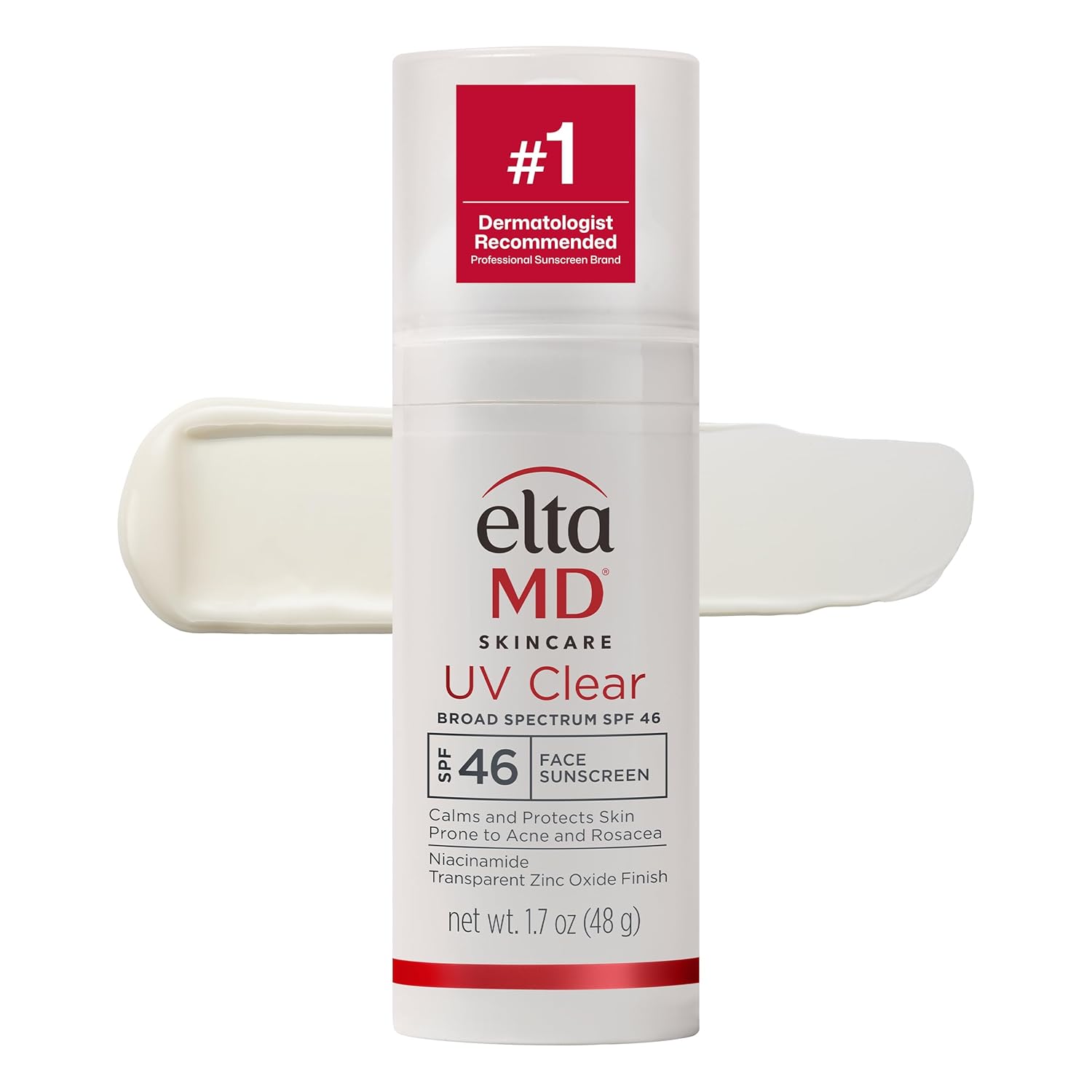
This dermatologist-recommended sunscreen is a standout choice for broad-spectrum protection:
- ✅ SPF 46 with broad-spectrum UVA/UVB protection
- ✅ Contains niacinamide to calm and soothe sensitive skin
- ✅ Transparent zinc oxide – no white cast
- ✅ Oil-free – won’t clog pores
- ✅ Calms and protects – ideal for acne-prone and sensitive skin
EltaMD UV Clear is widely recommended by dermatologists for daily use, offering the perfect balance of protection and skin-friendly ingredients.
🛒 Check Price on AmazonFrequently Asked Questions
Q: What does “broad spectrum” mean on sunscreen labels?
A: It means the sunscreen has passed FDA testing to protect against both UVA (aging) and UVB (burning) rays, with UVA protection proportional to its SPF value.
Q: Is SPF 30 broad spectrum enough?
A: Yes, SPF 30 with broad-spectrum protection is the minimum dermatologists recommend for daily use. Broad Spectrum SPF 15+ products have been shown to reduce skin cancer and early aging risk when used as directed.
Q: Can a sunscreen be broad spectrum without “broad spectrum” on the label?
A: No. The “Broad Spectrum” label is a regulated FDA designation. Without it, the sunscreen may only protect against UVB rays.
Q: What’s the difference between broad spectrum and SPF?
A: SPF measures protection against UVB (sunburn) rays only. Broad spectrum confirms the product also protects against UVA (aging) rays.
Q: Are US broad-spectrum sunscreens as good as European ones?
A: European and Australian sunscreens often contain more advanced UVA filters (like Tinosorb S and M) that provide “far UVA” protection closer to 400 nm. U.S. sunscreens primarily rely on avobenzone, which meets the FDA’s 370 nm critical wavelength standard but may not offer the same breadth of protection.
Q: Does a higher SPF mean better UVA protection?
A: For broad-spectrum sunscreens, yes. The FDA requires that UVA protection is proportional to UVB protection—so higher SPF broad-spectrum sunscreens provide higher UVA protection as well.
Final Thoughts
Understanding what makes sunscreen broad spectrum empowers you to make better choices for your skin’s health. The FDA’s critical wavelength test ensures that products carrying this label provide balanced protection against both UVA and UVB rays.
The bottom line:
- Always choose “Broad Spectrum SPF 30 or higher”
- Mineral formulas (zinc oxide/titanium dioxide) are the most gentle and offer the widest UVA protection
- Remember that no sunscreen is waterproof—reapply every 2 hours or after swimming/sweating
- Consistent daily use is the key to preventing skin cancer and premature aging
🛡️ Shop the Top Broad Spectrum Sunscreen
This article contains affiliate links. If you purchase through these links, I may earn a small commission at no extra cost to you. I only recommend products I trust and that meet dermatologist-recommended standards.
© 2026 · Broad Spectrum Sunscreen Guide · always consult with a board-certified dermatologist for personalized skincare recommendations.