
📋 TL/DR – Quick Summary
Your post‑hysterectomy plate = healing accelerator. Focus on:
- Protein (lean meats, fish, eggs, legumes) to rebuild tissues
- Fiber & fluids to combat opioid‑induced constipation
- Vitamin C & zinc for collagen synthesis and immunity
- Iron‑rich foods to replenish blood loss (red meat, spinach, fortified cereals)
- Anti‑inflammatory fats (avocado, olive oil, fatty fish) to calm internal swelling
- Small, frequent meals to avoid bloating and stabilize energy
- Calcium + Vitamin D to protect bone health if ovaries were removed
Skip the gas‑producing veggies, refined sugars, and alcohol for the first 2 weeks. Small, frequent meals win.
📑 Table of Contents
- 1. The Healing Foundation
- 2. Protein Power
- 3. Fiber & Hydration
- 4. Vitamins & Minerals
- 5. Anti‑Inflammatory Fats
- 6. Foods to Avoid
- 7. Sample 1‑Day Menu
- 8. Supplements that Help
- 9. Small, Frequent Meals
- 10. Bone Health & Hormones
🩺 1. The Healing Foundation – Why Nutrition Matters More Now
After a hysterectomy, your body enters a high‑demand repair phase. Incisions – whether abdominal or vaginal – require collagen, protein, and micronutrients to close properly. Meanwhile, anesthesia and pain meds slow gut motility, setting the stage for constipation and bloating. The best foods to eat after hysterectomy surgery do double duty: they fuel tissue regeneration while keeping digestion smooth. Think of every meal as a targeted intervention.

🍗 2. Protein Power – The Scaffolding for New Tissue
Your daily protein target jumps to 1.2–1.5 g per kg of body weight post‑surgery. Amino acids from high‑quality protein are the literal bricks for wound healing. Prioritize skinless chicken, turkey, fatty fish (salmon, mackerel), eggs, Greek yogurt, tofu, and lentils. For quick recovery, keep hard‑boiled eggs or pre‑cooked chicken strips in the fridge – easy to grab when fatigue hits.
💧 3. Fiber & Fluids – Your Constipation Defense Squad
Painkillers slow peristalsis, so soluble fiber becomes your best friend. Oats, barley, psyllium, and well‑cooked carrots swell with water, forming a soft gel that eases stool passage. Pair every fiber portion with at least 8–10 glasses of water; without adequate liquid, fiber backfires. Warm broths and herbal teas (peppermint, ginger) count toward hydration while soothing your digestive tract.
🥦 4. Vitamins & Minerals – The Micronutrient Boost
Vitamin C (citrus, bell peppers, kiwi) drives collagen production – the glue that holds stitches together. Zinc (pumpkin seeds, beef, chickpeas) powers immune cells and enzyme reactions. And iron is non‑negotiable; many women experience anemia after hysterectomy. Red meat, spinach, and fortified cereals help, but pair them with vitamin C to enhance absorption. A daily multivitamin can fill gaps, but food sources always come first.

🥑 5. Anti‑Inflammatory Fats – Calming the Internal Storm
Surgery triggers systemic inflammation. Omega‑3s from wild salmon, sardines, walnuts, and flaxseeds dial down inflammatory cytokines. Extra‑virgin olive oil and avocado offer monounsaturated fats that stabilize cell membranes. Drizzle olive oil over steamed veggies or add half an avocado to your morning smoothie – it’s a delicious way to reduce swelling and support hormone balance post‑op.
⛔ 6. Foods to Avoid – The Gut Irritants
For the first 10–14 days, steer clear of gas‑producing vegetables (broccoli, cabbage, onions, beans) – they can distend your abdomen and pull on internal stitches. Also avoid fried foods, sugary snacks, and carbonated drinks; they promote bloating and offer zero nutritional value. Alcohol and caffeine dehydrate and interfere with sleep, delaying recovery. Stick to bland, easily digestible options like mashed potatoes, rice, and well‑cooked squash.
📆 7. A Practical 1‑Day Healing Menu
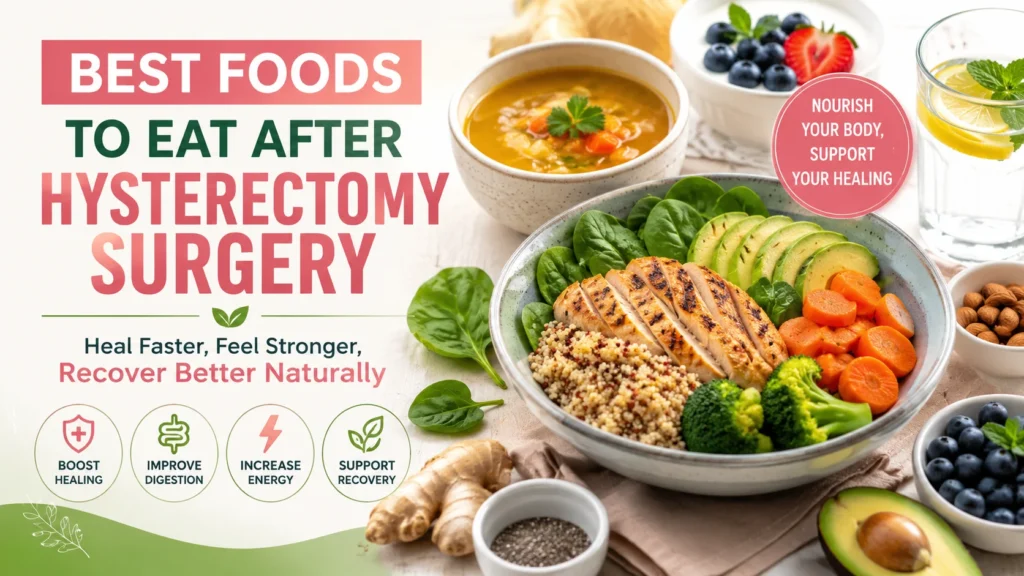
Breakfast: Oatmeal made with milk, topped with sliced banana and a drizzle of honey. Lunch: Grilled chicken breast with steamed zucchini and quinoa. Snack: Greek yogurt with a handful of blueberries. Dinner: Baked salmon, roasted sweet potato, and a side of sautéed spinach (cooked until wilted). Evening: Chamomile tea with a small slice of whole‑grain toast and avocado.

💊 8. Supplements That Support Recovery
While whole foods should be your primary source, targeted supplements can fill gaps. Vitamin D + calcium protect bone health (especially if ovaries were removed). Probiotics restore gut flora after antibiotics. And glucosamine/chondroitin may help with joint aches that sometimes appear during reduced activity. Always run any supplement by your surgeon before starting.
🍽️ 9. Small, Frequent Meals – Why Grazing Beats Gorging
Large, heavy meals put pressure on your diaphragm and freshly sutured abdominal wall, increasing discomfort and the risk of nausea (especially with pain meds). Instead, aim for 5–6 small “mini‑meals” every 2–3 hours. This approach stabilizes blood sugar, prevents energy crashes, and keeps your digestive tract moving gently without overwhelming it. Think of a hard‑boiled egg + crackers, or half a turkey sandwich – easy, light, and nutrient‑dense.
🦴 10. Bone Health & Hormonal Shifts – Calcium, Vitamin D & Phytoestrogens
If your hysterectomy included ovary removal, estrogen levels drop sharply, accelerating bone turnover. Prioritize calcium‑rich foods like dairy, fortified plant milks, canned sardines (with bones), and cooked leafy greens (cooking reduces oxalates, improving calcium absorption). Pair them with Vitamin D from fatty fish, egg yolks, or fortified cereals – it’s essential for calcium uptake. Some women also benefit from phytoestrogen‑rich foods like flaxseed and tofu, which gently mimic estrogen and may ease menopausal symptoms while supporting skeletal integrity.
🔗 Disclosure: Some of the links in this article are affiliate links. If you click on them and make a purchase, we may earn a small commission at no extra cost to you. We only recommend products we believe can support your recovery journey.
⚠️ Disclaimer: This content is for informational purposes only and does not constitute medical advice. Always consult your physician or a registered dietitian regarding your specific dietary needs after surgery. Individual recovery times and nutritional requirements vary.