
Anemia is the most common blood disorder worldwide, and iron-deficiency anemia accounts for nearly half of all cases. Fatigue, brain fog, cold hands, and shortness of breath are just a few signs that your body is crying out for iron. But here’s the good news: food is medicine, and the right iron-rich choices can reverse deficiency, restore energy, and protect your long-term health.
This guide cuts through the noise and gives you a practical, delicious roadmap to the best iron-rich foods — from heme sources to plant-based powerhouses, with tips to boost absorption like a pro.
📑 Table of Contents
⚡ TL/DR — Iron Essentials
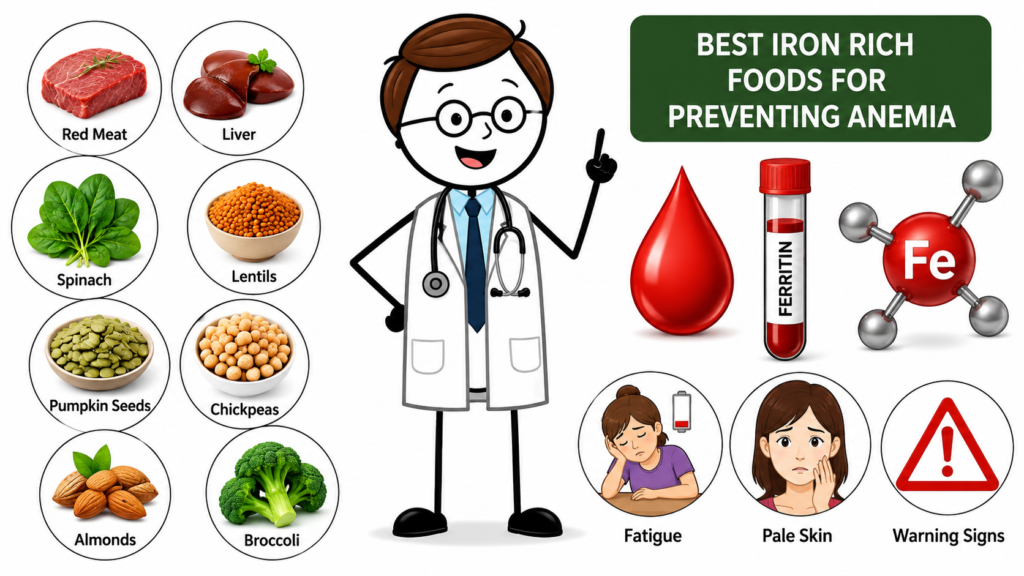
- Heme iron (from meat, fish, poultry) is absorbed 2–3x better than non-heme iron. Top sources: beef liver, oysters, sardines, lean red meat.
- Non-heme iron (plants) is abundant in lentils, chickpeas, beans, tofu, spinach, pumpkin seeds, and fortified cereals.
- Pair with vitamin C (citrus, bell peppers, broccoli) to boost non-heme absorption by up to 6x.
- Avoid blockers like coffee, tea, and calcium-rich foods within 1 hour of iron-rich meals.
- Daily goal: 8 mg for men, 18 mg for women (ages 19–50), 27 mg during pregnancy.
✨ Inspirational Insight: Every meal is a chance to rebuild your blood. Choose iron-rich foods not just to eat — but to thrive.
Why Iron Matters for Anemia Prevention
Iron is the backbone of hemoglobin, the protein in red blood cells that carries oxygen from your lungs to every tissue in your body. When iron stores run low, hemoglobin production drops, and oxygen delivery falters. The result? Fatigue, weakness, pale skin, dizziness, and even heart palpitations.
Preventing anemia isn’t just about avoiding symptoms — it’s about protecting brain function, immune defence, and pregnancy outcomes. Women, children, vegetarians, and endurance athletes are especially vulnerable. But with the right food choices, you can build a robust iron reserve and keep anemia at bay.
🥩 Heme Iron: The Animal-Based All-Stars
Heme iron is found only in animal products and is absorbed with high efficiency (15–35%). It’s the gold standard for rapid iron restoration.
Pro tip: organ meats like liver are nutritional powerhouses — but if you’re not a fan, grass-fed beef and canned sardines are excellent everyday options.
✨ Inspirational Insight: Iron from animals is like a fast-track ticket to energy. One serving of oysters gives you more than half your daily need — nature’s tiny multivitamin.
🌱 Non-Heme Iron: Plant-Based Champions
Non-heme iron comes from plants and is absorbed at a lower rate (2–20%), but the sheer variety and volume make it easy to meet your needs — especially when paired with vitamin C.
Plant-based power combo: lentil soup with a squeeze of lemon, or spinach salad with bell peppers and strawberries — the vitamin C skyrockets absorption.
🍊 How to Boost Iron Absorption (Vitamin C & More)
Simply eating iron isn’t enough — you need to unlock it. Here are the rules:
- Pair with Vitamin C: Add citrus, kiwi, strawberries, bell peppers, or broccoli to your iron-rich meal. Vitamin C can boost non-heme absorption by up to 6 times.
- Avoid blockers: Calcium (milk, cheese), tannins (tea, coffee), and phytates (whole grains) can inhibit absorption. Wait at least 1 hour before or after your meal.
- Cook in cast iron: Acidic foods cooked in cast iron absorb trace iron — a small but helpful boost.
- Soak and sprout: Soaking beans and grains reduces phytates, making iron more available.
✨ Inspirational Insight: Absorption is the art of synergy. A squeeze of lemon on your lentils isn’t just flavor — it’s alchemy.
🍽️ Sample Iron-Rich Meal Ideas
- Breakfast: Fortified oatmeal with strawberries and pumpkin seeds.
- Lunch: Spinach and chickpea salad with red bell peppers, lemon-tahini dressing.
- Dinner: Grass-fed beef stir-fry with broccoli and bell peppers (or tofu stir-fry for plant-based).
- Snack: Roasted sunflower seeds and an orange.
Even small tweaks — like swapping your morning coffee for a vitamin-C-rich smoothie — can transform your iron status over weeks.
❓ Frequently Asked Questions
A: The top foods include beef liver, oysters, sardines, lean red meat (heme iron), and lentils, chickpeas, spinach, pumpkin seeds, tofu, and fortified cereals (non-heme). Pair with vitamin C for best absorption.
A: Adult men: 8 mg; women (19–50): 18 mg; pregnant women: 27 mg. Postmenopausal women and men over 50 generally need 8 mg.
A: Absolutely. Plant-based eaters need to eat more iron overall and pair it with vitamin C. Lentils, beans, tofu, seeds, and fortified grains are excellent sources.
A: Calcium (dairy), tannins (tea, coffee), phytates (whole grains, beans), and polyphenols (some herbs). Separate these from iron-rich meals by at least 1 hour.
A: With consistent dietary changes and good absorption, you can see improvement in ferritin levels in 4–6 weeks. Severe deficiency may require supplements alongside diet.
This article is for informational and educational purposes only. It does not replace professional medical advice. If you suspect anemia or have persistent symptoms, consult a healthcare provider for proper testing and individualised guidance.
❤️ Every bite builds a stronger you. Choose wisely, eat colourfully, and nourish your blood.