
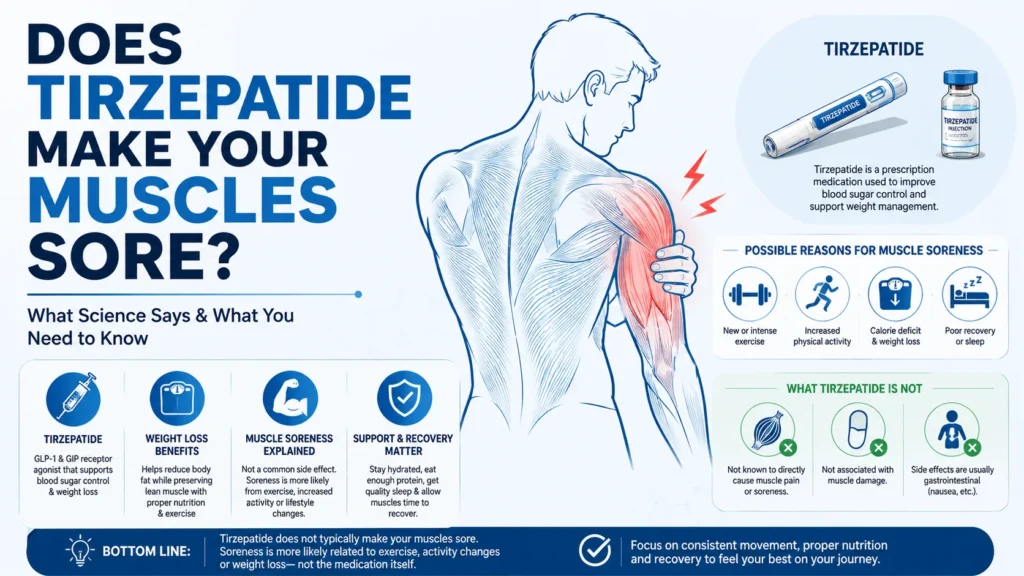

🔬 The Short Answer: No Direct Link
Body aches, muscle pain, and joint pain were not reported as side effects in Zepbound (tirzepatide) clinical trials or real-world safety studies[reference:5]. In the pivotal SURMOUNT-1 trial, musculoskeletal complaints like back pain, arthralgia, and myalgia occurred at rates no higher than placebo[reference:6]. The FDA prescribing information does not list myalgia or muscle soreness as a common adverse effect[reference:7]. Unlike statins — which are known to cause muscle toxicity — tirzepatide does not have this pattern of musculoskeletal damage[reference:8].
💧 Dehydration: The Hidden Culprit
Tirzepatide commonly causes nausea, vomiting, and diarrhea — especially during dose escalation[reference:9]. These GI effects can lead to dehydration, and even mild dehydration is a known trigger for muscle cramps, aches, and soreness[reference:10]. On top of that, tirzepatide suppresses appetite, which means people often drink less without realizing it[reference:11]. When muscle cells lack adequate water, they contract irregularly and fatigue quickly[reference:12]. Solution: Aim for 80–100 oz of water daily, and consider oral rehydration if GI symptoms are significant.
⚖️ Rapid Weight Loss & Muscle Changes
Tirzepatide can produce dramatic weight loss — 15–22% of body weight within 6 months[reference:13]. That kind of rapid change places new mechanical stress on muscles and joints as posture and load-bearing patterns shift[reference:14]. Additionally, 20–50% of weight lost on GLP-1/GIP medications can come from lean muscle mass, not just fat[reference:15]. This reduction in muscle support around joints can cause soreness, stiffness, and general discomfort[reference:16]. What helps: Prioritize protein (at least 1.2–1.6 g/kg body weight) and add low-impact resistance training to preserve muscle.
🧬 Metabolic Adaptation: Your Body Is Rewiring
During the first 4–8 weeks of tirzepatide, your metabolism undergoes a massive shift: fat breakdown accelerates, energy expenditure increases, and muscles change how they use glucose and amino acids[reference:17]. This metabolic transition can trigger mild inflammation in muscle fibers — similar to the soreness after an intense workout, even without exercise[reference:18]. Some patients also experience a mild hypersensitivity reaction to the new medication, presenting as generalized soreness or flu-like discomfort during the first few weeks[reference:19].
⚠️ Rhabdomyolysis: Extremely Rare but Real
A 2025 case report documented a 68-year-old man who developed rhabdomyolysis (severe muscle breakdown) after starting tirzepatide[reference:20]. His creatine kinase (CK) and other muscle injury markers rose significantly but returned to normal after stopping the drug[reference:21]. The association was classified as “probable” using standard causality scales[reference:22]. Important: This appears to be extremely rare — no previous cases were reported in the literature[reference:23]. Nevertheless, if you experience severe muscle pain with dark (cola-colored) urine, weakness, or confusion, seek emergency care immediately[reference:24][reference:25].
📊 Muscle Soreness: Direct vs. Indirect Causes
| Cause | Direct Tirzepatide Effect? | Frequency | Key Features | Management |
|---|---|---|---|---|
| Dehydration | Indirect | Common (from GI side effects) | Muscle cramps, aches, fatigue; worse with poor fluid intake[reference:26] | 80–100 oz water daily; oral rehydration if needed |
| Electrolyte Imbalance | Indirect | Common | Cramping, twitching, weakness (low Na⁺, K⁺, Mg²⁺)[reference:27] | Electrolyte-rich foods or supplements; consult provider |
| Rapid Weight Loss / Muscle Loss | Indirect | Very common | Soreness in weight-bearing joints; reduced muscle support[reference:28][reference:29] | High protein intake; resistance training |
| Metabolic Adaptation | Indirect | Mild–moderate (first 4–8 weeks) | Diffuse soreness; feels like post-exercise[reference:30] | Rest, hydration, anti-inflammatory foods |
| Direct Myalgia (Drug Effect) | No evidence | <3% (same as placebo)[reference:31] | Not a labeled side effect; no causal link established[reference:32] | Evaluate other causes; consider dose timing |
| Rhabdomyolysis | Extremely rare | Case reports only[reference:33] | Severe pain, dark urine, high CK[reference:34] | Emergency — stop drug; seek immediate care |
❓ Frequently Asked Questions
No. Clinical trials show no evidence of muscle damage or myopathy caused by tirzepatide[reference:42]. Unlike statins, it does not have a musculoskeletal toxicity pattern[reference:43]. Any soreness is almost always indirect.
Most discomfort emerges during the first 4–8 weeks of treatment as the body adapts to rapid metabolic shifts[reference:44]. Symptoms often improve as the body stabilizes.
Absolutely. Dehydration is a well-known trigger for muscle cramps, aches, and pain[reference:45]. Tirzepatide reduces appetite and thirst signals, making it easy to under-drink[reference:46].
Yes — but start with low-impact activities like walking, swimming, or light resistance training[reference:47]. This helps preserve muscle mass and reduce stiffness. Avoid high-intensity workouts until symptoms improve.
Contact your provider if you have: severe muscle pain, dark/cola-colored urine, weakness that interferes with daily activities, or symptoms that don’t improve with hydration and rest[reference:48][reference:49].
🔥 Support Your Muscles While on Tirzepatide
Preserve lean mass, stay hydrated, and reduce soreness with science-backed nutrition.
👉 Explore Muscle Support Formulas⚡ Exclusive offer for our readers — click to unlock.
📢 Disclosure & Disclaimer
This article contains affiliate links. I may earn a small commission at no extra cost to you if you purchase through these links. The content is for informational and educational purposes only and does not constitute medical advice. Tirzepatide (Mounjaro®, Zepbound®) is a prescription medication; always consult your healthcare provider before starting, stopping, or changing any treatment. The side-effect profile described is based on clinical trial data, post-marketing reports, and emerging literature — individual experiences vary. Do not ignore severe symptoms; seek professional medical attention promptly.
PS — Most muscle soreness on tirzepatide is temporary and manageable. Focus on hydration, protein, and gentle movement. If you’re looking for extra support, check the links above for curated solutions to help you stay strong throughout your journey.