
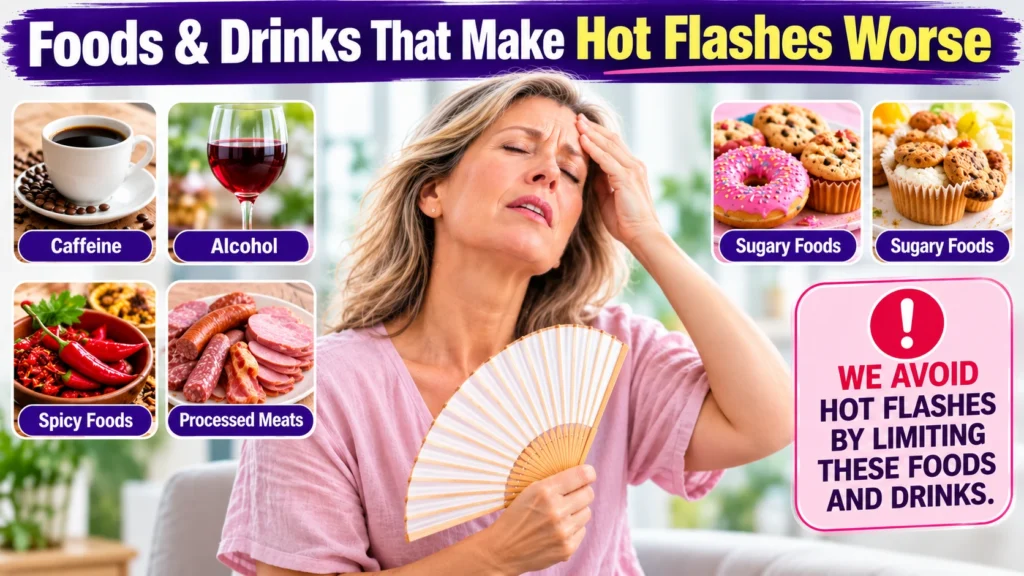

Capsaicin triggers TRPV1 receptors – immediate flush in 70% of women.
Vasodilation from alcohol can double the frequency of nighttime episodes.
Coffee and tea raise core temperature and may worsen flushing in sensitive individuals.
- 1. TL/DR – The Bottom Line
- 2. Why Diet Triggers Hot Flashes
- 3. Spicy Foods – The Capsaicin Effect
- 4. Alcohol – Vasodilation and Night Sweats
- 5. Caffeine – The Stimulant Thermostat
- 6. Sugar & Refined Carbs – Blood Sugar Rollercoaster
- 7. Hot Beverages – Temperature Matters
- 8. Processed & High-Sodium Foods
- 9. FAQs
- 10. Disclosure & Disclaimer
- Spicy foods (capsaicin), alcohol, and caffeine are the top dietary triggers for hot flashes.
- Sugar spikes and hot beverages can also disrupt thermoregulation.
- Identifying personal triggers via a food-symptom diary is the most effective strategy.
- Swap triggers for cooling alternatives – mint, herbal teas, and whole foods.
- Lifestyle and supplement support can help buffer dietary effects.
Why Diet Triggers Hot Flashes
Dietary triggers work through several mechanisms: vasodilation (widening of blood vessels), thermogenic effects (raising core temperature), and neuroreceptor activation (like TRPV1). For menopausal women with a hypersensitive hypothalamus, these effects can tip the balance and provoke sudden flushing. Up to 75% of women report that certain foods or drinks consistently worsen their symptoms.
3. Spicy Foods – The Capsaicin Effect
Chili peppers, hot sauces, curries, and sriracha contain capsaicin, which binds to TRPV1 receptors – the same receptors that detect heat and pain. This triggers a rapid release of substance P and calcitonin gene-related peptide (CGRP), leading to intense flushing, sweating, and a sudden rise in skin temperature. In one survey, 70% of perimenopausal women identified spicy foods as a primary trigger.
Cooling alternative: Use herbs like mint, basil, and oregano for flavor without the heat.
4. Alcohol – Vasodilation and Night Sweats
Alcohol is a potent vasodilator – it relaxes blood vessels, increasing blood flow to the skin and causing a feeling of warmth. This effect is particularly pronounced with red wine, spirits, and beer. Studies show that alcohol consumption can double the frequency of night sweats and disrupt sleep architecture, making hot flashes feel more intense.
Swap for: Sparkling water with cucumber or a non-alcoholic botanical spritzer.
5. Caffeine – The Stimulant Thermostat
Caffeine is a central nervous system stimulant that can raise core body temperature and increase heart rate. For some women, even one cup of coffee or strong black tea can trigger a flush. Caffeine also acts as a diuretic, potentially contributing to dehydration – which itself can worsen hot flashes.
Try instead: Decaffeinated green tea, rooibos, or chicory coffee.
6. Sugar & Refined Carbs – Blood Sugar Rollercoaster
High-sugar foods and refined carbohydrates (white bread, pastries, sugary cereals) cause rapid spikes and crashes in blood glucose. These fluctuations can stimulate the release of adrenaline and cortisol, which in turn may destabilize the hypothalamic thermostat. Women with insulin resistance or prediabetes often report more severe flashes after high-glycemic meals.
Better choice: Whole grains, legumes, and low-glycemic fruits like berries.
7. Hot Beverages – Temperature Matters
It may seem obvious, but hot coffee, tea, or soup directly raise core temperature. In a sensitive thermoregulatory system, this can be enough to trigger a hot flash. Even warm broths or hot chocolate can be problematic for some.
Smart swap: Enjoy your beverages at room temperature or iced. Iced herbal teas (chamomile, peppermint) are particularly soothing.
8. Processed & High-Sodium Foods
Highly processed foods – especially those with MSG, nitrates, or high sodium – can trigger vasodilation and flushing in sensitive individuals. Sodium also affects fluid balance and may exacerbate night sweats.
| Trigger Food/Drink | Mechanism | Common Effect |
|---|---|---|
| Chili peppers, hot sauce | Capsaicin → TRPV1 activation | Immediate flushing, sweating |
| Red wine, beer, spirits | Vasodilation, increased skin blood flow | Night sweats, flushing |
| Coffee, black tea, energy drinks | Stimulant, thermogenic | Heart rate ↑, core temp ↑ |
| Sugary snacks, white bread | Blood glucose spike/crash | Adrenaline surge, flush |
| Hot soups, hot tea/coffee | Direct thermal effect | Immediate overheating |
| Processed meats, MSG, salty snacks | Vasodilation, sodium load | Flushing, fluid retention |
FAQs
Should I completely eliminate all trigger foods?
Not necessarily. Many women find that moderation and timing are key. For example, avoiding spicy foods at dinner can reduce night sweats, even if you tolerate them earlier in the day. Use a symptom diary to identify your personal threshold.
How soon after eating does a hot flash occur?
Triggers like spicy foods or alcohol can cause flushing within 15–30 minutes. Blood-sugar-related triggers may occur 1–2 hours after eating, as glucose levels peak and then drop.
Is decaf coffee safe?
For most women, switching to decaf reduces the thermogenic effect. However, even decaf has a mild vasodilatory effect, so monitor your individual response.
Are there any alcoholic drinks that are less triggering?
Clear spirits like vodka or gin may be less vasoactive than red wine, but alcohol itself is a trigger. Dilute with ice or soda and drink slowly.
Can diet alone stop hot flashes?
Diet is a powerful tool, but it’s rarely a standalone cure. Combining dietary adjustments with herbal supplements, mind-body practices, and lifestyle changes yields the best results.
Disclosure & Disclaimer
Disclosure: This article contains affiliate marketing links. If you click on a link and make a purchase, we may receive a small commission at no additional cost to you. We only recommend products we believe in based on research quality and reputation.
Disclaimer: The information provided is for educational and informational purposes only and does not constitute medical advice. Individual responses to foods vary. Always consult with a qualified healthcare professional before making significant dietary changes or starting supplements.
2026 · Menopause Wellness Guide · listen to your body