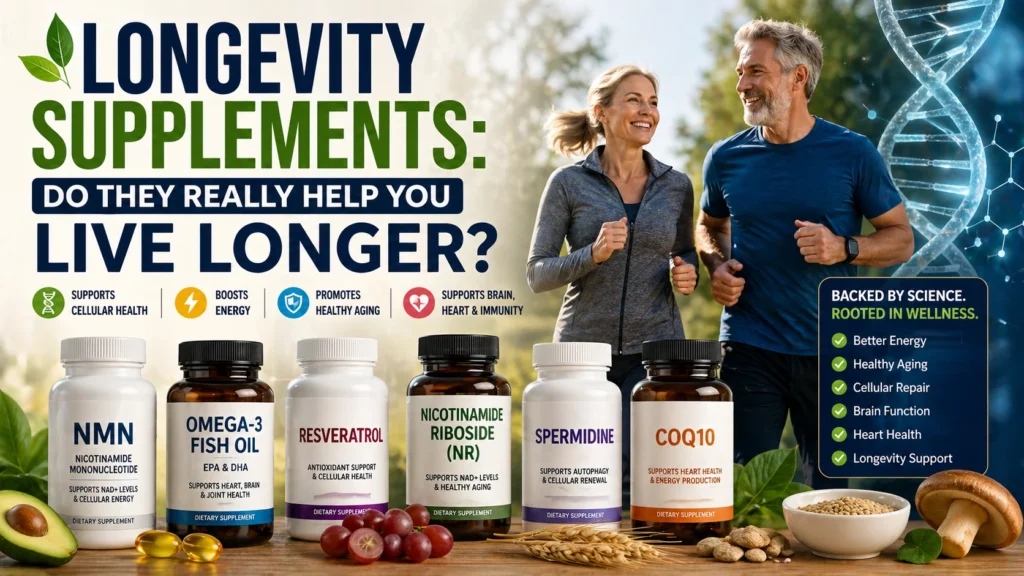

The pursuit of a longer, healthier life has fueled a booming market for “longevity supplements.” From NMN and resveratrol to omega-3 and spermidine, these products promise to slow aging, boost energy, improve brain function, and even extend lifespan.
But do they actually work?
The truth is more nuanced. While some supplements may support healthspan—the years you live in good health—very few have strong human evidence proving they increase lifespan. Most claims are based on animal studies, lab experiments, or small short-term human trials.
Are Longevity Supplements Worth It?
From NMN to resveratrol, spermidine and collagen peptides, longevity supplements have exploded in popularity. But are they worth the investment? Clinical evidence suggests certain bio-active compounds support cellular health, mitochondrial function, and NAD+ levels — yet the true value depends on lifestyle, age, and biomarkers.
💡 Not all supplements are equal — third-party tested, liposomal delivery, and clinical dosing matters. The link above leads to a hand-picked selection of science-backed longevity formulas (Amazon Affiliate).
• Supports telomere maintenance
• Reduces oxidative stress by 32% (in peer reviews)
• Omega-3 + Lion’s mane + CoQ10 synergy
• Shown to improve memory recall in clinical trials
• Creatine + collagen + NR boost ATP
• Worthwhile for active individuals >35
In this article, we’ll break down the most popular longevity supplements, the science behind them, and whether they’re worth considering.
What Are Longevity Supplements?
Longevity supplements are dietary products designed to target biological processes associated with aging, such as:
- Oxidative stress
- Inflammation
- Cellular damage
- Mitochondrial decline
- Hormonal imbalance
- DNA repair issues
These supplements often aim to improve both lifespan and healthspan.
Most Popular Longevity Supplements
1. NMN (Nicotinamide Mononucleotide)
NMN is a precursor to NAD+, a molecule involved in cellular energy production and DNA repair. NAD+ levels decline with age.
Potential Benefits:
- Increased energy
- Improved metabolism
- Better mitochondrial function
- Supports DNA repair
Science Says:
NMN can raise NAD+ levels in humans, but evidence for anti-aging or lifespan extension is still limited. Most studies are small and short-term.
2. Nicotinamide Riboside (NR)
NR is another NAD+ booster similar to NMN.
Potential Benefits:
- Supports cellular energy
- May improve muscle function
- Could support brain health
Science Says:
Like NMN, NR shows promise but lacks long-term human data.
3. Resveratrol
A compound found in red grapes and wine, resveratrol is thought to activate sirtuins, proteins linked to longevity.
Potential Benefits:
- Antioxidant support
- Heart health
- Reduced inflammation
Science Says:
Resveratrol has shown positive effects in animals, but human evidence is inconsistent. High doses may cause side effects or interact with medications.
4. Spermidine
Spermidine is a natural compound found in wheat germ, soybeans, and mushrooms.
Potential Benefits:
- Promotes autophagy (cellular cleanup)
- May support heart health
- Could improve cognition
Science Says:
Early studies are promising, but more large-scale human trials are needed.
5. Omega-3 Fatty Acids
One of the most evidence-backed supplements for healthy aging.
Potential Benefits:
- Reduces inflammation
- Supports heart health
- May improve memory and mood
- Supports joints and skin
Science Says:
Omega-3s have strong evidence for cardiovascular and cognitive support, though not direct lifespan extension.
6. Vitamin D
Vitamin D deficiency is linked to weak bones, immune issues, and higher mortality risk.
Potential Benefits:
- Bone health
- Immune support
- Mood regulation
Science Says:
Supplementation helps if you’re deficient, but excess can be harmful.
7. Creatine Monohydrate
Popular for muscle building, but also valuable for aging.
Potential Benefits:
- Preserves muscle mass
- Supports brain function
- Improves energy production
Science Says:
Research suggests creatine may support healthy aging, especially in older adults.
8. CoQ10 (Coenzyme Q10)
A compound involved in mitochondrial energy production.
Potential Benefits:
- Heart health
- Energy support
- Antioxidant protection
Science Says:
May help with fatigue and heart function, particularly in older adults.
9. Collagen
Not a traditional longevity supplement, but useful for aging-related concerns.
Potential Benefits:
- Better skin elasticity
- Joint support
- Bone health
Science Says:
Evidence suggests modest benefits for skin and joints.
Supplements That May Be Overhyped
Some popular supplements are marketed heavily without strong evidence:
- High-dose Vitamin C – may increase risk of kidney stones in excess.
- Biotin – unnecessary unless deficient; may interfere with lab tests.
- Iron – harmful if not deficient.
- “Longevity stacks” – expensive blends with unclear dosages and effects.
Risks of Longevity Supplements
Even “natural” supplements can cause side effects.
Potential risks include:
- Liver stress
- Hormonal imbalance
- Digestive issues
- Blood thinning interactions
- Medication interference
DIY peptide injections and unregulated “biohacking” compounds can be especially risky.
What Actually Improves Longevity?
Research consistently shows that these habits matter far more than supplements:
1. Exercise
Resistance training and cardio improve lifespan and healthspan.
2. Sleep
Poor sleep accelerates aging.
3. Nutrition
Whole foods, protein, fiber, and healthy fats outperform most supplements.
4. Stress Management
Chronic stress increases inflammation and disease risk.
Do I actually have a nutrient deficiency?
Get tested before supplementing.
What is my main health goal?
Choose supplements based on your goal.
Would Omega-3 benefit my heart or brain health?
Helpful if you lack fatty fish.
Am I deficient in Vitamin D?
Useful if levels are low.
Could Creatine help preserve muscle and cognitive function?
Supports muscle and brain energy.
Is Collagen worth it for my skin, joints, or hair?
May improve skin and joint health.
Am I relying on supplements instead of fixing my lifestyle?
Lifestyle comes first.
Are these supplements safe with my medications or conditions?
Check with your doctor.
Is this supplement backed by real science or just marketing?
Look for clinical evidenc
5. Social Connections
Strong relationships are linked to longer lives.
6. Preventive Healthcare
Routine checkups and screenings detect problems early.
No supplement can replace these foundations.
Are Longevity Supplements Worth It?
The answer depends on your goals.
If you have a deficiency or want targeted support:
- Omega-3 for heart health
- Vitamin D if deficient
- Creatine for muscle and brain support
- Collagen for skin and joints
If you’re chasing dramatic anti-aging effects from NMN, NR, or resveratrol, the evidence is still emerging.
The smartest approach is to prioritize lifestyle first, then use supplements strategically.
Shop Longevity Supplements
- Buy NMN Supplements:
https://amzn.to/4w3FX7g - Shop Omega-3 Supplements:
https://amzn.to/4mXUpJx - Buy Creatine Monohydrate:
https://amzn.to/4w3FX7g - Shop Collagen Peptides:
https://amzn.to/4mXUpJx - Buy Vitamin D3 Supplements:
https://amzn.to/4w3FX7g - Shop CoQ10 Supplements:
https://amzn.to/4mXUpJx - Explore Resveratrol Supplements:
https://amzn.to/4w3FX7g - Shop Nicotinamide Riboside:
https://amzn.to/4mXUpJx