
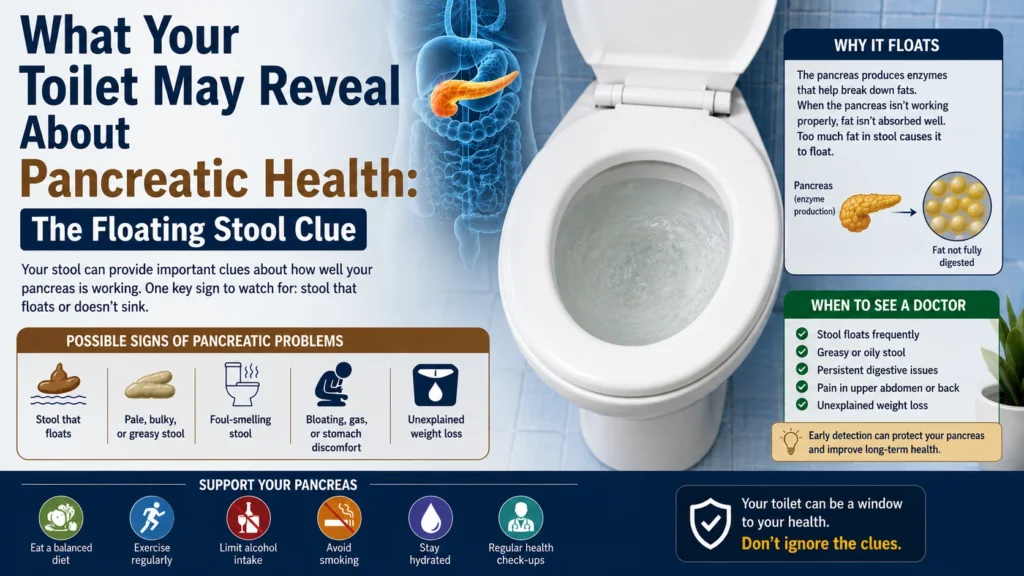

Most people flush and forget. But your toilet bowl may quietly reveal important clues about your digestive health—especially the health of your pancreas.
The pancreas is a small organ located behind the stomach, yet it plays a massive role in digestion, blood sugar control, and nutrient absorption. When it stops working properly, one of the earliest warning signs can appear in your stool.
A floating, greasy, foul-smelling stool may seem harmless at first, but in some cases, it can signal pancreatic enzyme problems, chronic pancreatitis, or even pancreatic cancer.
Why the Pancreas Matters for Digestion
The pancreas produces digestive enzymes that help break down:
- Fats
- Proteins
- Carbohydrates
These enzymes travel into the small intestine where they help your body absorb nutrients from food.
If the pancreas becomes damaged or blocked, it may not release enough enzymes. This condition is called Pancreatic Exocrine Insufficiency (PEI). Without enough enzymes, food—especially fat—is poorly digested and passes through the body partially undigested.
The result often shows up in the toilet.
The Floating Stool Clue
One of the classic signs of pancreatic enzyme deficiency is floating stool.
Why does stool float?
Stool can float for harmless reasons such as gas or dietary changes. But persistent floating stool combined with oily residue may indicate excess fat in the stool, known medically as steatorrhea.
When fat is not absorbed properly, stool may become:
- Pale or clay-colored
- Greasy or oily
- Foul-smelling
- Bulky
- Difficult to flush
- Floating for long periods
This happens because undigested fat changes the density and texture of stool.
What Does Your Stool Look Like With Pancreas Issues?
People with pancreatic problems often notice unusual stool changes before other symptoms appear.
Common stool characteristics include:
1. Floating Stool
Fat-rich stool tends to float instead of sink.
2. Oily or Greasy Appearance
You may notice oil droplets in the toilet water or a shiny coating.
3. Pale or Yellow Stool
Lack of proper bile and fat digestion can make stool lighter in color.
4. Extremely Bad Odor
Undigested fat and nutrients ferment in the intestine, producing a strong smell.
5. Loose or Bulky Stool
Stool may appear large, mushy, or difficult to clean.
These symptoms may occur in:
- Chronic pancreatitis
- Pancreatic cancer
- Cystic fibrosis
- Pancreatic duct blockage
- Severe diabetes affecting the pancreas
Are There Warning Signs Your Pancreas Is in Trouble?
Yes. Pancreatic diseases often produce subtle symptoms at first. Many people ignore them until the condition becomes advanced.
Possible warning signs include:
- Persistent upper abdominal pain
- Pain radiating to the back
- Unexplained weight loss
- Loss of appetite
- Nausea after eating fatty foods
- Frequent bloating
- Floating or greasy stools
- New-onset diabetes
- Fatigue
- Jaundice (yellowing of skin or eyes)
If several of these symptoms appear together, medical evaluation is important.
Three Warning Signs of Pancreatic Cancer
Pancreatic cancer is one of the most serious pancreatic diseases because it often develops silently. Early symptoms may be vague.
Three major warning signs include:
1. Unexplained Weight Loss
People may lose weight rapidly despite eating normally.
2. Jaundice
Yellowing of the eyes and skin can happen when the tumor blocks the bile duct.
3. Persistent Abdominal or Back Pain
Pain may start in the upper abdomen and spread to the back.
Other symptoms may include floating stools, loss of appetite, dark urine, nausea, and fatigue.
What Is the Biggest Breakthrough in Pancreatic Cancer?
Recent years have brought several promising breakthroughs in pancreatic cancer treatment and detection.
Some of the most important advances include:
Liquid Biopsy Testing
Scientists are developing blood-based tests that detect tumor DNA and biomarkers earlier than traditional imaging.
Precision Medicine
Doctors can now analyze the genetic makeup of pancreatic tumors to tailor treatments more effectively.
Immunotherapy Research
While pancreatic cancer has historically resisted immunotherapy, newer combination approaches are showing promise in select patients.
Endoscopic Ultrasound-Guided Treatments
Advanced minimally invasive procedures help diagnose and sometimes treat pancreatic tumors earlier.
AI-Assisted Early Detection
Artificial intelligence is being used to identify subtle pancreatic abnormalities on CT and MRI scans that humans might miss.
Although pancreatic cancer remains challenging, survival rates are gradually improving because of earlier detection and personalized therapies.
Conditions That Can Cause Pancreatic Digestive Problems
Several pancreatic disorders can interfere with enzyme production.
Chronic Pancreatitis
Long-term inflammation damages pancreatic tissue over time.
Pancreatic Cancer
Tumors may block enzyme flow or destroy pancreatic cells.
Pancreatic Exocrine Insufficiency (PEI)
The pancreas does not produce enough digestive enzymes.
Gallstones
Blockages can trigger pancreatic inflammation.
Alcohol-Related Pancreatic Damage
Heavy alcohol use is a major risk factor for pancreatitis.
When Should You See a Doctor?
Occasional floating stool is usually not dangerous. However, persistent changes should not be ignored.
Seek medical evaluation if you experience:
- Floating greasy stool lasting more than 2 weeks
- Unexplained weight loss
- Persistent abdominal pain
- Jaundice
- Chronic diarrhea
- Loss of appetite
- Family history of pancreatic disease
Doctors may recommend:
- Stool fat testing
- Pancreatic enzyme tests
- CT scan or MRI
- Endoscopic ultrasound
- Blood tests
Can Pancreatic Problems Be Treated?
Yes, many pancreatic conditions can be managed when identified early.
Treatment may include:
- Pancreatic enzyme replacement therapy (PERT)
- Dietary changes
- Avoiding alcohol and smoking
- Treating gallstones
- Surgery for tumors or blockages
- Chemotherapy or targeted therapy for cancer
Nutrition also plays a major role in recovery and symptom control.
Final Thoughts
Your stool can provide valuable insights into digestive health. Persistent floating, greasy, foul-smelling stool may indicate that the pancreas is struggling to produce enough digestive enzymes.
While not every case signals serious disease, the “floating stool clue” should never be ignored if it occurs alongside weight loss, abdominal pain, or jaundice.
Sometimes, the toilet bowl becomes the body’s earliest warning system.