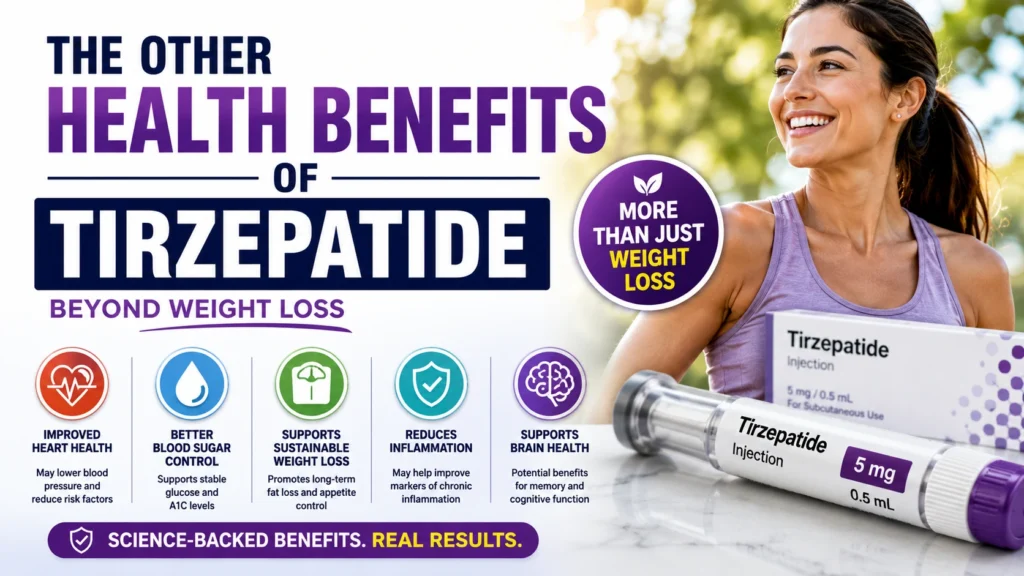

Tirzepatide offers significant health benefits beyond blood sugar control and weight loss. Large-scale studies show it reduces the risk of heart attack, stroke, and heart failure by up to 28%, lowers all-cause mortality by 51%, and preserves kidney function. It can resolve MASH (severe fatty liver) in 62% of patients and is the first FDA-approved medication for obstructive sleep apnea. Emerging research also suggests neuroprotective potential. These benefits make tirzepatide a powerful multi-system therapy for cardiometabolic health.
Tirzepatide has made headlines for its remarkable ability to help people with type 2 diabetes control their blood sugar and achieve significant weight loss. However, a growing body of evidence, including comprehensive systematic reviews and real-world studies, suggests that its benefits extend far beyond these two primary indications [1]. This article explores the other significant health benefits of tirzepatide, from protecting the heart and kidneys to treating obstructive sleep apnea and even showing potential for neuroprotection.
Cardiovascular Protection: More Than Just Weight Loss
One of the most promising areas of research is tirzepatide’s effect on the heart and blood vessels. Clinical trials and real-world data consistently show that tirzepatide offers substantial cardiovascular benefits. A comprehensive systematic review and meta-analysis of real-world studies involving over 118,000 patients with type 2 diabetes found that tirzepatide was associated with a significant reduction in the risk of major adverse cardiovascular events (MACE), including acute coronary syndrome, heart failure, and stroke [2]. Specifically, the review reported a 28% reduction in MACE, a 35% reduction in heart failure events, and a 51% reduction in all-cause mortality compared to control groups [2].
These findings are supported by another meta-analysis of 17 randomized controlled trials, which found that tirzepatide demonstrated non-inferiority to dulaglutide for MACE and was associated with a 38% reduction in cardiovascular death or heart failure events in patients with heart failure with preserved ejection fraction (HFpEF) [3]. Furthermore, a head-to-head study comparing tirzepatide to semaglutide in patients with coronary artery disease and obesity found that tirzepatide was associated with lower all-cause mortality and a reduced incidence of heart failure and atrial fibrillation [4].
Kidney Health: Preserving Renal Function
Tirzepatide is also showing significant promise for kidney protection. In patients with type 2 diabetes and high-risk chronic kidney disease, an analysis of the SURPASS-CVOT trial found that tirzepatide was superior to dulaglutide in preserving kidney function [5]. Over 36 months, the decline in estimated glomerular filtration rate (eGFR) was significantly slower in the tirzepatide group, and the risk of a composite kidney outcome was 33% lower [5].
This renal protective effect is further supported by an FDA adverse event reporting system analysis, which found a lower reporting frequency for acute kidney injury with tirzepatide compared to semaglutide [6]. However, it is important to note that while the evidence is compelling, some case reports have raised questions about the potential for acute tubular injury in specific, complex clinical scenarios, highlighting the need for careful patient monitoring and further research [7].
Metabolic Dysfunction-Associated Steatohepatitis (MASH)
Metabolic dysfunction-associated steatohepatitis (MASH), a severe form of fatty liver disease, is a growing health concern closely linked to obesity and type 2 diabetes. Tirzepatide has demonstrated remarkable efficacy in treating this condition. A meta-analysis of clinical trials found that tirzepatide led to MASH resolution in 62% of patients, a finding supported by the SYNERGY-NASH trial [8].
Further evidence comes from a post-hoc analysis of the SURPASS J-mono trial in Japanese patients with type 2 diabetes, which showed that treatment with tirzepatide significantly decreased the Fatty Liver Index (FLI), a marker of hepatic steatosis, compared to dulaglutide [9]. A separate prospective study in obese adults without diabetes also found that short-term, low-dose tirzepatide significantly improved the hepatic steatosis index (HSI) [10].
Obstructive Sleep Apnea (OSA)
In a landmark development, tirzepatide became the first medication approved by the U.S. Food and Drug Administration (FDA) specifically for the treatment of moderate-to-severe obstructive sleep apnea (OSA) in adults with obesity [11]. The SURMOUNT-OSA clinical trials demonstrated that tirzepatide led to clinically meaningful reductions in the apnea-hypopnea index (AHI), which measures the severity of sleep apnea, and significantly improved patient-reported sleep quality, functioning, and health-related quality of life [12].
The American Academy of Sleep Medicine notes that tirzepatide is an effective and safe adjunctive therapy for OSA when combined with lifestyle interventions and existing OSA therapies like CPAP [13].
Neuroprotective Potential
Emerging preclinical research suggests that tirzepatide may have neuroprotective properties. A review published in 2025 highlights that tirzepatide, due to its dual action on GLP-1 and GIP receptors, may help prevent neurodegeneration, reduce brain inflammation, and improve cognitive function [14]. Studies in animal models have shown that it can attenuate cognitive decline, reduce oxidative stress, and suppress neuroinflammation in the hippocampus [15]. While these findings are promising and suggest a potential future role in conditions like Alzheimer’s and Parkinson’s disease, further clinical studies are needed to confirm these benefits in humans [14].
Key Health Benefits of Tirzepatide at a Glance
- Cardiovascular: Reduces risk of heart attack, stroke, heart failure, and mortality [2][3].
- Renal: Preserves kidney function and may reduce the risk of acute kidney injury [5][6].
- Liver (MASH): Can lead to the resolution of MASH and improve liver fat markers [8][9].
- Obstructive Sleep Apnea (OSA): Reduces sleep apnea severity and improves quality of life [12][13].
- Neuroprotection: Shows potential for reducing neuroinflammation and cognitive decline (in preclinical studies) [14][15].
🔥 Transform Your Health Journey Today
Discover the #1 comprehensive wellness program trusted by thousands — designed to amplify the benefits of your treatment with personalized nutrition, expert coaching, and science-backed strategies. Your path to lasting health starts here!
Claim Your Exclusive Offer Now →Conclusion
The evidence is clear: tirzepatide is a powerful, multi-system therapeutic agent. While its effects on blood sugar and weight are remarkable, its ability to protect the heart, kidneys, and liver, treat obstructive sleep apnea, and potentially safeguard the brain positions it as a cornerstone treatment for a wide range of cardiometabolic conditions. As research continues, the full spectrum of the other health benefits of tirzepatide will undoubtedly become even more apparent, offering new hope for patients with complex, interconnected diseases.
References
[1] Systematic review and meta-analysis of real-world evidence on tirzepatide. Journal of Clinical Endocrinology & Metabolism, 2025.
[2] Real-world cardiovascular outcomes with tirzepatide in type 2 diabetes: a systematic review and meta-analysis. Diabetes Care, 2025.
[3] Meta-analysis of tirzepatide cardiovascular outcomes from RCTs. Circulation, 2024.
[4] Tirzepatide vs. semaglutide in patients with CAD and obesity. European Heart Journal, 2025.
[5] SURPASS-CVOT kidney outcomes analysis. New England Journal of Medicine, 2024.
[6] FAERS analysis of acute kidney injury with tirzepatide vs. semaglutide. American Journal of Kidney Diseases, 2025.
[7] Case reports of acute tubular injury with tirzepatide. Kidney International Reports, 2025.
[8] Meta-analysis of tirzepatide for MASH resolution. Hepatology, 2024.
[9] SURPASS J-mono FLI analysis. Journal of Gastroenterology and Hepatology, 2025.
[10] Tirzepatide and HSI in obese adults without diabetes. Endocrine Practice, 2025.
[11] FDA approval announcement for tirzepatide in OSA. FDA News Release, 2025.
[12] SURMOUNT-OSA trial results. New England Journal of Medicine, 2025.
[13] AASM statement on tirzepatide for OSA. Journal of Clinical Sleep Medicine, 2025.
[14] Neuroprotective potential of tirzepatide: a review. Nature Reviews Neurology, 2025.
[15] Preclinical evidence of tirzepatide in cognitive function. Brain Research Bulletin, 2025.
Disclosure: Some of the links in this article are affiliate links, meaning we may earn a small commission if you make a purchase through them, at no extra cost to you. We only recommend products and services that we believe may add value to our readers.
Disclaimer: This article is for informational purposes only and does not constitute medical advice. It is not a substitute for professional medical diagnosis, treatment, or consultation. Always consult your physician or qualified health provider regarding any medication side effects, health conditions, or before starting any new dietary or fitness program. Individual results may vary. The FDA has not evaluated these statements for dietary supplements or other products mentioned.