
Natural Sources to Decrease Raised Prolactin Levels: A Comprehensive Guide
If you have been diagnosed with elevated prolactin levels (hyperprolactinemia) or are experiencing symptoms like irregular periods, unexplained milk production, or low libido, you may be wondering whether natural approaches can help. The good news is that several natural sources—ranging from specific vitamins and minerals to herbs and lifestyle modifications—have shown promise in reducing prolactin levels.
However, a crucial caveat: Natural does not always mean harmless, and these approaches are not a substitute for medical evaluation. Always consult your healthcare provider before starting any supplement regimen, especially if you are taking medications or have an underlying condition like a prolactinoma (pituitary tumor). This article reviews the evidence-based natural sources that may help lower raised prolactin levels.
Part 1: Vitamin B6 – The Most Evidence-Backed Natural Option
What the Research Shows
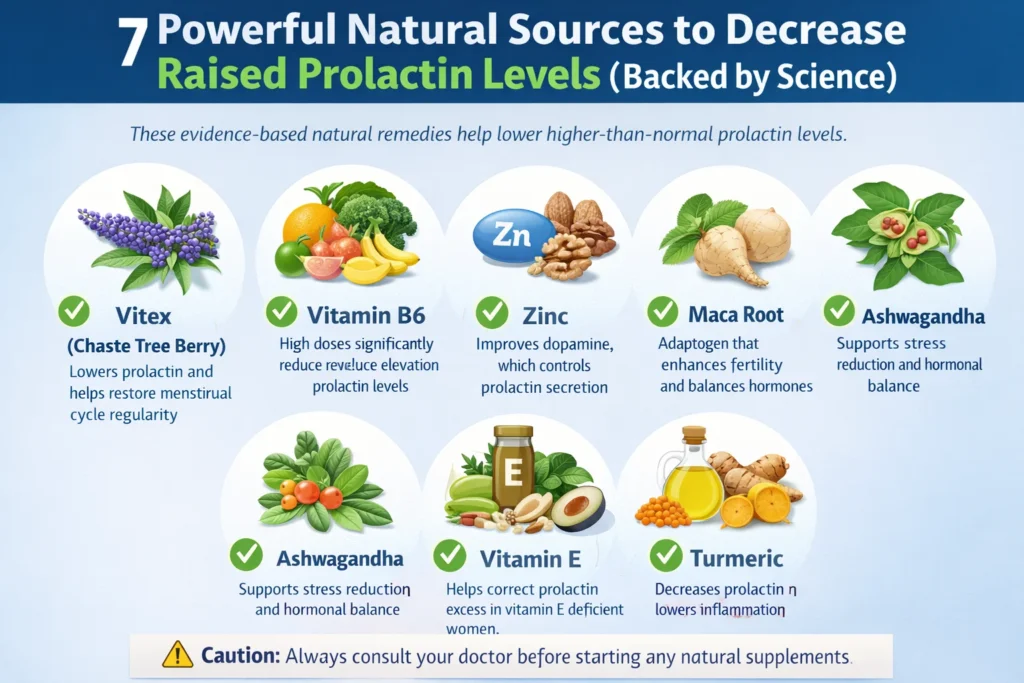
Vitamin B6 (pyridoxine) is the most well-studied natural supplement for reducing prolactin levels. Its mechanism of action is believed to involve increasing dopamine production in the brain—dopamine is the primary neurotransmitter that inhibits prolactin secretion from the pituitary gland .
Key clinical findings:
The study in men with treatment-resistant schizophrenia is particularly noteworthy. After 16 weeks of high-dose vitamin B6, prolactin levels dropped by more than two-thirds, outperforming the medication aripiprazole (which achieved only a 37.4% reduction) . Importantly, no serious adverse effects were reported.
Natural Food Sources of Vitamin B6
Before turning to supplements, consider increasing your intake of vitamin B6-rich foods:
- Bananas – A convenient, portable source
- Potatoes (especially with skin)
- Spinach and other leafy greens
- Chickpeas (garbanzo beans)
- Salmon and poultry (chicken, turkey)
- Fortified cereals
Supplement Considerations
If dietary changes are insufficient, vitamin B6 supplements are widely available. The dosages used in clinical studies (300-600 mg daily) are significantly higher than the typical recommended dietary allowance (RDA) of 1.3-1.7 mg for adults. High-dose vitamin B6 should only be taken under medical supervision, as prolonged use of very high doses can potentially cause nerve damage (neuropathy).
Part 2: Vitamin D – Addressing an Often-Overlooked Deficiency
The Prolactin-Vitamin D Connection
Research has identified a significant association between low vitamin D levels and elevated prolactin. Women with hyperprolactinemia and prolactinoma are more likely to have vitamin D deficiency than those with normal prolactin levels .
While this association may not be directly causal, the clinical implications are important: Elevated prolactin combined with low vitamin D can accelerate bone density loss, particularly in postmenopausal women . This makes vitamin D supplementation especially relevant for individuals with long-standing hyperprolactinemia.
Natural Sources of Vitamin D
- Sunlight exposure (10-30 minutes of midday sun several times per week, depending on skin type and latitude)
- Fatty fish (salmon, mackerel, sardines, tuna)
- Egg yolks
- Fortified foods (milk, orange juice, plant-based milks)
- Beef liver
Supplement Guidance
Before starting vitamin D supplements, request a blood test to check your current levels. Your doctor can then recommend an appropriate dosage—typically 600-2000 IU daily for maintenance, or higher doses for treating confirmed deficiency.
Part 3: Zinc – An Essential Mineral with Prolactin-Lowering Potential
The Evidence
Zinc plays a significant role in hormonal homeostasis and has been shown to inhibit prolactin secretion at physiologically and pharmacologically relevant concentrations . This trace mineral is involved in over 300 enzymatic reactions in the body, including those that regulate pituitary function.
However, the evidence is not conclusive across all populations. While some studies suggest zinc can reduce prolactin—particularly in individuals with zinc deficiency—more rigorous research is needed to establish definitive effects .
Natural Food Sources of Zinc
| Food Source | Zinc Content (approximate) |
|---|---|
| Oysters | The richest source |
| Beef and lamb | High bioavailability |
| Pumpkin seeds | Excellent plant-based option |
| Cashews and almonds | |
| Chickpeas and lentils | |
| Dairy products (milk, cheese) |
Important Considerations
The RDA for zinc is 8 mg for women and 11 mg for men. The upper tolerable limit is 40 mg per day. Exceeding this can lead to:
- Nausea and gastrointestinal distress
- Copper deficiency (zinc and copper compete for absorption)
- Impaired immune function
Never self-treat hyperprolactinemia with high-dose zinc supplements without medical guidance .
Part 4: Herbal Remedies – Traditional Plants with Modern Evidence
1. Chasteberry (Vitex agnus-castus)
Chasteberry is perhaps the most well-known herbal remedy for hormonal imbalances, particularly those affecting the menstrual cycle and prolactin.
Evidence base:
- A 2020 study found that Vitex agnus-castus was as effective as bromocriptine (a prescription dopamine agonist) for reducing prolactin levels
- A 2023 review supported the use of chaste tree for mild hyperprolactinemia, though more controlled studies are needed
- Traditionally used for premenstrual breast pain (mastodynia) and menstrual irregularities
Mechanism: Chasteberry acts on the pituitary gland to reduce excess prolactin secretion, likely through dopamine receptor activity .
Important warning: Herbs like Vitex can influence hormone levels and may interact with medications. Do not use chasteberry as a replacement for medical evaluation—especially if a pituitary tumor is suspected .
2. Mucuna Pruriens (Velvet Bean)
Mucuna pruriens is a natural source of L-DOPA, the direct precursor to dopamine. By increasing dopamine availability, it may help inhibit prolactin release.
Evidence:
- Studies have shown that Mucuna pruriens decreases prolactin levels while increasing testosterone in men
- This dual effect makes it particularly interesting for male infertility or low libido associated with hyperprolactinemia
Caution: Because Mucuna contains pharmacologically active compounds, it should be used only under professional guidance. Dosage and standardization vary widely between products.
3. Ashwagandha (Withania somnifera)
Ashwagandha is an adaptogenic herb that helps the body manage stress. Since chronic stress can elevate prolactin (via increased cortisol), reducing stress indirectly helps regulate prolactin levels .
Evidence: While ashwagandha has not been directly studied for hyperprolactinemia, its stress-reducing properties are well-documented. By balancing cortisol, it may prevent stress-induced prolactin spikes .
4. 18β-Glycyrrhetinic Acid (from Licorice Root)
A 2016 study identified 18β-glycyrrhetinic acid (a compound derived from licorice root) as a novel natural agent that suppresses prolactin hyperactivity in laboratory and animal models .
Mechanism: This compound appears to inhibit prolactin synthesis and secretion, potentially through modulation of the serotonergic system. The study found it effective in reducing antipsychotic-induced hyperprolactinemia .
Note: This research is still in early stages (in vitro and animal models). Do not attempt to self-treat with licorice root, as excessive consumption can cause serious side effects including hypertension and potassium loss.
Part 5: Dietary and Lifestyle Modifications
Beyond specific supplements, several foundational lifestyle changes can support healthy prolactin levels.
Foods to Emphasize
Foods to Limit or Avoid
- Excessive dairy – May raise prolactin in some individuals, particularly those with lactose intolerance
- Sugar and refined carbohydrates – Can cause blood pressure and hormonal imbalances
- Alcohol – Can temporarily increase prolactin levels
- Excessive caffeine – May contribute to hormonal disruption
Lifestyle Factors That Matter
Part 6: Important Precautions and When to See a Doctor
Natural Approaches Are Not Always Safe for Everyone
While the natural sources discussed above have shown promise, they carry risks:
| Supplement | Potential Risk |
|---|---|
| High-dose Vitamin B6 | Peripheral neuropathy (nerve damage) with prolonged high-dose use |
| Zinc | Copper deficiency, gastrointestinal distress if exceeded 40 mg/day |
| Vitex (Chasteberry) | May interact with oral contraceptives, dopamine agonists, or antipsychotics |
| Licorice root | Hypertension, hypokalemia (low potassium), dangerous with certain heart conditions |
| Mucuna pruriens | Contains L-DOPA; may interact with antidepressants and other medications |
Red Flags That Require Medical Evaluation
Do not rely solely on natural remedies if you experience:
- Persistent headaches or vision changes (possible pituitary tumor compressing the optic chiasm)
- Unexplained milk production (galactorrhea) in non-pregnant, non-breastfeeding women or in men
- Infertility that has not been evaluated by a physician
- Symptoms persisting after 3-6 months of lifestyle modifications
- Medication-induced hyperprolactinemia – never stop prescribed medications (especially antipsychotics) without consulting your doctor
The Bottom Line on Natural Sources
Natural sources can be valuable adjuncts to medical treatment, but they are not replacements for proper diagnosis. Hyperprolactinemia has many potential causes—from benign pituitary tumors (prolactinomas) to hypothyroidism to medication side effects. Each requires a different treatment approach.
Before trying any natural supplement:
- Get a proper diagnosis with a prolactin blood test
- Have your doctor rule out serious causes (thyroid dysfunction, kidney/liver disease, pituitary tumors)
- Discuss any supplements you wish to take—some interact with prescription medications
- Monitor your prolactin levels with repeat blood tests to assess effectiveness
Summary Table: Natural Sources to Decrease Prolactin
| Natural Source | Evidence Strength | Typical Dosage (Medical Supervision Required) | Food Sources |
|---|---|---|---|
| Vitamin B6 | Strongest (clinical trials) | 300-600 mg daily (high-dose) | Bananas, potatoes, spinach, chickpeas, salmon |
| Vitamin D | Moderate (association + bone protection) | 600-4000 IU daily (based on blood levels) | Sunlight, fatty fish, egg yolks, fortified foods |
| Zinc | Moderate (mechanism established) | 8-11 mg daily (RDA); higher only under supervision | Oysters, beef, pumpkin seeds, cashews |
| Chasteberry (Vitex) | Moderate (small studies) | Product-dependent; follow manufacturer | Supplement only |
| Mucuna pruriens | Limited (small studies) | Product-dependent | Supplement only |
| Ashwagandha | Indirect (stress reduction) | Product-dependent | Supplement only |
| Dietary modifications | Supportive | N/A | Tyrosine-rich foods; limit sugar, alcohol, excessive dairy |
| Lifestyle changes | Supportive | N/A | Stress management, quality sleep, moderate exercise |
Disclaimer: This article is for informational and educational purposes only and does not constitute medical advice. Hyperprolactinemia can be caused by serious conditions requiring medical treatment. Always consult a qualified healthcare provider for proper diagnosis and before starting any supplement regimen