
Your body doesn’t just run on calories—it runs on cellular energy. And at the center of that system are your mitochondria, the tiny “power plants” inside your cells that convert food into usable energy (ATP). When your mitochondria are healthy, you feel energized, your skin looks vibrant, your brain stays sharp, and your metabolism works efficiently.
That’s why focusing on the best food for mitochondrial health is one of the smartest upgrades you can make to your diet todayWhat Is the Best Food for Mitochondrial Health?
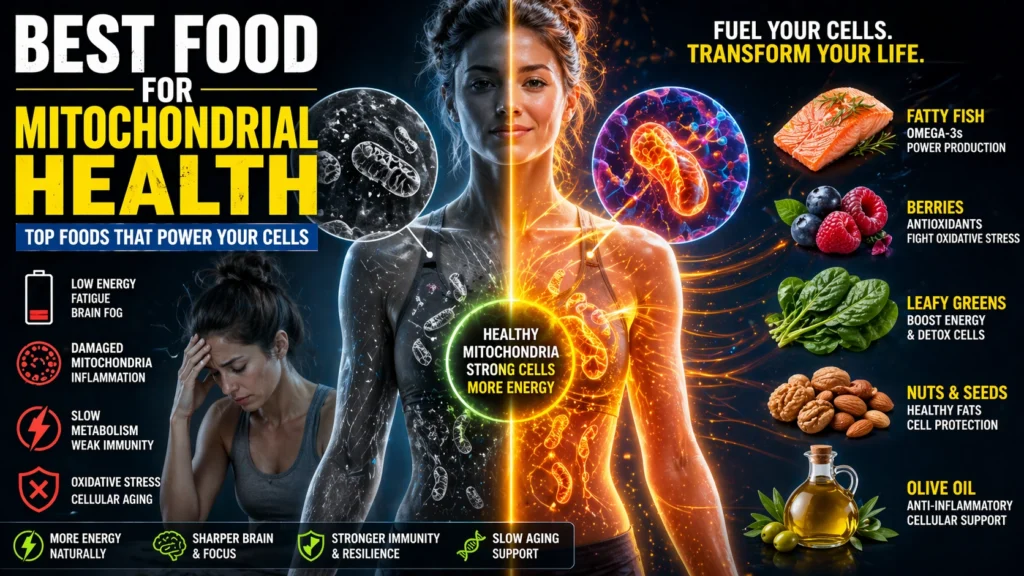
The best food for mitochondrial health is nutrient-dense, anti-inflammatory, and rich in antioxidants. The top choices include:
- Fatty fish (salmon, sardines, mackerel) – omega-3s support mitochondrial membranes
- Berries (blueberries, strawberries) – protect against oxidative stress
- Leafy greens (spinach, kale) – boost energy production (ATP)
- Nuts & seeds (almonds, chia, flax) – stabilize cell structures
- Extra virgin olive oil – improves mitochondrial efficiency
👉 These foods help your cells produce energy more efficiently, not just provide calories.
What Foods Repair Mitochondria?
Foods that repair mitochondria support a process called mitochondrial biogenesis.
Top mitochondria-repairing foods:
- Fatty fish (rich in omega-3s)
- Colorful fruits (high in polyphenols)
- Dark leafy vegetables
- Green tea
- Fermented foods (gut support = cellular repair)
These foods reduce inflammation and protect mitochondrial DNA from damage.
What Vitamin Increases Mitochondria?
The most important vitamins for mitochondrial function are:
- Vitamin B complex (B1, B2, B3, B5) – converts food into energy
- Vitamin D – regulates mitochondrial activity
- Vitamin C – protects against oxidative stress
- Vitamin E – shields mitochondrial membranes
👉 Without these, your cells cannot efficiently produce energy.
What Foods Have the Highest Mitochondria?
Foods highest in mitochondria come from energy-demanding animal tissues.
Top sources:
- Organ meats (liver, heart)
- Red meat (especially grass-fed)
- Dark poultry meat
- Wild-caught fish
These foods are rich in compounds like CoQ10 that directly support mitochondrial performance.
What Foods Damage Mitochondria?
Avoid these foods to protect your cellular energy system:
- Processed sugar – increases oxidative stress
- Trans fats & refined oils – damage cell membranes
- Ultra-processed foods – low nutrients, high inflammation
- Excess alcohol – toxic to mitochondria
- Overeating – overloads energy systems
Best Food for Mitochondrial Health (Simple Daily Plan)
Morning: Eggs + spinach + olive oil + berries
Lunch: Salmon/chicken + leafy greens + nuts
Dinner: Vegetables + healthy fats + fermented foods
Why Mitochondrial Nutrition Matters
Mitochondria determine how your body uses energy. When they function well:
- Energy levels increase
- Skin and metabolism improve
- Inflammation decreases
When they don’t:
- Fatigue rises
- Aging accelerates
- Chronic disease risk increases
Final Takeaway
The best food for mitochondrial health includes fatty fish, berries, leafy greens, nuts, and olive oil. These foods improve energy production, reduce inflammation, and protect your cells. Avoid processed foods and sugar to maintain strong mitochondrial function.
FAQ
What foods repair mitochondria?
Fatty fish, berries, leafy greens, and nuts help repair mitochondria by reducing oxidative stress and inflammation.
What vitamin increases mitochondria?
Vitamin B complex, vitamin D, vitamin C, and vitamin E all support mitochondrial growth and function.
What foods have the highest mitochondria?
Organ meats, red meat, dark poultry, and fish contain the highest mitochondrial density.
What foods damage mitochondria?
Processed sugar, trans fats, ultra-processed foods, alcohol, and overeating can damage mitochondria.