

Please note: This content is for informational purposes only and is not a substitute for professional medical advice. Always consult a healthcare provider for persistent or severe foot conditions.
⚡ TL;DR — Quick Verdict
What is it? A tea tree antifungal spray for feet is a topical product that uses Melaleuca alternifolia (tea tree) oil — often combined with alcohol or other actives — to help manage athlete’s foot (tinea pedis), foot odour, and minor fungal skin issues.
Main potential advantage: Tea tree oil has demonstrated antifungal activity in laboratory studies and some clinical trials, and sprays offer a convenient, no-touch application method for hard-to-reach areas like between the toes.
Most important limitation: Research is mixed. Some studies show tea tree oil can relieve symptoms, while others found it no more effective than a placebo for curing athlete’s foot. It is generally not as effective as conventional antifungals like terbinafine or clotrimazole.
Who might find it suitable? People with mild athlete’s foot or foot odour who prefer a natural, plant-based approach and are willing to use it consistently for several weeks.
What to verify before buying: Check the tea tree oil concentration (at least 5% is a common therapeutic threshold), confirm the product contains no known allergens for you, and understand that tea tree oil is for external use only — it should never be ingested.
Ready to compare ingredients?
Introduction: Why Ingredients Matter
You’re standing in the foot care aisle — or scrolling through pages of online listings — and every bottle promises to fight fungus, stop the itch, and freshen your feet. The labels look similar. The claims sound identical. But what’s actually inside these sprays can make the difference between relief and frustration.
Here’s the problem: “tea tree antifungal spray” is not a single, standardized product. Some formulas contain 5% tea tree oil. Others pack in 150 mg/g or combine tea tree oil with clotrimazole, a prescription-strength antifungal. Some rely on alcohol as a carrier; others use gentler bases. And some — frankly — use just enough tea tree oil to list it on the label without providing a therapeutic dose.
If you have athlete’s foot or persistent foot odour, you deserve to know exactly what you’re buying. This article will help you compare ingredients, understand the evidence, and make a decision that fits your needs and budget. No hype. No miracle claims. Just a clear-eyed look at what tea tree antifungal sprays can — and cannot — do.
What Is Tea Tree Antifungal Spray for Feet?
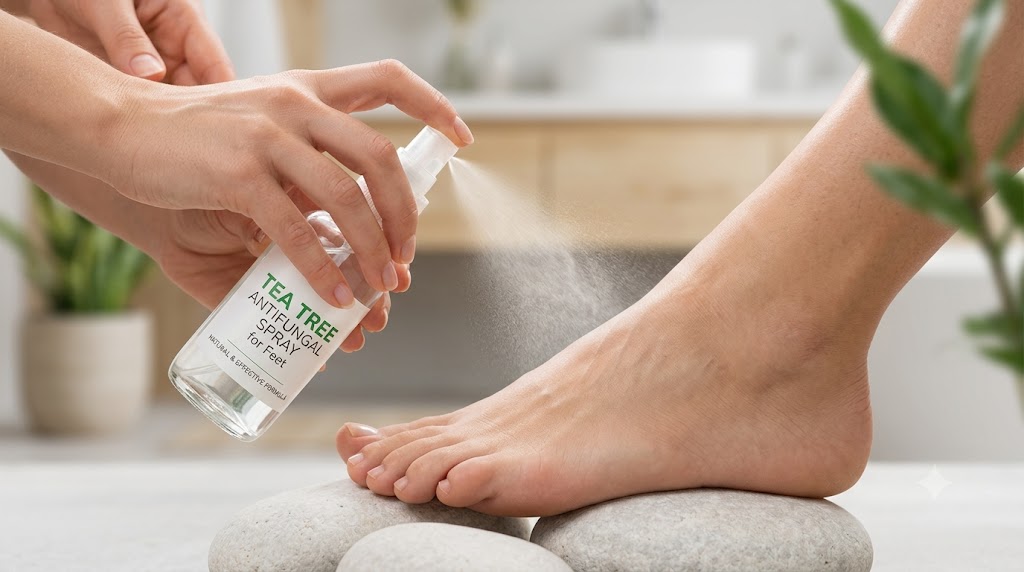
Tea tree antifungal spray for feet is a topical liquid product designed to be sprayed directly onto the skin of the feet — particularly between the toes — and sometimes inside shoes and socks. It typically contains tea tree oil (Melaleuca alternifolia) as the primary active ingredient, dissolved in a carrier such as isopropyl alcohol, ethanol, or a water-based solution.
Tea tree oil comes from the leaves of the Australian tea tree and contains over 100 different compounds, with terpinen-4-ol being the most studied for its antimicrobial properties. These compounds are believed to work by disrupting the cell membranes of bacteria and fungi, interfering with their ability to grow and replicate.
The spray format offers several practical advantages: it’s easy to apply to the entire foot (including between toes), it requires no touching or rubbing, and it can be used on footwear to help control odour-causing microorganisms.
How Does Tea Tree Oil Work Against Foot Fungus?
Athlete’s foot is caused primarily by dermatophyte fungi — organisms that feed on keratin, the protein in your skin, hair, and nails. Tea tree oil’s antifungal activity is thought to work through several mechanisms:
- Cell membrane disruption: Tea tree oil compounds increase the permeability of fungal cell walls, causing essential cellular contents to leak out and the fungus to die.
- Spore killing: Laboratory studies show tea tree oil is active against both growing fungi and their spores, which is important because spores can survive in shoes and socks for months.
- Broad-spectrum action: Tea tree oil has demonstrated activity against multiple dermatophyte species, including Trichophyton and Epidermophyton, the most common causes of athlete’s foot.
However, laboratory activity does not always translate into clinical effectiveness. The concentration of tea tree oil, how long it stays in contact with the skin, and the severity of the infection all affect real-world results.
What the Evidence Says (Honest Assessment)
Let’s be direct: the research on tea tree oil for athlete’s foot is genuinely mixed. And any product review that ignores this is not doing you any favours.
The encouraging evidence
- A 2002 study found that tea tree oil solutions at 25% and 50% worked better than a placebo in relieving athlete’s foot between the toes. The infection cleared in 64% of people who used tea tree oil, compared to 31% of those using the inactive treatment.
- A more recent study found that adding tea tree oil to the antifungal drug ketoconazole in a gel formula could increase the drug’s effectiveness in fighting fungal infections.
- Harvard Health notes that some studies suggest tea tree oil may help reduce symptoms and fight the fungus responsible for athlete’s foot.
The less encouraging evidence
- An older study found that a 10% tea tree oil cream was not nearly as effective as the antifungal drug tolnaftate (Tinactin) and no more effective than a placebo in curing athlete’s foot in a month.
- A separate review concluded that tea tree oil is “likely ineffective” based on one randomized controlled trial showing no difference from placebo after four weeks of treatment.
- The Mayo Clinic states that a tea tree oil cream applied twice a day for one month “may relieve some symptoms of athlete’s foot” but “doesn’t seem to work as well as antifungal medicines.”
What this means for you: Tea tree oil may help manage symptoms like itching and burning, especially in mild cases. But if you have a moderate to severe infection, or if your symptoms don’t improve within a few weeks, a conventional antifungal is likely to be more reliable. It’s also worth noting that white spots on nails are almost never a sign of calcium deficiency — they’re usually caused by minor trauma — so don’t confuse nail discoloration with a fungal issue that tea tree oil might address.
Key Ingredients to Compare Before Buying
This is the heart of this guide. Before you click “buy,” scan the ingredient list for these components:
1. Tea Tree Oil Concentration
Look for Melaleuca alternifolia oil — but more importantly, look for the amount. Common concentrations in therapeutic products range from 5% to 50%. Products listing 100 mg/g or 150 mg/g are providing 10% or 15% tea tree oil respectively. Lower concentrations (under 5%) may not provide meaningful antifungal activity.
2. Active Antifungal Ingredients (If Any)
Some tea tree foot sprays combine tea tree oil with conventional antifungals like clotrimazole 1%, tolnaftate, or miconazole. These combination products may offer stronger, more reliable antifungal action than tea tree oil alone. If your primary goal is curing an active infection, a combination product may be a smarter choice.
3. Carrier and Solvent
Alcohol-based sprays (isopropyl or ethanol) provide an antiseptic and drying effect, which can be helpful for sweaty feet. However, alcohol can sting on broken or irritated skin. Water-based or hydrosol-based formulas may be gentler but may also have shorter shelf life.
4. Additional Skin-Conditioning Ingredients
Some formulas include aloe vera, glycerin, witch hazel, or essential oils like peppermint or eucalyptus for soothing and odour control. These don’t fight fungus directly but can improve the user experience.
5. Preservatives and Potential Irritants
Tea tree oil itself can cause allergic contact dermatitis in some people. Check for added fragrances, parabens, or other preservatives that may irritate sensitive skin.
Top Tea Tree Antifungal Sprays for Feet: Comparison Table
| Product | Tea Tree Oil Content | Additional Actives | Format | Key Considerations |
|---|---|---|---|---|
| Thursday Plantation Tea Tree Spray | 100 mg/g (10%) | None (alcohol carrier) | Aerosol spray | Multipurpose: feet, shoes, surfaces; contains ethanol |
| Bosisto’s Tea Tree Spray | 100 mg/g (10%) | None | Aerosol spray | Similar formula; marketed for tinea and foot odour |
| Thursday Plantation Antiseptic Spray | 150 mg/g (15%) | None | Pump spray | Higher concentration; antiseptic + antifungal claims |
| Elemis Tea Tree S.O.S. Spray | Tea tree oil (concentration not specified) | None listed | Fine mist spray | Premium positioning; strong customer reviews for foot fungus |
| Clotrimazole + Tea Tree combination sprays | ≥5% tea tree oil | Clotrimazole 1% | Spray | Combines natural + pharmaceutical antifungal action |
| Generic / Value tea tree foot sprays | Varies (check label) | Varies | Spray | Budget options exist but verify tea tree oil concentration |
Ready to explore options that match your needs?
Tea Tree Oil vs. Conventional Antifungals
If you’re trying to decide between a tea tree spray and a conventional antifungal, here’s an honest comparison:
| Factor | Tea Tree Oil Spray | Conventional Antifungal (e.g., Terbinafine, Clotrimazole) |
|---|---|---|
| Evidence for cure | Mixed; some studies show symptom relief, others show no difference from placebo | Strong; 70–75% of patients successfully treated vs. 20–30% with placebo |
| Speed of action | May take several weeks; results vary | Typically faster; visible improvement within 1–2 weeks |
| Side effects | Generally mild; skin irritation possible | Generally well-tolerated; occasional burning or itching |
| Cost | Varies; often $10–$30 | Varies; often $8–$20 for generic options |
| Convenience | Spray format is easy to apply | Creams, gels, and sprays available |
| Natural preference | Plant-based | Synthetic |
The bottom line: If you have a mild case and prefer natural options, tea tree spray may be worth trying. If your infection is persistent, spreading, or causing significant discomfort, a conventional antifungal — or a combination product — is likely to be more effective and faster-acting.
Pros and Cons of Tea Tree Antifungal Sprays
✅ Pros
- Convenient application: Spray reaches between toes and covers large areas quickly
- Natural ingredient option: Appeals to those who prefer plant-based products
- Multi-purpose: Many formulas can also be used on shoes, socks, and gym bags to control odour
- Antiseptic bonus: Alcohol-based formulas provide additional drying and antiseptic action
- Generally accessible: Available over the counter without a prescription
❌ Cons
- Mixed evidence: Not as reliably effective as conventional antifungals for curing active infections
- Concentration variability: Products range widely in tea tree oil content, making comparisons difficult
- Potential for irritation: Tea tree oil can cause allergic contact dermatitis in sensitive individuals
- Alcohol sting: Alcohol-based sprays may burn on cracked or broken skin
- Not for internal use: Tea tree oil is toxic if swallowed and should never be ingested
Price and Total Cost
Tea tree antifungal sprays vary significantly in price depending on brand, concentration, and format:
- Budget options: $3–$10 (generic or dollar-store tea tree foot sprays; verify concentration)
- Mid-range options: $10–$20 (established natural brands like Thursday Plantation, Bosisto’s)
- Premium options: $25–$70+ (luxury brands like Elemis, specialty formulations)
Hidden costs to consider
- Repeat purchases: If the infection is stubborn, you may need multiple bottles over several weeks
- Shipping: If ordering online, factor in delivery costs
- Combination products: If you later add a conventional antifungal, that’s an additional expense
- Shoe treatment: Some people buy separate sprays for footwear, doubling the cost
Ready to check current pricing?
Who Should Consider Tea Tree Antifungal Spray?
Tea tree antifungal spray for feet may be a reasonable option if you:
- Have mild athlete’s foot with occasional itching or peeling between the toes
- Are dealing primarily with foot odour rather than an active infection
- Prefer a natural, plant-based approach and are willing to use it consistently
- Want a convenient spray format that’s easy to apply to hard-to-reach areas
- Are looking for a product that can also treat shoes and socks to reduce reinfection risk
- Have used conventional antifungals before and experienced side effects or irritation
Who Might Prefer an Alternative?
Consider a conventional antifungal — or a combination product — if you:
- Have moderate to severe athlete’s foot with significant pain, cracking, or blistering
- Have toenail fungus (onychomycosis), which tea tree oil is unlikely to cure on its own
- Have diabetes, circulatory problems, or a weakened immune system — foot infections require professional medical attention in these cases
- Have tried tea tree spray for 2–3 weeks with no improvement
- Have a known allergy or sensitivity to tea tree oil or any other ingredient in the formula
- Need fast, reliable results — for example, before a trip or athletic event
If you also struggle with scalp buildup or flaking, a tea tree scalp scrub works on the same antifungal principles — just for a different part of the body.
Frequently Asked Questions
How long does tea tree antifungal spray take to work?
Can I use tea tree spray on my toenails for fungus?
Is tea tree antifungal spray safe for children?
Can I use tea tree spray while pregnant or breastfeeding?
What’s the difference between tea tree spray and tea tree cream?
Will tea tree spray stain my shoes or socks?
Final Verdict
Tea tree antifungal spray for feet is not a miracle cure — but it’s not a gimmick either. The evidence suggests it can help manage mild symptoms of athlete’s foot and foot odour, particularly when used consistently. The key is choosing a product with a therapeutically meaningful concentration of tea tree oil (5% or higher) and understanding its limitations.
If you have mild symptoms and prefer a natural approach: A well-formulated tea tree spray is worth trying. Look for products with at least 10% tea tree oil content, and use it consistently for several weeks.
If you have moderate to severe infection, diabetes, or nail involvement: A conventional antifungal or a combination product is likely a better first choice. Don’t let a preference for “natural” delay effective treatment.
Before you buy, check:
- Tea tree oil concentration (mg/g or %)
- Whether it contains additional actives like clotrimazole
- Carrier type (alcohol vs. water-based)
- Any ingredients you may be allergic to
- The return or refund policy
References & Sources
- Harvard Health Publishing. “Could tea tree oil help treat acne or athlete’s foot?”
- Mayo Clinic. “Tea tree oil.”
- Verywell Health. “10 Home Remedies for Athlete’s Foot.”
- Canadian Family Physician. “Topical management of tinea pedis.”
- Direct Chemist Outlet. Product information: Thursday Plantation Tea Tree Spray and Antiseptic Spray.
- Canadian Patent Application CA 2626292 A1. “Spray solution to treat Athlete’s foot.”
- Elemis Australia. “Tea Tree S.O.S. Spray” customer reviews.
- Swimmer Living. “6 Best Antiseptic Foot Sprays For Locker Room Hygiene.”