
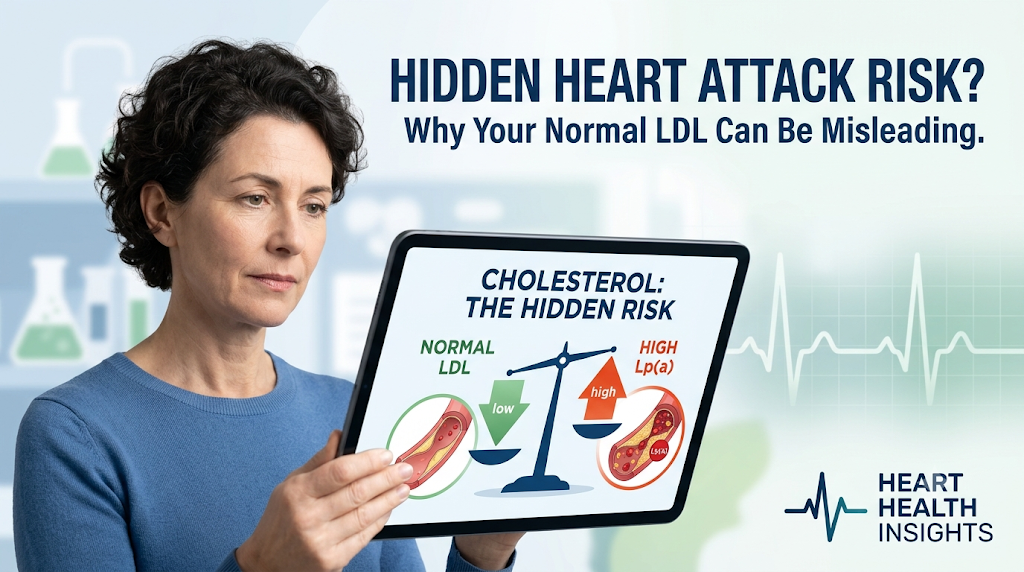

You can have perfect LDL and still be at high risk. Here’s the lipoprotein your standard lipid panel never measures.
TL;DR
- Standard cholesterol tests measure LDL, HDL, and total cholesterol—but often miss Lipoprotein(a), or Lp(a), a genetically determined particle that significantly raises heart attack and stroke risk.
- You can have perfectly normal LDL and still face high cardiovascular risk if your Lp(a) is elevated.
- Lp(a) is largely genetic, affects roughly 1 in 5 people worldwide, and is not routinely tested.
- A simple blood test can measure Lp(a); everyone should consider getting tested at least once in their lifetime.
- Lifestyle changes have limited impact on Lp(a), but emerging therapies and cardiovascular risk management strategies can help.
- Knowing your Lp(a) number could save your life—especially if you have a family history of early heart disease.
Introduction
Imagine this scenario: You visit your doctor for your annual checkup. The blood work comes back, and your LDL cholesterol—the so-called “bad cholesterol”—is perfectly normal. Your HDL is good. Your triglycerides are fine. Your doctor gives you a clean bill of health and tells you to keep doing what you’re doing.
Then, six months later, you suffer a heart attack.
This scenario is more common than most people realize. Every year, thousands of individuals with seemingly “normal” cholesterol profiles experience cardiovascular events that their standard lipid panels failed to predict. The culprit? A hidden risk factor that rarely makes it onto routine blood work: Lipoprotein(a), commonly known as Lp(a).
At IntelliNewz, we believe in empowering readers with the knowledge they need to advocate for their own health. Understanding Lp(a) is one of the most important—and most overlooked—aspects of cardiovascular risk assessment. This comprehensive guide will explain why your standard cholesterol test may be giving you a false sense of security, how Lp(a) differs from LDL, when elevated Lp(a) is most likely to occur, and what you can do about it.
Understanding Cholesterol: The Basics
Before diving into Lp(a), it’s essential to understand what cholesterol is and how standard lipid panels work.
What Is Cholesterol?
Cholesterol is a waxy, fat-like substance found in every cell of your body. It’s not inherently “bad”—in fact, your body needs cholesterol to build cell membranes, produce hormones like testosterone and estrogen, synthesize vitamin D, and create bile acids that help digest food.
Because cholesterol is a fat (lipid), it can’t travel through your bloodstream on its own. Instead, it’s packaged into lipoproteins—particles that carry cholesterol and triglycerides through the blood.
The Standard Lipid Panel
A standard lipid panel typically measures four things:
- Total Cholesterol: The sum of all cholesterol in your blood.
- LDL Cholesterol: Low-density lipoprotein, often called “bad cholesterol” because high levels can lead to plaque buildup in arteries.
- HDL Cholesterol: High-density lipoprotein, often called “good cholesterol” because it helps remove excess cholesterol from the bloodstream.
- Triglycerides: Another type of fat in the blood that can contribute to heart disease when elevated.
What Your Standard Test Doesn’t Measure
Here’s the critical point: a standard lipid panel does not measure Lp(a). It also doesn’t measure ApoB (apolipoprotein B), the protein found on the surface of LDL and other atherogenic particles, which many experts consider a superior predictor of cardiovascular risk compared to LDL alone.
For a deeper understanding of how advanced lipid testing can reveal hidden risks, explore our detailed analysis at IntelliNewz.
What Is Lipoprotein(a)?
Lipoprotein(a)—pronounced “lipoprotein little a”—is a particle that resembles LDL cholesterol but has an additional protein attached to it called apolipoprotein(a), or Apo(a).
The Structure of Lp(a)
Think of Lp(a) as an LDL particle wearing an extra “backpack.” Specifically:
- It contains an LDL-like core with cholesterol and ApoB-100 (the same protein found on LDL).
- Attached to this core is apolipoprotein(a), a unique protein encoded by the LPA gene.
- This Apo(a) protein has a structure that resembles plasminogen, a protein involved in breaking down blood clots.
Why This Structure Matters
Because Apo(a) looks similar to plasminogen, it can interfere with the body’s natural clot-dissolving mechanisms. This means Lp(a) doesn’t just contribute to plaque buildup like LDL—it also promotes blood clotting and inflammation, making it a “double threat” for cardiovascular disease.
The Genetics of Lp(a)
Unlike LDL cholesterol, which is heavily influenced by diet and lifestyle, Lp(a) levels are approximately 90% genetically determined. Your Lp(a) level is largely set at birth and remains relatively stable throughout your life, though it can increase slightly with age or certain medical conditions.
The LPA gene on chromosome 6 determines your Lp(a) level. Variations in this gene—particularly the number of “kringle IV type 2” repeats—affect how much Lp(a) your body produces. This is why Lp(a) tends to run in families.
How Common Is Elevated Lp(a)?
Approximately 1 in 5 people worldwide (about 20–25% of the population) have elevated Lp(a) levels. In some populations, such as Black individuals and South Asians, the prevalence may be even higher.
Why Standard Cholesterol Tests Miss Lp(a)
The fact that Lp(a) isn’t included in routine cholesterol testing is one of the biggest gaps in preventive cardiology. Here’s why this happens and why it matters.
Historical Reasons
When standard lipid panels were developed decades ago, Lp(a) was not well understood. The technology to measure it was expensive and not widely available. As a result, routine testing focused on the “big four”—total cholesterol, LDL, HDL, and triglycerides—and this convention stuck.
Lack of Awareness
Many healthcare providers are not fully aware of the importance of Lp(a) testing. Medical education often gives Lp(a) limited attention, and clinical guidelines have historically been vague about when and whom to test.
Cost and Accessibility
Lp(a) testing is more expensive than standard lipid panels, and not all laboratories offer it. However, the cost has decreased significantly in recent years, and many major labs now offer Lp(a) testing.
The Result: Missed Risk
The consequence of this testing gap is that millions of people are walking around with normal LDL but dangerously high Lp(a), unaware of their increased risk for heart attack, stroke, and aortic stenosis.
The “Normal LDL” Trap
Perhaps the most dangerous aspect of missing Lp(a) is that it creates a false sense of security. A person with normal LDL may be told they have “nothing to worry about,” when in reality, their elevated Lp(a) could be silently accelerating atherosclerosis.
Comparison: Normal LDL vs. Normal Lp(a) vs. Raised Apo(a)
To understand the difference between these markers, let’s break down each one and compare them side by side.
Normal LDL Cholesterol
What it is: LDL (low-density lipoprotein) is a particle that carries cholesterol from the liver to cells throughout the body. When LDL levels are too high, excess cholesterol can accumulate in artery walls, forming plaques.
Normal range: Generally, LDL below 100 mg/dL is considered optimal, though some experts recommend even lower targets (below 70 mg/dL) for high-risk individuals.
Key characteristics:
- Measured in almost every standard lipid panel
- Influenced by diet, exercise, weight, and genetics
- Can be lowered significantly through lifestyle changes and medications (especially statins)
- A well-established risk factor for cardiovascular disease
What “normal LDL” means: A normal LDL level indicates that one major risk factor for heart disease is well-controlled. However, it does not mean you have no cardiovascular risk—especially if other risk factors like Lp(a) are present.
Normal Lp(a)
What it is: Lp(a) is an LDL-like particle with an additional apolipoprotein(a) attached. It contributes to both atherosclerosis (plaque buildup) and thrombosis (clot formation).
Normal range: Generally, Lp(a) below 30 mg/dL (or below 75 nmol/L) is considered normal or optimal. Some experts suggest even lower thresholds (below 20 mg/dL or 50 nmol/L) for optimal cardiovascular health.
Key characteristics:
- Not measured in standard lipid panels
- Approximately 90% genetically determined
- Remains relatively stable throughout life
- Not significantly affected by diet or exercise
- Can be measured with a simple blood test
What “normal Lp(a)” means: A normal Lp(a) level indicates that this particular genetic risk factor is not contributing to your cardiovascular risk. It’s reassuring—but it doesn’t guarantee freedom from heart disease if other risk factors are present.
Raised Apoprotein Lp(a)
What it is: When we talk about “raised apoprotein Lp(a),” we’re referring to elevated levels of the Lp(a) particle, driven by increased production of apolipoprotein(a). This is the protein component that makes Lp(a) uniquely dangerous.
Elevated range: Lp(a) above 30 mg/dL (or above 75 nmol/L) is generally considered elevated. Levels above 50 mg/dL (or 125 nmol/L) are considered high risk, and levels above 100 mg/dL are associated with significantly increased risk.
Key characteristics:
- Genetically determined—you inherit your Lp(a) level from your parents
- Associated with 2–3× increased risk of heart attack and stroke
- Linked to aortic stenosis (narrowing of the aortic valve)
- Promotes both atherosclerosis and blood clotting
- Resistant to lifestyle modifications
- Emerging therapies are being developed to lower Lp(a)
What “raised Apo(a)” means: Elevated apolipoprotein(a) indicates a genetically driven increase in cardiovascular risk that is independent of LDL cholesterol. This means you can have “normal” LDL and still be at high risk for heart disease.
Side-by-Side Comparison
| Feature | Normal LDL | Normal Lp(a) | Raised Apo(a) / Lp(a) |
|---|---|---|---|
| What it measures | Cholesterol carried by LDL particles | Lp(a) particle concentration | Elevated Lp(a) due to increased Apo(a) |
| Normal range | <100 mg/dL (optimal) | <30 mg/dL or <75 nmol/L | >30 mg/dL or >75 nmol/L |
| Genetic influence | Moderate (polygenic) | High (~90%) | Very high (primarily LPA gene) |
| Lifestyle impact | Significant | Minimal | Minimal |
| Diet impact | Significant | Minimal | Minimal |
| Medication response | Good (statins, etc.) | Limited | Limited (emerging therapies) |
| Cardiovascular risk | Well-established | Low if normal | 2–3× increased risk |
| Routine testing | Yes | No | No |
| Clotting risk | Low | Low | Elevated |
| Aortic stenosis risk | Low | Low | Elevated |
The Critical Difference
The key takeaway from this comparison is that LDL and Lp(a) are independent risk factors. You can have:
- Normal LDL and normal Lp(a): Low overall risk (though other factors matter)
- High LDL and normal Lp(a): Increased risk from LDL
- Normal LDL and high Lp(a): Increased risk from Lp(a)—often missed!
- High LDL and high Lp(a): Significantly increased risk from both
For more detailed comparisons of cardiovascular risk markers, visit IntelliNewz.
When Do We See a Rise in Apoprotein Lp(a)?
Understanding when and why Lp(a) rises is crucial for identifying who should be tested and how to interpret results.
Primary Cause: Genetics
The most common reason for elevated Lp(a) is genetic inheritance. Specific variations in the LPA gene determine how much apolipoprotein(a) your body produces. If you inherit certain gene variants from one or both parents, your Lp(a) level will be elevated regardless of your lifestyle.
Key genetic factors:
- LPA gene polymorphisms: Variations in the number of kringle IV type 2 repeats affect Lp(a) levels
- Single nucleotide polymorphisms (SNPs): Specific genetic variants associated with higher Lp(a)
- Family history: If a parent or sibling has high Lp(a), you’re more likely to have it too
Secondary Causes and Conditions
While genetics are the primary driver, certain conditions can cause Lp(a) to rise:
- Hypothyroidism: An underactive thyroid can increase Lp(a) levels. Treating hypothyroidism may help lower Lp(a).
- Nephrotic syndrome: This kidney disorder can cause elevated Lp(a) due to protein loss and altered lipid metabolism.
- Diabetes mellitus: Poorly controlled diabetes, especially with kidney involvement, can affect Lp(a) levels.
- Chronic kidney disease: Impaired kidney function is associated with elevated Lp(a).
- Liver disease: Certain liver conditions can affect Lp(a) metabolism.
- Pregnancy: Lp(a) levels can increase during pregnancy due to hormonal changes.
- Post-menopause: Estrogen decline after menopause can lead to increased Lp(a) levels.
- Certain medications: Some medications, including certain hormones and immunosuppressants, may affect Lp(a) levels.
Populations at Higher Risk
Certain populations have a higher prevalence of elevated Lp(a):
- Black individuals: Higher average Lp(a) levels compared to other populations
- South Asians: Elevated Lp(a) is common and contributes to higher cardiovascular risk
- Individuals with family history of early heart disease: A strong indicator of genetic Lp(a) elevation
- People with familial hypercholesterolemia: Often have coexisting elevated Lp(a)
When Lp(a) Testing Is Recommended
Major guidelines suggest Lp(a) testing for:
- Anyone with a family history of premature cardiovascular disease (before age 55 in men, 65 in women)
- Individuals with known or suspected familial hypercholesterolemia
- People with recurrent cardiovascular events despite statin therapy
- Individuals with calcific aortic stenosis
- Anyone with an unexplained cardiovascular event at a young age
- People with a personal or family history of elevated Lp(a)
- Adults with intermediate or high 10-year cardiovascular risk
Some experts advocate for universal Lp(a) testing at least once in a lifetime, given its genetic nature and stability over time.
Does Lp(a) Change Over Time?
Unlike LDL cholesterol, which can fluctuate significantly based on diet and lifestyle, Lp(a) remains relatively stable throughout life. This means:
- A single Lp(a) measurement is generally sufficient
- Retesting is usually unnecessary unless there’s a significant change in health status
- Lp(a) levels don’t change much with diet, exercise, or weight loss
This stability is actually helpful for risk assessment—your Lp(a) level at age 30 is likely to be similar at age 60.
Health Risks Associated with High Lp(a)
Elevated Lp(a) is associated with several serious health conditions:
Cardiovascular Disease
High Lp(a) is an independent risk factor for:
- Coronary artery disease: 2–3× increased risk of heart attack
- Stroke: Increased risk of ischemic stroke
- Peripheral artery disease: Narrowing of arteries in the legs
- Carotid artery disease: Narrowing of arteries in the neck
Aortic Stenosis
Elevated Lp(a) is strongly associated with calcific aortic stenosis—a condition where the aortic valve becomes narrowed and calcified, impairing blood flow from the heart. This can lead to symptoms like chest pain, shortness of breath, and fainting, and may eventually require valve replacement surgery.
Heart Failure
Some studies suggest that high Lp(a) may contribute to heart failure, particularly heart failure with preserved ejection fraction (HFpEF).
How Lp(a) Causes Harm
Lp(a) promotes cardiovascular disease through multiple mechanisms:
- Atherosclerosis: Like LDL, Lp(a) can penetrate artery walls and contribute to plaque formation.
- Inflammation: Lp(a) carries oxidized phospholipids that promote inflammation in artery walls.
- Thrombosis: The Apo(a) component interferes with clot-dissolving mechanisms, increasing the risk of blood clots.
- Calcification: Lp(a) promotes calcification of the aortic valve and coronary arteries.
The “Hidden” Risk
The insidious nature of high Lp(a) is that it often causes no symptoms until a cardiovascular event occurs. This is why testing is so important—it allows for early identification and risk management before problems develop.
For more information on cardiovascular risk factors and prevention, visit IntelliNewz.
How to Test for Lp(a)
The Blood Test
Lp(a) testing requires a simple blood draw. The test can be done at the same time as a standard lipid panel, though it’s usually ordered separately.
Units of Measurement
Lp(a) can be reported in two ways:
- Mass units (mg/dL): Measures the mass of Lp(a) particles
- Molar units (nmol/L): Measures the number of Lp(a) particles
Molar units (nmol/L) are generally preferred because they are more standardized across laboratories and less affected by the size of Apo(a) isoforms.
Optimal vs. Elevated Levels
| Category | mg/dL | nmol/L |
|---|---|---|
| Optimal | <30 | <75 |
| Borderline | 30–50 | 75–125 |
| High | 50–100 | 125–250 |
| Very High | >100 | >250 |
Preparing for the Test
No special preparation is needed for Lp(a) testing. You don’t need to fast, though your doctor may ask you to fast if they’re also testing triglycerides and other lipids.
Where to Get Tested
Lp(a) testing is available at:
- Major commercial laboratories
- Hospital laboratories
- Some primary care offices
- Direct-to-consumer testing services
If your doctor isn’t familiar with Lp(a) testing, you can request it specifically or seek a second opinion from a preventive cardiologist.
How to Maintain Healthy Lp(a) Levels
The Challenge
Here’s the difficult truth: Lp(a) is challenging to modify. Because it’s primarily genetically determined, lifestyle interventions that work well for LDL cholesterol (diet, exercise, weight loss) have minimal impact on Lp(a).
What Doesn’t Work (Much)
- Diet changes: While a heart-healthy diet is important for overall cardiovascular health, it has minimal effect on Lp(a).
- Exercise: Regular physical activity is beneficial for cardiovascular health but doesn’t significantly lower Lp(a).
- Weight loss: Losing weight can improve many health parameters but doesn’t meaningfully reduce Lp(a).
What May Help
While Lp(a) is resistant to change, certain strategies may have modest effects:
- Address secondary causes: If you have hypothyroidism, treating it may lower Lp(a). Similarly, managing kidney disease and other conditions may help.
- Hormone therapy: Estrogen can lower Lp(a) levels, which is why levels rise after menopause. However, hormone therapy has risks and benefits that must be carefully weighed.
- Niacin: High-dose niacin (vitamin B3) can lower Lp(a) by about 20–30%, but its use is limited by side effects and lack of proven cardiovascular benefit in clinical trials.
- Emerging medications: New therapies specifically targeting Lp(a) are in development and showing promising results in clinical trials.
The Real Goal: Managing Overall Cardiovascular Risk
Since Lp(a) itself is difficult to lower, the focus should be on managing overall cardiovascular risk:
- Control LDL cholesterol: If you have high Lp(a), keeping LDL low is even more important.
- Manage blood pressure: High blood pressure compounds cardiovascular risk.
- Maintain healthy blood sugar: Diabetes further increases risk.
- Stay physically active: Regular exercise benefits cardiovascular health in many ways.
- Eat a heart-healthy diet: Focus on fruits, vegetables, whole grains, lean proteins, and healthy fats.
- Don’t smoke: Smoking dramatically increases cardiovascular risk.
- Manage stress: Chronic stress is a risk factor for heart disease.
For detailed lifestyle recommendations for cardiovascular health, explore IntelliNewz.
Treatment Options for High Lp(a)
Current Standard of Care
Currently, there are no FDA-approved medications specifically designed to lower Lp(a). However, several approaches are used:
- Aggressive LDL lowering: Since Lp(a) and LDL both contribute to cardiovascular risk, lowering LDL aggressively with statins, ezetimibe, or PCSK9 inhibitors is recommended for high-risk patients with elevated Lp(a).
- PCSK9 inhibitors: These medications lower LDL significantly and may have modest Lp(a)-lowering effects (20–30%).
- Lipoprotein apheresis: This is a procedure that physically removes Lp(a) from the blood. It’s used for very high-risk patients with extremely elevated Lp(a) and recurrent cardiovascular events.
Emerging Therapies
Several new therapies specifically targeting Lp(a) are in development:
- Pelacarsen (TQJ230): An antisense oligonucleotide that reduces Lp(a) production by 80–90%. It’s currently in Phase 3 clinical trials.
- Olpasiran: A small interfering RNA (siRNA) that lowers Lp(a) by up to 90%+ and is in Phase 3 trials.
- Lepodisiran: Another siRNA therapy showing significant Lp(a) reduction in trials.
- Muvalaplin: An oral Lp(a) inhibitor that has shown promising results in early trials.
These therapies represent a major breakthrough in cardiovascular medicine. If approved, they could provide the first targeted treatment for elevated Lp(a).
Who Should Consider Treatment?
Treatment for elevated Lp(a) is generally considered for:
- Individuals with Lp(a) >50 mg/dL and established cardiovascular disease
- Those with Lp(a) >50 mg/dL and multiple other risk factors
- People with Lp(a) >100 mg/dL regardless of other risk factors
- Individuals with elevated Lp(a) and a strong family history of early heart disease
Lifestyle Strategies That May Help
While lifestyle changes have limited direct impact on Lp(a), they’re still crucial for overall cardiovascular health. Here are evidence-based strategies:
Diet
- Mediterranean-style diet: Rich in fruits, vegetables, whole grains, fish, and olive oil
- Limit saturated and trans fats: These raise LDL cholesterol
- Increase fiber intake: Soluble fiber helps lower LDL
- Consider plant sterols: These can help lower LDL
- Limit processed foods: These are often high in unhealthy fats, sodium, and added sugars
Exercise
- Aim for 150 minutes of moderate-intensity aerobic exercise per week
- Include strength training at least twice per week
- Stay active throughout the day: Even small amounts of movement add up
Stress Management
- Practice relaxation techniques: Meditation, deep breathing, yoga
- Prioritize sleep: Aim for 7–9 hours per night
- Maintain social connections: Strong relationships support heart health
Other Factors
- Don’t smoke: Smoking is one of the worst things you can do for your heart
- Limit alcohol: Moderate consumption at most
- Maintain a healthy weight: Even modest weight loss can improve cardiovascular health
- Manage underlying conditions: Diabetes, high blood pressure, sleep apnea
For comprehensive wellness strategies, visit IntelliNewz.
Frequently Asked Questions
Q: Should everyone get tested for Lp(a)?
A: While not yet universal, many experts recommend that everyone get tested at least once in their lifetime. This is especially important if you have a family history of early heart disease.
Q: Can I lower my Lp(a) naturally?
A: Lp(a) is largely genetically determined and resistant to lifestyle changes. However, addressing secondary causes (like hypothyroidism) and maintaining overall cardiovascular health can help manage risk.
Q: Is Lp(a) more dangerous than LDL?
A: Both are important, but Lp(a) has the additional property of promoting blood clotting. High Lp(a) is considered a significant independent risk factor for cardiovascular disease.
Q: How often should I get my Lp(a) tested?
A: Because Lp(a) levels are relatively stable, a single test is usually sufficient. Retesting may be considered if there’s a significant change in health status.
Q: Will insurance cover Lp(a) testing?
A: Coverage varies. Many insurance plans cover Lp(a) testing when ordered for appropriate indications (like family history of early heart disease). Check with your insurance provider.
Q: What should I do if my Lp(a) is high?
A: If your Lp(a) is elevated, talk to your doctor about:
- Aggressively managing other cardiovascular risk factors
- Considering advanced lipid testing
- Discussing whether you’re a candidate for emerging therapies
- Evaluating your family history and considering cascade screening for relatives
Q: Can children have high Lp(a)?
A: Yes, Lp(a) is genetically determined and can be measured in children. Testing is particularly important if there’s a family history of early heart disease.
Conclusion
The gap between what standard cholesterol tests measure and what actually predicts heart disease risk is one of the most significant issues in preventive cardiology today. Lp(a)—a genetically determined particle that can dramatically increase cardiovascular risk—is routinely missed in standard lipid panels, leaving millions of people unaware of their danger.
Key takeaways:
- Normal LDL doesn’t mean low risk. Lp(a) is an independent risk factor that can be elevated even when all other cholesterol numbers are normal.
- Lp(a) is largely genetic. You inherit your level from your parents, and it remains stable throughout life.
- Testing is simple. A single blood test can reveal your Lp(a) level and help you understand your true cardiovascular risk.
- Lifestyle changes have limited impact on Lp(a). The focus should be on managing overall cardiovascular risk and considering emerging therapies.
- Advocacy matters. If you have a family history of early heart disease, request Lp(a) testing from your healthcare provider.
At IntelliNewz, we’re committed to bringing you the latest insights in cardiovascular health, medical research, and wellness. Understanding hidden risk factors like Lp(a) empowers you to take control of your health and make informed decisions with your healthcare provider.
Don’t let a “normal” cholesterol test give you a false sense of security. Ask about Lp(a) testing—it could save your life.
Disclosure & Disclaimer
Disclosure: This article is intended for educational and informational purposes only. The content is based on current scientific research and medical guidelines as of the publication date. While we strive for accuracy, medical knowledge evolves, and readers should consult healthcare professionals for the most current recommendations. Some links in this article may direct to external sites, including IntelliNewz, where related content is published. We do not receive compensation for medical advice or endorsements.
Disclaimer: This content is not a substitute for professional medical advice, diagnosis, or treatment. Always seek the advice of your physician or other qualified healthcare provider with any questions you may have regarding a medical condition. Never disregard professional medical advice or delay in seeking it because of something you have read in this article. If you think you may have a medical emergency, call your doctor or emergency services immediately. The information provided here does not create a doctor-patient relationship.
Citations and Sources:
- Tsimikas S. “A Test in Context: Lipoprotein(a): Diagnosis, Prognosis, Controversies, and Emerging Therapies.” Journal of the American College of Cardiology. 2017;69(6):692–711.
- Nordestgaard BG, et al. “Lipoprotein(a) as a cardiovascular risk factor: current status.” European Heart Journal. 2010;31(23):2844–2853.
- Kronenberg F, et al. “Lipoprotein(a): A Genetically Determined, Causal, and Prevalent Risk Factor for Atherosclerotic Cardiovascular Disease.” Arteriosclerosis, Thrombosis, and Vascular Biology. 2022;42(2):e48–e60.
- Wilson DP, et al. “Use of Lipoprotein(a) in clinical practice: A biomarker whose time has come.” Journal of Clinical Lipidology. 2019;13(3):374–392.
- Arnett DK, et al. “2019 ACC/AHA Guideline on the Primary Prevention of Cardiovascular Disease.” Circulation. 2019;140(11):e596–e646.
- Grundy SM, et al. “2018 AHA/ACC/AACVPR/AAPA/ABC/ACPM/ADA/AGS/APhA/ASPC/NLA/PCNA Guideline on the Management of Blood Cholesterol.” Circulation. 2019;139(25):e1082–e1143.
- Mach F, et al. “2019 ESC/EAS Guidelines for the management of dyslipidaemias: lipid modification to reduce cardiovascular risk.” European Heart Journal. 2020;41(1):111–188.
- Nissen SE, et al. “Lepodisiran, an Extended-Duration Short Interfering RNA Targeting Lipoprotein(a).” JAMA. 2023;330(21):2075–2083.
- O’Donoghue ML, et al. “Small Interfering RNA to Reduce Lipoprotein(a) in Cardiovascular Disease.” New England Journal of Medicine. 2022;387(20):1855–1864.
- Yeang C, et al. “Lipoprotein(a)-Associated Molecules Are Prominent Components in Plasma and Valve Leaflets in Calcific Aortic Valve Stenosis.” JACC: Basic to Translational Science. 2017;2(3):229–240.
PS
A Personal Note from IntelliNewz:
If you’ve read this far, you’re already ahead of most people when it comes to understanding heart health. But here’s the thing: knowledge without action is just information.
We want to leave you with three simple steps:
- Check your family history. Talk to your parents, grandparents, aunts, uncles, and siblings. Ask about heart attacks, strokes, and heart surgeries—especially if they happened at young ages. This information is gold for your doctor.
- Ask for an Lp(a) test. Next time you see your healthcare provider, bring up Lp(a). If they’re not familiar with it, share this article. Advocate for yourself—you deserve to know your full risk picture.
- Share this knowledge. Someone you love may have normal LDL and high Lp(a) right now, unaware of their risk. Share this article with them. It might be the nudge that leads to a life-saving conversation.
Remember: heart disease is the leading cause of death worldwide, but it’s also one of the most preventable. Knowing your numbers—all of them—is the first step toward a healthier, longer life.
For more in-depth health content, visit IntelliNewz and explore our growing library of evidence-based articles designed to help you live well.
Stay informed. Stay proactive. Stay healthy.
— The IntelliNewz Team