
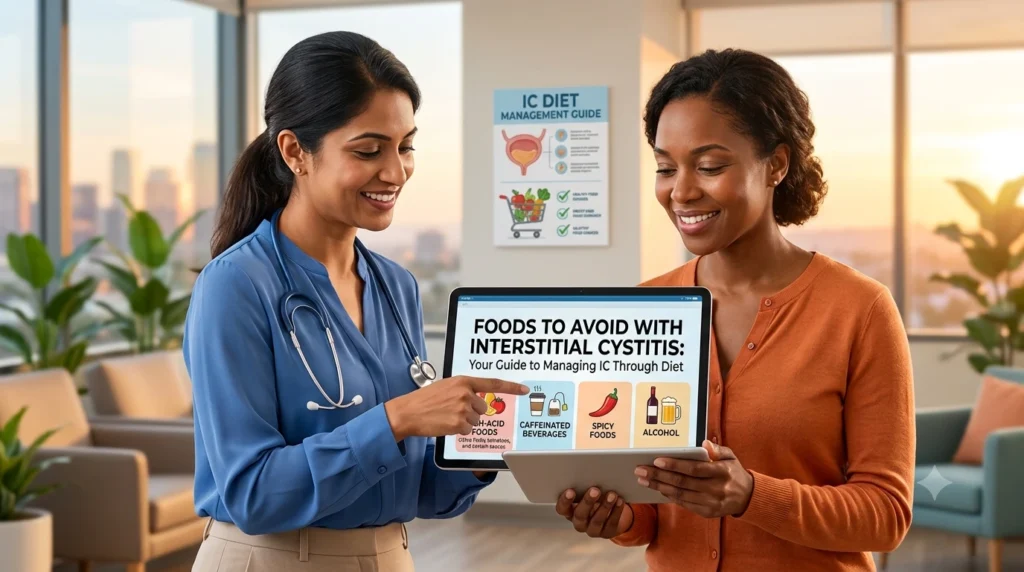

If you’re living with interstitial cystitis (IC) or bladder pain syndrome (BPS), you already know that what you eat can make or break your day. While there’s no universal “IC diet” that works for everyone, research shows that up to 95% of IC patients find that certain foods and beverages trigger their symptoms. The good news? Identifying your personal triggers through an elimination diet can help you take control of your condition and reduce painful flare-ups.
Understanding the IC-Diet Connection
Interstitial cystitis causes your bladder wall to become sore and easily irritated, making it sensitive to certain foods and drinks. When you consume a trigger food, it can lead to increased pain, urinary urgency, and frequency—what the IC community calls a “flare”.
But here’s the thing: every person has different tolerances. Some people may be able to eat a small amount of an “offending food” without problems, while others find that just one mouthful triggers a flare. This is why keeping a food diary and working with a registered dietitian can be incredibly helpful.
The Most Common Trigger Foods
While individual triggers vary, research and clinical experience have identified a consistent group of foods that are most likely to irritate the bladder.
🚫 Beverages to Avoid
- Coffee and tea (both caffeinated and decaffeinated versions)
- Alcohol (including wine and beer)
- Carbonated drinks (soda, sparkling water, diet and regular)
- Citrus juices (orange, grapefruit, lemon, cranberry)
- Fruit juices (especially acidic varieties)
💡 Pro tip: Calcium glycerophosphate (Prelief) and sodium bicarbonate taken before consuming trigger beverages may help reduce sensitivity.
🍅 Fruits to Skip
- Citrus fruits: Oranges, grapefruits, lemons, limes
- Pineapple
- Strawberries
- Cranberries (despite their reputation for urinary health!)
- Plums, grapes, guava
🌶️ Vegetables and Spicy Foods
- Tomatoes and all tomato-based products (sauces, ketchup, pizza)
- Chili peppers and hot peppers
- Pickles and sauerkraut
- Onions (problematic for many)
- Spicy cuisines: Indian, Mexican, Thai food
🧂 Condiments and Additives
- Vinegar and vinegar-based dressings
- Soy sauce and Worcestershire sauce
- Ketchup and hot sauces
- Monosodium glutamate (MSG)
- Artificial sweeteners (aspartame, saccharin, Sweet’N Low)
- Mayonnaise (for some people)
🍫 Processed Foods
- Chocolate (dark and milk)
- Processed sandwich meats (salami, bologna)
- Soy products and tofu
- Yogurt (some people react to the acidity)
- Aged cheeses
Putting It Into Practice: The Elimination Diet
The most effective way to identify your personal triggers is through an elimination diet. Here’s how to approach it:
Start with the comprehensive list above. Add any foods you’ve personally suspected of triggering symptoms.
Remove these foods from your diet for 1-2 weeks. Pay attention to how your symptoms change during this time.
Add foods back one at a time, every 2-3 days, and monitor for symptom changes. This helps you identify exactly which foods are problematic and which are safe.
Track what you eat, when you eat it, and any symptom changes you experience. This record will help you spot patterns and identify specific triggers.
IC-Friendly Foods You Can Enjoy
While the list of foods to avoid can feel overwhelming, there are many bladder-friendly options:
✅ Safe Foods
Fruits
- Blueberries
- Pears
- Honeydew
- Watermelon
- Bananas
Vegetables
- Broccoli
- Carrots
- Cauliflower
- Potatoes
- Squash
- Asparagus
Protein
- Chicken
- Turkey
- Fish
- Eggs
- Beef
- Lamb
Grains & Dairy
- Rice
- Oats
- Pasta
- Milk (low-fat or whole)
- Mild cheeses (American, cottage)
Beverages
- Water (the best choice!)
- Decaf coffee substitutes like Cafix
- Herbal teas (chamomile, peppermint)
Key Takeaways
- Personalization is everything. Your triggers may be completely different from someone else’s. The elimination diet is your best tool for figuring out what works for you.
- Keep it simple. A 2011 study that surveyed over 500 IC patients found that most items did NOT cause symptoms. You don’t have to restrict everything—focus on the common triggers.
- Stay hydrated. Drinking enough plain water helps dilute urine and can reduce bladder irritation.
- Work with a professional. A registered dietitian can help you create a balanced eating plan that meets your nutritional needs while avoiding triggers.
- Don’t lose hope. Up to 90% of patients can achieve significant symptom improvement with the right treatment plan—and identifying your dietary triggers is a powerful first step.
📋 Final Thoughts
Managing interstitial cystitis through diet isn’t about permanent restriction—it’s about understanding your body’s unique responses and making informed choices. The goal is to identify your personal triggers so you can avoid them when needed while enjoying as many foods as possible.
Start with an elimination diet, keep a food diary, and work with your healthcare provider or a dietitian. Every step you take toward understanding your IC triggers is a step toward better symptom control and a better quality of life.
Disclaimer: This article is for informational purposes only and does not constitute medical advice. Always consult a qualified healthcare professional, dietitian, or urologist for diagnosis, treatment, and dietary guidance.