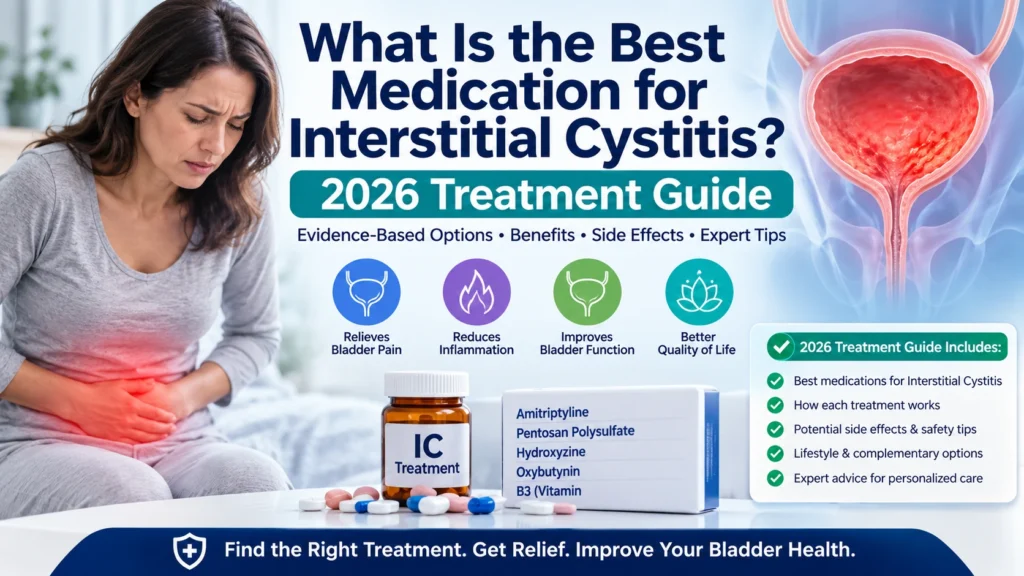

If you’re living with interstitial cystitis/bladder pain syndrome (IC/BPS), you know that finding effective relief can feel like a frustrating journey. The question “what is the best medication for interstitial cystitis” doesn’t have a simple answer—because the best treatment is highly individual and often involves a combination of therapies.
The good news? Recent guidelines from 2025 and 2026 emphasize a personalized, multimodal approach that integrates medications with lifestyle changes, physical therapy, and other interventions. Let’s explore your medication options in detail.
Bladder Calm & Comfort Support
Thousands of IC warriors are finding daily relief with this natural bladder support formula. Helps soothe irritation, reduce urgency, and support healthy bladder lining — without the harsh side effects of prescription drugs.
🔥 Limited-time offer — check price on Amazon 👉 See Reviews & Get Yours Now Free shipping · 30-day money-back guaranteeUnderstanding the Treatment Landscape
Before diving into specific medications, it’s important to understand that:
- There is no single “miracle drug” for IC/BPS. What works for one person may not work for another.
- Treatment is often stepwise—starting with conservative measures and progressing to medications and other therapies as needed.
- Multimodal therapy (combining different treatments) is now the gold standard according to the 2025 German S2k guidelines and 2026 French urology guidelines.
Oral Medications for Interstitial Cystitis
FDA Approved 1. Pentosan Polysulfate Sodium (Elmiron)
How it works: Elmiron is the only FDA-approved oral medication specifically for IC. It works by repairing the defective glycosaminoglycan (GAG) layer that protects the bladder lining.
Dosing: 100 mg taken three times daily.
Important considerations:
- It may take 5-6 months to see maximum effects.
- Long-term use carries risks, including alopecia (hair loss) and retinal pigmentary changes that can affect vision.
⚠️ 2025 Guideline Update: The Canadian Urological Association (CUA) now conditionally recommends against the use of oral pentosan polysulfate compared to standard of care, citing limited evidence of benefit. This represents a significant shift in expert opinion.
First-Line 2. Amitriptyline (Elavil)
How it works: A tricyclic antidepressant that helps block nerve pain and reduce urinary frequency. It’s often considered a first-line therapy for IC.
Dosing: Typically started at 10 mg at bedtime, with doses up to 75 mg daily.
Effectiveness: A randomized, double-blind, placebo-controlled study showed amitriptyline provides statistically significant improvement in IC symptoms, pain, and urgency.
Common side effects:
- Dry mouth
- Sedation (taking it at bedtime helps)
- Constipation
- Weight gain
Note: It takes about 4 weeks of treatment before you see results.
Antihistamine 3. Hydroxyzine (Vistaril)
How it works: An antihistamine that may inhibit mast cell secretion and suppress histamine activity in the bladder.
Dosing: 25-75 mg per day orally.
Consideration: A National Institutes of Health study found that using pentosan polysulfate alone or in combination with hydroxyzine was only slightly beneficial, with neither agent providing benefit for most patients.
Immunosuppressant 4. Cyclosporine (Gengraf, Neoral, Sandimmune)
How it works: An immunosuppressant that may be particularly effective for patients with Hunner lesions (bladder ulcers).
Effectiveness: A randomized study showed cyclosporine significantly reduced micturition frequency and demonstrated superior clinical response rates compared to pentosan polysulfate.
Serious side effects: Risk of kidney damage, liver damage, and increased infections.
⚠️ Guideline status: The CUA 2025 guidelines note insufficient evidence to make a firm recommendation for or against cyclosporine. The AUA guidelines include it as a treatment option for patients with Hunner lesions refractory to other treatments.
5. Other Oral Medications
According to the 2025 Global Consensus on IC/BPS, other available oral therapies include:
- Hydroxyzine (antihistamine)
- Silodosin (alpha-blocker)
- Cyclobenzaprine (non-opioid muscle relaxant)
- Cimetidine (H2 receptor antagonist) — considered second-line therapy by AUA guidelines
Intravesical Therapies (Bladder Instillations)
Medications can be delivered directly into the bladder through a catheter—a method called bladder instillation or bladder wash.
Dimethyl Sulfoxide (Rimso-50)
How it works: An anti-inflammatory medication that may help reduce swelling and pain in the bladder.
Administration: 50 mL of a 50% solution instilled into the bladder and held for 20 minutes.
Common side effect: A garlic-like taste in the mouth that can last up to 72 hours.
Lidocaine Combination Solutions
Doctors may create a combination cocktail with lidocaine (for pain relief), sodium bicarbonate, steroids, or heparin.
Effectiveness: These combinations may boost the effectiveness of dimethyl sulfoxide treatment.
Glycosaminoglycan (GAG) Substitution Therapy
Intravesical instillations containing heparin, hyaluronic acid, or chondroitin sulfate can help replenish the bladder’s protective lining.
Pain Management Options
Over-the-Counter Options
- NSAIDs (ibuprofen, aspirin): For mild to moderate pain on a short-term basis—long-term use can cause stomach or kidney damage.
- Acetaminophen (Tylenol): A safer option if you have stomach ulcers or kidney disease, but can cause liver damage.
Prescription Pain Medications
- Opioids (hydrocodone, oxycodone): Used only on a short-term basis due to risk of dependence.
- Gabapentin: Sometimes used for nerve pain.
What the Latest 2026 Guidelines Say
🇩🇪 German S2k Guidelines (2025-2026)
The updated German guidelines emphasize:
- Individualized multimodal treatment integrating pharmacological, intravesical, interventional, and non-pharmacological therapies
- Special focus on psychosocial factors, dietary management, pelvic floor physiotherapy, and pain medicine
- Structured diagnostic evaluation and patient-centered care
🇫🇷 French AFU Guidelines (2026)
The French urology guidelines recommend:
- Multimodal and individualized management from lifestyle measures to surgical options
- First-line: Behavioral interventions, patient education, pelvic floor physical therapy, and psychological support
- Second-line: Pharmacological treatments including pentosan polysulfate
- Intravesical therapies: GAG instillations or dimethyl sulfoxide
- Refractory cases: Hydrodistension, onabotulinumtoxinA injections, and sacral neuromodulation
- Rigorous phenotypic patient selection as the cornerstone of all therapeutic decisions
🇨🇦 Canadian Urological Association (2025)
Key recommendations:
- Against routine use of oral pentosan polysulfate
- For intravesical onabotulinumtoxin-A (BTX-A) for refractory patients
- For fulguration or triamcinolone injections for Hunner lesions
Finding Your Best Treatment
Given the complexity of IC/BPS, here’s a practical approach:
- Dietary modifications (identify trigger foods)
- Pelvic floor physical therapy
- Stress management and cognitive therapy
- First-line: Often amitriptyline (10-75 mg at bedtime)
- Alternative: Hydroxyzine or cimetidine
- Specialist consideration: Pentosan polysulfate (with careful monitoring)
- For patients who don’t respond to oral medications
- Options: DMSO, lidocaine cocktails, GAG substitution
- Botulinum toxin A injections (BTX-A)
- Neuromodulation (sacral or pudendal)
- For patients with Hunner lesions: fulguration or triamcinolone injections
- Up to 90% of patients can achieve significant symptom improvement with the right combination of treatments
- Treatment is a process of trial and adjustment, not failure
Key Takeaways
- There is no single “best” medication for IC/BPS—treatment must be personalized.
- Amitriptyline is often a first-line oral therapy.
- Pentosan polysulfate is the only FDA-approved oral drug but has significant side effects and newer guidelines question its routine use.
- Multimodal therapy combining medications, lifestyle changes, and physical therapy is the gold standard.
- Always work with a specialist—urologists, urogynecologists, and pelvic floor physical therapists can create an integrated plan.
Disclaimer: This article is for informational purposes only and does not constitute medical advice. Always consult a qualified healthcare professional for diagnosis, treatment, and medication decisions.