
🩺 The Insulin Resistance Reversal Guide
🔴 The 7 Signs of Insulin Resistance
🟡 YELLOW LIGHT These signs are often subtle. If you recognise 2 or more, it’s time to take action.
🟢 GREEN LIGHT These signs are reversible. Early detection gives you the best chance of preventing type 2 diabetes.
⚡ How Can I Reduce Insulin Resistance Quickly?
🟢 GREEN LIGHT Here are the most evidence‑based strategies ranked by speed of results:
1. 💪 Strength Training — The Most Powerful Insulin Sensitiser
Strength training is the single most powerful insulin sensitiser known. It builds muscle, which absorbs glucose more efficiently.
🟢 Action: Start with 2–3 sessions per week. Even 15 minutes makes a difference.
2. 🚶 Walk After Meals — Immediate Impact
A 10–15 minute walk immediately after eating helps your muscles absorb glucose from your meal, reducing the insulin spike.
🟢 Action: Set a reminder to walk after lunch and dinner.
3. ⏰ Intermittent Fasting — Give Your Pancreas a Break
Giving your body longer breaks between meals (12–16 hours overnight) can improve insulin sensitivity.
🟢 Action: Start with a simple 12‑hour fast (e.g., 8 PM to 8 AM).
4. 🥗 Reduce Refined Carbohydrates — Stop the Sugar Rollercoaster
Replace white rice, white bread, pastries, and sugary beverages with whole grains, legumes, and vegetables.
🟢 Action: Swap white rice for brown rice or quinoa. Replace sugary drinks with water or herbal tea.
5. 😴 Improve Sleep Quality — The Overlooked Factor
Poor sleep increases cortisol and worsens insulin resistance.
🟢 Action: Aim for 7–8 hours of quality sleep. Establish a consistent bedtime routine.
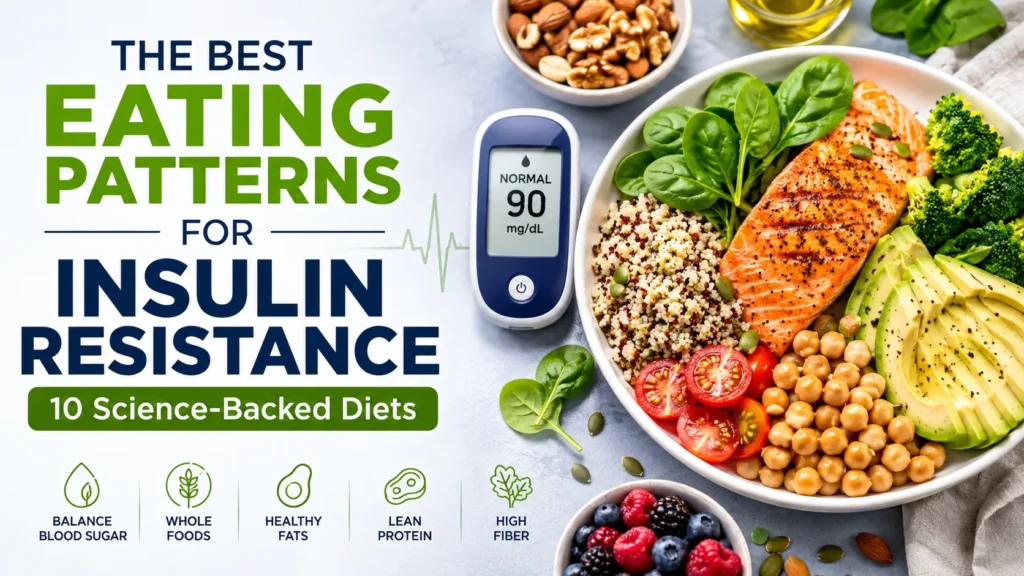
🥗 The Best Eating Patterns for Insulin Resistance
🟢 GREEN LIGHT The Mediterranean diet is the most evidence‑supported eating pattern, showing consistent HOMA‑IR reductions and a 31% decrease in T2DM incidence.
🏆 The Mediterranean Diet — The Gold Standard
The American Diabetes Association recommends a Mediterranean‑style eating plan. It’s built around:
- Plant‑based foods — vegetables, fruits, whole grains, legumes, nuts, seeds
- Fish and seafood — at least twice a week
- Healthy fats — extra virgin olive oil as the primary fat source
- Limited red meat — small amounts, infrequently
- Moderate wine — optional, with meals
The Evidence: Higher Mediterranean diet adherence is associated with lower fasting insulin and improved insulin resistance markers. It modulates inflammatory pathways, reduces oxidative stress, supports gut microbiome diversity, and improves insulin sensitivity.
⚡ Low‑Carbohydrate & Ketogenic Diets — Fastest Results
Very low‑carbohydrate diets produce the largest short‑term reductions in fasting glucose and insulin secretion.
🟢 Action: If you need quick results, reducing carbohydrate intake to 50–100 g per day can show improvements within weeks. Long‑term sustainability requires careful planning.
🌱 Plant‑Based & DASH Diets — Long‑Term Heart Health
Plant‑based and DASH (Dietary Approaches to Stop Hypertension) diets consistently improve insulin sensitivity through diverse mechanisms.
🟢 Action: Focus on fibre‑rich foods, which help control blood sugar and improve insulin sensitivity.
🍽️ Meal Timing Matters
Spacing your meals 4–6 hours apart allows insulin to drop to baseline between eating windows. Eating larger, well‑balanced meals earlier in the day is associated with improved insulin sensitivity.
🚫 What Foods Raise Insulin Resistance?
🔴 RED FLAG These foods should be minimised or eliminated:
| Category | Examples | Why They’re Harmful |
|---|---|---|
| Refined Carbohydrates | White bread, white rice, pasta, pastries, cakes, biscuits | Break down quickly into glucose, causing rapid blood sugar spikes |
| Sugary Beverages | Sodas, sweetened juices, energy drinks | Liquid sugars are absorbed faster, leading to higher insulin spikes |
| Processed Meats | Sausages, bacon, deli meats | Associated with insulin resistance and hyperinsulinemia |
| Saturated Fats | Fatty red meat, butter, full‑fat dairy | Positively associated with insulin resistance |
| High‑Glycemic Vegetables | Potatoes, sweet corn | Cause rapid blood sugar spikes |
🟡 YELLOW LIGHT: Rice caused the highest average blood glucose spike in studies, while beans and mixed berries caused the lowest.
💊 What Vitamin Stops Insulin Resistance?
🟢 GREEN LIGHT: No single vitamin “stops” insulin resistance, but several play crucial supporting roles:
- Vitamin D — most effective at improving HbA1c. Low levels are associated with insulin resistance. Action: Get levels checked. Supplement if deficient.
- Vitamin C — strongest effects on fasting blood glucose and insulin indices. Supplementation >30 days shows significant benefits.
- B‑Complex Vitamins — B2, B3, B5, B6, B7, B12, and folic acid all play roles. Folic acid specifically improves insulin resistance.
- Vitamin K2 — inversely associated with T2DM and metabolic syndrome. Found in fermented foods like natto and cheese.
- Key Minerals: Magnesium (often low in insulin‑resistant individuals), Omega‑3 fatty acids, Chromium & Selenium.
📖 How I Cured My Insulin Resistance
🟢 GREEN LIGHT: Reversal is possible, but it takes time and consistency.
- 2–4 weeks: Improvements in insulin sensitivity can be seen with strict adherence to a low‑glycemic diet and exercise.
- 3–6 months: Full reversal and normalisation of HOMA‑IR levels typically takes this long.
- Long‑term: Maintaining the lifestyle changes keeps insulin resistance at bay.
The Strategy That Works: Balance every meal, avoid starvation diets, exercise regularly, and manage stress.
🥗 30‑Day Meal Plan for Insulin Resistance
🟢 GREEN LIGHT: This plan focuses on low‑glycemic, high‑fibre, nutrient‑dense foods.
Week 1 — Foundation
Week 2 — Mediterranean Focus
- Add more olive oil, fish, and legumes
- Reduce red meat to once per week
- Include a side salad with every dinner
Week 3 — Lower Carb
- Replace one grain‑based meal with extra vegetables
- Increase protein portions slightly
- Add fermented foods (kimchi, sauerkraut, kefir)
Week 4 — Consolidation
- Practice meal spacing (4–6 hours between meals)
- Try a 12‑hour overnight fast
- Focus on mindful eating
📋 Best Diet for Insulin Resistance and Weight Loss
🟢 GREEN LIGHT: The Mediterranean diet wins for both insulin resistance and weight loss.
- Calorie range: 1,500–2,000 calories per day (adjust based on individual needs)
- Macronutrient balance: Moderate carbohydrate, higher protein, higher fibre
- Key principles: Colour your plate with fruits and vegetables; prioritise fibre‑rich foods
🍽️ What Do I Eat in a Day for Insulin Resistance?
🟢 GREEN LIGHT: Here’s a sample day:
Meal timing: Last meal by 7 PM, next meal at 8 AM = 13‑hour overnight fast.
🥤 What to Drink to Reverse Insulin Resistance?
- Water — essential for hydration and kidney function
- Green Tea — rich in antioxidants that may improve insulin sensitivity
- Herbal Tea — caffeine‑free, hydrating option
- Black Coffee (unsweetened) — may improve insulin sensitivity (in moderation)
- Apple Cider Vinegar (diluted) — may help reduce post‑meal blood sugar spikes
🔴 RED FLAG: Avoid sugary drinks, fruit juices, and sweetened teas.
❓ Frequently Asked Questions
1. Abdominal obesity (waist >40″ men / >35″ women). 2. Dark, velvety skin patches. 3. Skin tags. 4. Increased thirst & urination. 5. Persistent fatigue. 6. Sugar cravings and hunger soon after meals. 7. Blurred vision or tingling.
Prioritise: strength training, walking after meals, intermittent fasting (12–16 h), reducing refined carbohydrates, and improving sleep. Improvements can be seen in 2–4 weeks.
Refined carbohydrates (white bread, rice, pasta, pastries), sugary beverages, processed meats, saturated fats, and high‑glycemic vegetables like potatoes.
No single vitamin “stops” it. Vitamins D, C, B‑complex, K2, and minerals like magnesium and omega‑3s all play supporting roles.
Through consistent lifestyle changes: balanced meals with healthy fats and fibre, regular exercise, stress management, and weight loss. Full reversal typically takes 3–6 months.
A plan focusing on low‑glycemic, high‑fibre foods: whole grains, lean proteins, healthy fats, and plenty of vegetables. Sample: oatmeal with berries, salmon salad, grilled chicken with vegetables.
The Mediterranean diet is the most evidence‑supported. It is high in fibre, antioxidants, and unsaturated fats, and improves insulin sensitivity while supporting weight loss.
A moderate‑carbohydrate, higher‑protein, higher‑fibre eating pattern with a Mediterranean fat profile. Focus on whole foods, limit processed foods, and practice meal spacing.
Yes. Several resources offer free PDFs, including 7‑day plans focusing on low‑glycemic, high‑fibre foods.
Refined carbohydrates, sugary beverages, processed meats, saturated fats, and high‑glycemic vegetables.
Yes. It is the most evidence‑supported eating pattern, showing consistent HOMA‑IR reductions and a 31 % decrease in T2DM incidence.
Water, green tea, herbal tea, unsweetened black coffee, and diluted apple cider vinegar. Avoid sugary drinks and fruit juices.
A sample day: oatmeal with berries, salmon salad, grilled chicken with vegetables, with nuts and Greek yoghurt as snacks.
📥 FREE Insulin Resistance Reversal Guide (PDF)
🟢 GREEN LIGHT Download our comprehensive 30‑page PDF, including:
- Complete 30‑day meal plan with recipes
- Grocery shopping list
- Exercise protocol
- Progress tracking tools
To receive your free PDF, simply register with your email below:
🔒 No spam. Unsubscribe anytime.
⚕️ Medical Disclaimer: The information provided in this article is for educational and informational purposes only and is not intended as medical advice. Insulin resistance is a serious metabolic condition that should be diagnosed and managed under the supervision of a qualified healthcare provider. Always consult with your physician before starting any new diet, exercise, or supplement regimen, especially if you have pre‑existing medical conditions, are pregnant, nursing, or taking medications. Individual results may vary. This information is not a substitute for professional medical advice, diagnosis, or treatment.