
🍄 The Mushroom Manifesto
🍄 Are Mushrooms Good for Health? The Short Answer
YES—with a side of caution.
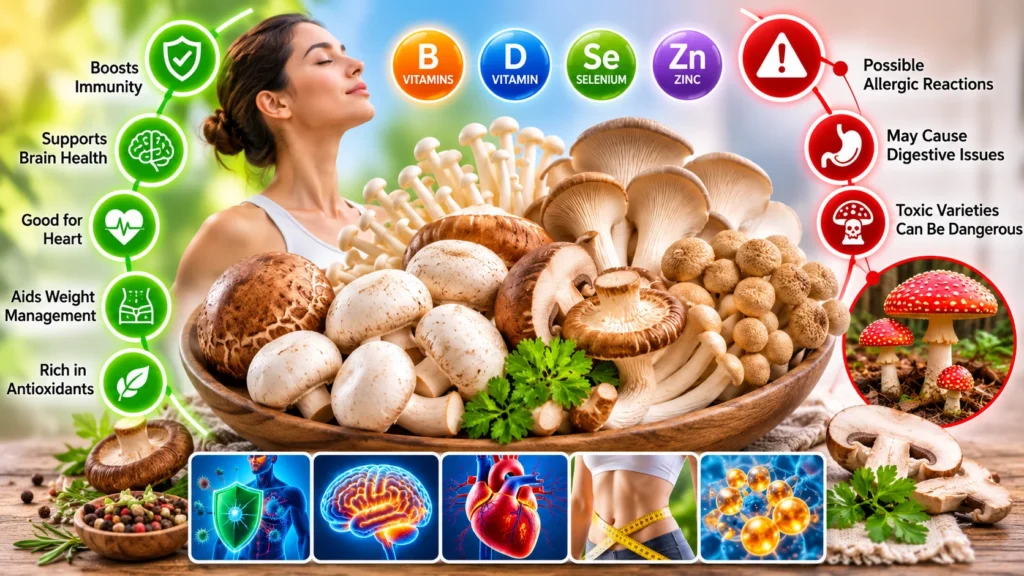
Mushrooms are among the most nutritionally dense foods on the planet. They’re low in calories and saturated fat, rich in fiber, and packed with essential vitamins and minerals like selenium, potassium, and B vitamins. They contain bioactive compounds—phenolic acids, flavonoids, sterols, polysaccharides, and terpenoids—that confer antioxidant, anti‑inflammatory, antimicrobial, antidiabetic, and immunomodulatory effects.
🟢 GREEN LIGHT Eating mushrooms regularly is linked to improved cardiometabolic health, better immune function, and reduced inflammation.
🔴 RED FLAG Not all mushrooms are created equal. Some wild varieties are toxic, and even edible mushrooms can cause issues if consumed raw or spoiled.
💪 5 Health Benefits of Mushrooms (Backed by Science)
- Cancer Risk Reduction — Studies show that eating just two medium mushrooms per day could lower cancer risk by up to 45%, thanks to a powerful amino acid called ergothioneine that helps prevent and repair cellular damage.
- Brain Health & Cognition — Regular mushroom consumption is linked to a 50% reduced risk of cognitive impairment. The bioactive compounds support neuroprotection and may help fend off age‑related decline.
- Immune System Support — Mushrooms contain beta‑glucans that regulate pro‑inflammatory compounds and strengthen the body’s natural defenses.
- Heart Health — They help reduce serum triglycerides and support healthy blood pressure regulation.
- Blood Sugar Management — With a low glycemic index and compounds that improve insulin sensitivity, mushrooms may help regulate blood sugar and reduce diabetes risk.
🧪 Do Medicinal Mushrooms Actually Work?
The honest answer: It’s complicated.
Medicinal mushrooms like Reishi, Lion’s Mane, Turkey Tail, and Cordyceps have been used for centuries in traditional East Asian medicine. Modern science is validating some of these uses—but with important caveats.
A 2016 Cochrane review found that Reishi combined with chemotherapy/radiation improved tumor regression and quality of life in cancer patients. However, Reishi alone showed no survival benefit. The evidence is promising but preliminary.
⚠️ Side Effects of Medicinal Mushrooms: What You Need to Know
Yes, side effects exist. Common ones include:
- Nausea, vomiting, diarrhea, and gastrointestinal discomfort
- Dry mouth and allergic reactions
- For Reishi specifically: insomnia, liver toxicity, anorexia, and chronic diarrhea have been reported
🟡 YELLOW LIGHT Reishi may increase bleeding risk if you’re on antiplatelet or anticoagulation medications. It can also cause hypotension with blood pressure meds and hypoglycemia with diabetes medications.
🔴 RED FLAG If you’re pregnant, nursing, or on immunosuppressants, talk to your healthcare provider first.
💊 What Is the Best Way to Consume Medicinal Mushrooms?
Powders, tinctures, capsules—oh my!
- Powders are the most versatile. Add them to coffee, tea, smoothies, soups, sauces, or even baked goods. They provide dietary fiber along with active compounds.
- Tinctures offer faster absorption and higher bioavailability.
- Capsules are convenient and pre‑measured—perfect for busy lifestyles.
💡 PRO TIP For powdered supplements, aim for 2‑3 grams (about 1 teaspoon) daily for maintenance, or 2 teaspoons for therapeutic purposes. Always start with a lower dose to see how your body reacts.
⏰ How Long Can You Take Medicinal Mushrooms?
It depends on the mushroom and the form.
- Reishi extract: Possibly safe for up to one year
- Reishi powder: Possibly safe for up to 16 weeks
- Agaricus extract: Possibly safe for up to 12 months
- Lion’s Mane: Doses up to 1 gram daily for 16 weeks appear safe
Many adaptogens take about two weeks before you notice benefits. Give it at least a month before judging effectiveness.
📅 Is It Healthy to Eat Mushrooms Every Day?
Yes—with some considerations.
Regular daily consumption is linked to significant health benefits, including that impressive 45% cancer risk reduction. However:
- Don’t eat them raw — cooking destroys certain toxins and reduces the risk of digestive issues
- Chew thoroughly — mushrooms can maintain their shape in the bowel and potentially cause blockages in susceptible individuals
- Watch portion sizes — even healthy foods should be part of a balanced diet
🧑🤝🧑 Why Is Gen Z Obsessed with Mushrooms?
Because mushrooms are the ultimate wellness flex.
Gen Z is moving away from alcohol and embracing functional alternatives. In April 2024, 37% of surveyed consumers reported consuming mushroom‑boosted foods and beverages, with Gen Z over‑indexing by 10 or more percentage points.
Why the love?
- Lion’s Mane for focus
- Reishi for calming effects
- Chaga for immune support
- Cordyceps for energy
🤝 Are Mushrooms Friendly or Harmful?
Both. It depends entirely on the mushroom.
- Friendly: Edible varieties like button, shiitake, oyster, and portobello are nutrient‑rich and safe when properly prepared
- Harmful: Over 5,000 mushroom species are toxic, and around 100 are deadly. Wild mushrooms should NEVER be eaten unless identified by an expert
🔴 RED FLAG Even “safe” mushrooms can cause problems if spoiled, eaten raw, or consumed by sensitive individuals.
🧠 What Organ Is Mushroom Good For?
Multiple organs benefit:
- Liver — hepatoprotective properties support liver function and regeneration
- Brain — neuroprotective effects support cognitive health
- Heart — helps regulate blood pressure and cholesterol
- Immune system — strengthens overall immune function
- Gut — prebiotic fibers feed beneficial bacteria
🫘 Is Mushroom Safe for Kidneys?
Generally yes—but with important exceptions.
Mushrooms provide rare bioactives like ergothioneine, vitamin D, selenium, and low‑potential renal acid load. They’re suitable for many with kidney disease who follow a plant‑based diet.
However:
- Dialysis patients may need to limit mushrooms due to high potassium content
- Chaga mushroom is extremely high in oxalates and can cause permanent kidney damage or acute kidney failure, especially in those with existing kidney issues
🟡 YELLOW LIGHT If you have kidney disease, consult your nephrologist before adding mushroom supplements to your routine.
🍟 Is Mushroom a Junk Food?
Absolutely not.
Mushrooms are the opposite of junk food. They’re low in calories, zero cholesterol, rich in protein, fiber, vitamins, and antioxidants. They’re a nutrient‑dense whole food that supports health rather than undermining it.
❌ When Should I Not Eat a Mushroom?
Avoid mushrooms when:
- They’re spoiled, rotten, or damaged
- They’re wild and unidentified
- You have a known mushroom allergy
- You’re on a low‑copper diet (mushrooms are high in copper)
- You have digestive conditions that make mushrooms difficult to process
- They’re raw—some contain toxins destroyed only by cooking
👩 Is Mushroom Good for Ladies?
Yes! Mushrooms offer specific benefits for women:
- Iron absorption support
- Bone health through minerals like calcium
- Stress regulation
- Skin health — antioxidants like ergothioneine and vitamin D precursors protect against oxidative stress and premature aging
- Hair health — biotin, selenium, and copper support hair strength and scalp health
📊 How Much Mushroom Can I Eat a Day?
For culinary mushrooms: As few as two medium mushrooms daily can provide significant benefits. Studies suggest benefit from as little as 18 grams daily.
For medicinal mushroom supplements: Follow product guidelines. Typical maintenance doses range from 2‑3 grams of powder daily.
🟢 GREEN LIGHT Moderation is key. A serving or two daily is healthy—but don’t go overboard.
❓FAQs
Yes! They’re low in calories, high in fiber, and take longer to chew, promoting satiety and slowing stomach emptying.
Yes. Reishi can interact with blood thinners, blood pressure medications, and diabetes drugs.
Not strictly. Quality and purity vary greatly between brands. Choose reputable sources.
Generally not recommended. Cooking destroys toxins and improves digestibility.
Yes—especially when exposed to sunlight. Some varieties are excellent natural sources.
Ready to experience the power of mushrooms? These premium products from HerbsPro make it easy to incorporate functional mushrooms into your daily routine:


🛒 Shop now and transform your wellness routine with the power of functional mushrooms.
⚕️ Medical Disclaimer: The information provided in this article is for educational and informational purposes only and is not intended as medical advice. Always consult with a qualified healthcare provider before starting any new supplement regimen, especially if you are pregnant, nursing, taking medications, or have a pre‑existing medical condition. Mushroom supplements are not FDA‑approved to diagnose, treat, cure, or prevent any disease. Individual results may vary.