

Table of Contents
- 1. What is Saliva pH and Why Should You Care?
- 2. The Ideal pH Range: Your Mouth’s Happy Place
- 3. The Acid Attack: When pH Drops Too Low and Causes Erosion
- 4. The Alkaline Side: What Happens When Saliva is Too Basic?
- 5. Foods That Shift the pH: The Good, The Bad, and The Acidic
- 6. How to Test and Manage Your Saliva pH
- 7. Conclusion: Your Mouth, Your Body’s Mirror
- 8. Semantic FAQs
- 9. Disclosure, Disclaimer, and PS
1. What is Saliva pH and Why Should You Care?
You might remember pH from high school chemistry—a scale from 0 to 14 that measures how acidic or alkaline a substance is. But did you know your spit has a pH too? It’s not just a random number. Why is the pH of saliva important? Because it’s a vital sign for your oral health and even your systemic well-being.
Saliva is much more than just water. It’s a complex fluid that lubricates, aids digestion, and acts as a natural buffer. It’s the mouth’s first line of defense against the acids produced by oral bacteria and the foods we eat. When the mouth pH balance is right, your saliva works tirelessly to protect your teeth from decay and keep harmful oral bacteria in check. When it’s out of whack, problems start to brew, leading to acid attack on teeth and dental enamel erosion.
2. The Ideal pH Range: Your Mouth’s Happy Place
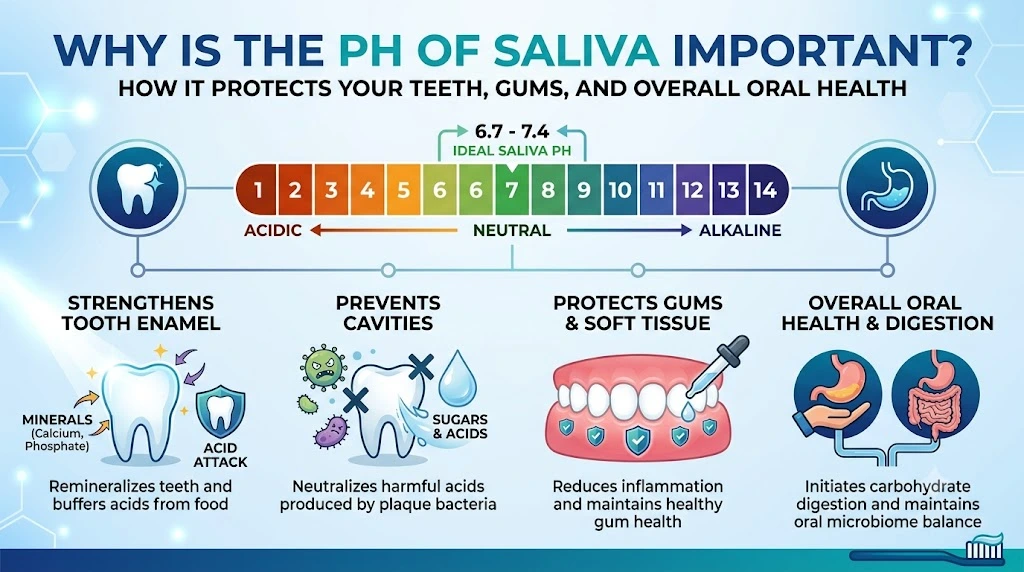
So, what’s the magic number for a healthy mouth? The normal saliva pH range for healthy human saliva is generally considered to be between 6.2 and 7.6, with many sources citing an optimal range of 6.7 to 7.4. This means it’s slightly acidic to neutral.
Maintaining this delicate oral pH balance is crucial. This is the “Goldilocks zone” where saliva can effectively neutralize harmful acids and help remineralize your tooth enamel. When your saliva pH stays in this range, you’re giving your teeth the best possible chance to stay strong and cavity-free. The ideal saliva pH for healthy teeth is one that supports this natural protective mechanism.
3. The Acid Attack: When pH Drops Too Low and Causes Erosion
The most common problem with saliva pH is it becoming too acidic—creating an acidic mouth environment. This happens every time you consume sugary or acidic foods and drinks. Oral bacteria in your mouth feast on these carbohydrates, releasing acids like lactic acid, which drive the pH down.
The critical danger point is a mouth pH below 5.5. At this level, your saliva can no longer protect your teeth. The acid starts to demineralize (break down) the hard enamel surface, leading to dental enamel erosion. This is the beginning of an acid attack on teeth. If the enamel becomes too thin, it exposes the dentin underneath, causing that unpleasant zing when you eat or drink something hot, cold, or sweet. Frequent acid attacks can also increase your risk of developing dental caries (cavities). Understanding how saliva pH affects dental health is key to preventing this damage.
4. The Alkaline Side: What Happens When Saliva is Too Basic?
While an overly acidic environment is a clear danger, a saliva pH that is too high (alkaline saliva) can also signal issues. It’s not that the alkalinity itself is harmful, but it is often associated with different oral health problems.
For instance, studies have shown that a higher salivary pH is linked to periodontitis (gum disease). It’s a complex picture: an alkaline saliva environment may promote the growth of certain bacteria or be a result of the disease process itself, such as from ammonia production by bacteria. This highlights the importance of not just focusing on mouth acidity, but achieving a true saliva pH balance.
5. Foods That Shift the pH: The Good, The Bad, and The Acidic
Your diet is the most significant factor influencing your saliva pH. Here’s a breakdown of how different foods tip the scale. Knowing what is the normal mouth pH and how foods affect it is the first step.
Acidic Offenders
Soft drinks, citrus, wine, coffee, sugary foods – lower pH, increase dental enamel erosion risk.pH-Friendly Neutralizers
Water, dairy, vegetables, beans – help raise & balance saliva pH, promote remineralization.Acidic Offenders: Soft drinks (pH ~3), fruit juices, wine, coffee, and sugary foods feed oral bacteria that produce acid. These are major contributors to mouth acidity and acid attack on teeth.
pH-Friendly Neutralizers: Water (pH 7) washes away acids. Dairy products help counteract acidity and promote remineralization. A diet rich in vegetables and beans is linked to a healthier oral pH. These are among the best foods to improve mouth pH.
6. How to Test and Manage Your Saliva pH
First, you can test your own saliva pH with simple pH test strips available at drugstores—a simple saliva pH test at home. For best results, wait at least two hours after eating or drinking. Fill your mouth with saliva, swallow it, then fill it again and place a small amount on the test strip. Match the resulting color to the chart on the box.
How to Manage and Rebalance Your Saliva pH
- Rinse with Water: After eating or drinking anything acidic, simply swish and swallow or spit out some water. It’s one of the quickest ways to reduce mouth acidity.
- Chew Sugar-Free Gum: This stimulates saliva production, your body’s natural buffering system. Gum with xylitol is even better.
- Be Smart About Brushing: Never brush immediately after consuming highly acidic foods. Wait at least 30 minutes.
- Hydrate Regularly: Drinking plenty of water throughout the day keeps your mouth moist and helps wash away food particles and acids, promoting a healthy mouth pH.
- Maintain a Healthy Diet: Be mindful of your sugar and acidic food intake. Focus on a balanced diet rich in vegetables and beans.
- Know the Signs of Acidic Saliva: Increased sensitivity, frequent cavities, and a sour taste can be signs of acidic saliva.
7. Conclusion: Your Mouth, Your Body’s Mirror
The pH of saliva is a powerful indicator of your oral health and a potential window into your overall well-being. By understanding the factors that affect it and taking simple steps to manage it, you can protect your teeth, support healthy gums, and maintain a thriving oral environment. How to restore healthy saliva pH is a question with a simple answer: awareness, hydration, and smart dietary choices.
Semantic FAQs
Disclosure: This article is for informational and educational purposes only. It does not constitute medical advice. The author and publisher are not medical professionals.
Disclaimer: The information regarding saliva pH, oral pH balance, and related topics is based on current scientific research and medical literature. However, medical science is constantly evolving. This content is not intended to be a substitute for professional medical advice, diagnosis, or treatment. Always seek the advice of your dentist, physician, or other qualified healthcare provider with any questions you may have regarding a medical condition. If you are experiencing symptoms of mouth acidity or dental enamel erosion, consult a dentist promptly.
Written with care & science • 2026