
Polycystic Ovary Syndrome (PCOS) is one of the most common endocrine disorders affecting women of reproductive age, yet it remains notoriously underdiagnosed. Many women suffer for years with irregular periods, acne, weight gain, and infertility before receiving a formal diagnosis. But what if a simple blood test could change that timeline?
The critical question gaining attention in reproductive endocrinology is: Can blood tests detect PCOS before symptoms appear?
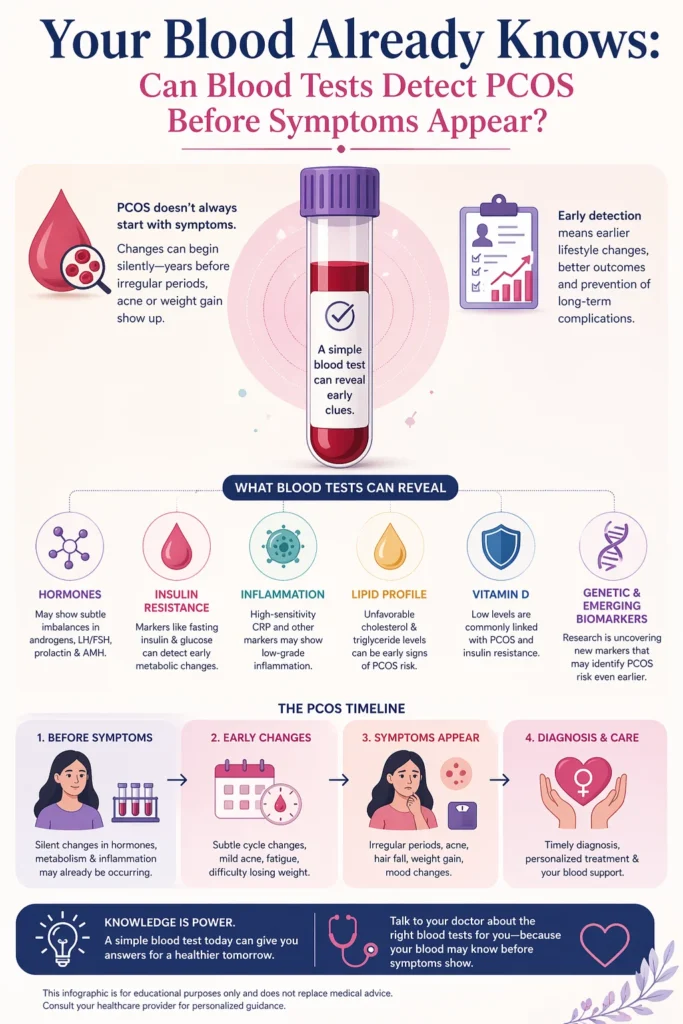
The answer is evolving. While no single blood test can definitively diagnose PCOS in asymptomatic women, emerging research suggests that specific hormonal and metabolic biomarkers can signal the condition years before classic symptoms manifest.
Understanding PCOS: Why Early Detection Matters
PCOS affects approximately 10-13% of women worldwide, yet up to 70% remain undiagnosed. The syndrome is characterized by:
- Hyperandrogenism (excess male hormones)
- Ovulatory dysfunction (irregular or absent periods)
- Polycystic ovarian morphology on ultrasound
However, symptoms often take years to become clinically obvious. During this latency period, metabolic and hormonal abnormalities can silently progress, increasing risks for:
- Type 2 diabetes
- Cardiovascular disease
- Endometrial cancer
- Non-alcoholic fatty liver disease
- Mental health disorders (anxiety, depression)
So, can blood tests detect PCOS before symptoms appear? Early detection through blood biomarkers could allow for preventive interventions before irreversible metabolic damage occurs.
Key Blood Markers That May Predict PCOS Ahead of Symptoms
1. Anti-Müllerian Hormone (AMH)
AMH is produced by small growing follicles in the ovaries. Women with PCOS have 2-3 times higher AMH levels than healthy controls because of their increased follicle pool.
Research shows that elevated AMH can predate clinical PCOS by several years. A 2023 longitudinal study found that high AMH levels in adolescent girls predicted development of oligomenorrhea (infrequent periods) and hyperandrogenism within 3-5 years.
Cut-off for suspicion: AMH > 4.7 ng/mL in non-obese women raises significant concern for PCOS phenotype, even without symptoms.
2. Total and Free Testosterone
Hyperandrogenism is a core feature of PCOS. While clinical signs like hirsutism (excess facial/body hair) and acne take time to develop, elevated blood testosterone can be detected early.
Free testosterone (the biologically active fraction) is a more sensitive marker than total testosterone. Levels above laboratory reference ranges—even without visible hair growth—may indicate early PCOS.
3. Sex Hormone-Binding Globulin (SHBG)
SHBG binds to testosterone, reducing its activity. Low SHBG is a hallmark of PCOS and correlates strongly with insulin resistance.
SHBG < 30 nmol/L in a young woman, especially with normal BMI, is an early red flag. Low SHBG often appears years before menstrual irregularity.
4. Luteinizing Hormone (LH) and LH:FSH Ratio
In PCOS, LH is often elevated while FSH remains normal or low, producing an LH:FSH ratio > 2:1. This hormonal signature reflects disordered ovarian signaling and can be detected before anovulation becomes clinically apparent.
5. Fasting Insulin and HOMA-IR
Up to 75% of women with PCOS have insulin resistance, even at normal body weight. Fasting insulin > 10 μIU/mL or HOMA-IR > 2.5 indicates metabolic dysfunction.
Insulin resistance often precedes hyperandrogenism by years. Detecting it early through blood tests provides a window for lifestyle intervention before full PCOS syndrome develops.
Can Blood Tests Alone Diagnose PCOS Without Ultrasound?
No. According to the Rotterdam Criteria (the international standard), a PCOS diagnosis requires two of three findings:
| Criterion | Can Blood Test Detect? |
|---|---|
| Oligo/anovulation (irregular periods) | No — requires clinical history |
| Hyperandrogenism (clinical or biochemical) | Yes — via testosterone, DHEA-S |
| Polycystic ovarian morphology on ultrasound | No — requires imaging |
Therefore, blood tests cannot replace ultrasound or symptom assessment. However, they can identify at-risk women who warrant closer monitoring and early imaging.
Who Should Consider Early PCOS Blood Testing?
You may benefit from predictive blood testing if you have:
- A first-degree relative (mother, sister) with PCOS — heritability is approximately 70%
- Unexplained weight gain or difficulty losing weight despite diet/exercise
- Acne or mild hirsutism that is bothersome but not yet meeting diagnostic thresholds
- Acanthosis nigricans (dark, velvety patches on neck or armpits) — a sign of insulin resistance
- Premature pubarche (early pubic hair development) as a child
- Low birth weight or being born small for gestational age — risk factors for later PCOS
The Role of Emerging Biomarkers
Research is identifying novel blood markers that may predict PCOS even earlier than conventional hormones:
MicroRNAs (miRNAs)
Specific circulating miRNAs (miR-93, miR-222, miR-146a) are dysregulated in PCOS and correlate with insulin resistance and hyperandrogenism. These may become pre-symptomatic screening tools in the next 5-10 years.
Anti-Müllerian Hormone (AMH) Again — A Special Note
A landmark 2024 study followed healthy adolescents for 8 years and found that each 1 ng/mL increase in AMH was associated with a 37% higher risk of developing full PCOS before age 25. This makes AMH the single most promising presymptomatic biomarker.
Inflammatory Markers
CRP (C-reactive protein) and other inflammatory cytokineCancer Genetics: Understanding Hereditary Risks, Genetic Testing, and Preventions are often elevated years before PCOS diagnosis, reflecting the chronic low-grade inflammation that drives metabolic dysfunction.
Limitations and Clinical Realities
Can blood tests detect PCOS before symptoms appear with perfect accuracy? Not yet. Several limitations exist:
- No validated cut-offs for asymptomatic populations — current reference ranges are derived from symptomatic women
- Age variability — hormonal norms differ significantly between adolescents, reproductive-age women, and perimenopausal women
- BMI effects — obesity alters many markers independently of PCOS
- Contraceptive use — hormonal birth control suppresses all ovarian and pituitary markers, making testing unreliable
- Ethnic differences — Asian women with PCOS often have lower AMH and testosterone than Caucasian women
What to Do If Your Blood Tests Are Suggestive
If you undergo blood testing and markers are consistent with early or impending PCOS — even without symptoms — actionable steps include:
Lifestyle Interventions
- Low glycemic index diet to reduce insulin stimulation
- Regular physical activity (150 minutes per week minimum)
- Stress management — cortisol amplifies insulin resistance
Targeted Supplements (Discuss with Doctor)
- Inositol (myo-inositol + D-chiro-inositol 40:1) — improves insulin sensitivity and ovulatory function
- Vitamin D — up to 80% of PCOS women are deficient
- Berberine — natural compound with insulin-sensitizing effects
Medical Monitoring
- Annual fasting glucose and lipid panel
- Blood pressure checks every 6 months
- Consider ultrasound if symptoms develop
The Future: A Pre-Symptomatic PCOS Blood Panel
Researchers are working toward a multiplex blood test that combines:
- AMH (elevated)
- Free testosterone (elevated)
- SHBG (low)
- Fasting insulin (elevated)
- LH:FSH ratio (>2)
Machine learning algorithms using these 5 markers have shown 86% accuracy in predicting subsequent PCOS development within 5 years in asymptomatic high-risk populations.
Until such a panel is clinically validated and commercially available, individual markers can still provide valuable early warnings.
Conclusion: A Proactive Approach to PCOS
So, can blood tests detect PCOS before symptoms appear? The evidence is promising but not definitive. While no standalone blood test can diagnose PCOS in the absence of symptoms or ultrasound findings, hormonal and metabolic markers — particularly AMH, free testosterone, and fasting insulin — can identify women at high risk years before full clinical expression.
The real power of these blood tests is not diagnosis but prediction and prevention. Early detection of hormonal dysfunction allows for lifestyle and medical interventions that may delay onset, reduce symptom severity, or prevent complications like diabetes and infertility.
If you have risk factors for PCOS — especially a family history or signs of insulin resistance — consider asking your healthcare provider for a baseline hormonal and metabolic panel. A single blood draw today could provide a roadmap for your reproductive and metabolic health for years to come.
This article is for informational purposes and does not constitute medical advice. If you have concerns about PCOS, please consult a healthcare provider.